
Before Memmo my notes were scattered across PDFs. Now a workspace pulls everything into one place — I see exactly what's still left to study.
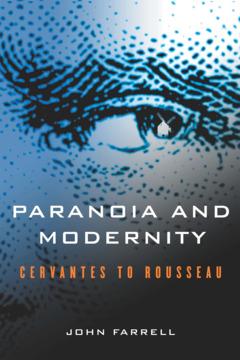
"Don Quixote is the first great modern paranoid adventurer.... Grandiosity and persecution define the characters of Swift's Gulliver, Stendhal's Julien Sorel, Melville's Ahab, Dostoyevsky's Underground Man, Ibsen's Masterbuilder Solness, Strindberg's Captain (in The Father), Kafka's K., and Joyce's autobiographical hero Stephen Dedalus.... The all-encompassing conspiracy, very much in its original Rousseauvian cast, has become almost the normal way of representing society and its institutions since World War Two, giving impetus to heroic plots and counter-plots in a hundred films and in the novels of Burroughs, Heller, Ellison, Pynchon, Kesey, Mailer, DeLillo, and others."—from Paranoia and Modernity
Paranoia, suspicion, and control have preoccupied key Western intellectuals since the sixteenth century. Paranoia is a dominant concern in modern literature, and its peculiar constellation of symptoms—grandiosity, suspicion, unfounded hostility, delusions of persecution and conspiracy—are nearly obligatory psychological components of the modern hero.
How did paranoia come to the center of modern moral and intellectual consciousness? In Paranoia and Modernity, John Farrell brings literary criticism, psychology, and intellectual history to the attempt at an answer. He demonstrates the connection between paranoia and the long history of struggles over the question of agency—the extent to which we are free to act and responsible for our actions. He addresses a wide range of major authors from the late Middle Ages to the eighteenth century, among them Luther, Bacon, Cervantes, Descartes, Hobbes, Pascal, La Rochefoucauld, Swift, and Rousseau. Farrell shows how differently paranoid psychology looks at different historical junctures with different models of agency, and in the epilogue, "Paranoia and Postmodernism," he draws the implications for recent critical debates in the humanities.
Before Memmo my notes were scattered across PDFs. Now a workspace pulls everything into one place — I see exactly what's still left to study.
Memmo's summaries are gold before exams. I don't have to re-read 800 pages two weeks before — just the important parts.
The AI chat has saved me the night before an exam more than once. I just keep asking until I get it — no waiting on a study group to reply.
The quizzes hit exactly what I need to know. Memmo tracks what I get stuck on — so I only practice what's worth it.
Flashcards with spaced repetition are magic. Memmo knows when I'm about to forget something and brings it back.
The AI podcasts are my favorite. I listen on my way to school and get a recap without sitting at a computer.

Handbok i kvalitativa metoder
281 kr

Hållbar utveckling: en introduktion för ingenjörer och andra problemlösare
334 kr

Brymans Samhällsvetenskapliga metoder
390 kr

Projektledning
491 kr

Den orättvisa hälsan: om socioekonomiska skillnader i hälsa och livslängd
326 kr

Vetenskapsteori för nybörjare
196 kr

Organizational Leadership
429 kr

På väg mot läraryrket
172 kr

Det sociala livet i skolan: Socialpsykologiska perspektiv
253 kr

Betygsättningens didaktik
151 kr

Personality
402 kr

Studying Leadership
404 kr

Managing Innovation
477 kr

Introduktion till samhällsvetenskaplig metod
347 kr

The Psychology of Sex and Gender
698 kr

Evidens och kunskap för socialt arbete
207 kr

Introduction to Leadership
605 kr