
Before Memmo my notes were scattered across PDFs. Now a workspace pulls everything into one place — I see exactly what's still left to study.
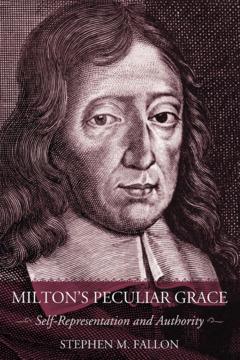
Despite writing about himself extensively and repeatedly, John Milton, the archetypal Puritan author, resolutely avoids the obligatory Augustinian narrative of sinfulness, conviction of sin, reception of the Word, regeneration of the spirit, and sanctification. The doctrine of fall, grace, and regeneration, so well illustrated in Paradise Lost, has no discernible effect on Milton's overt self-representations. Exploring this anomaly in his new book, Stephen M. Fallon contends that Milton, despite his deep engagement with theology, is not a religious writer.
Why, Fallon asks, does Milton write about himself so compulsively? Why does he substitute, for the otherwise universal theological script, a story of precocious and continued virtue, even, it seems, a narrative of sinlessness? What pressures does this decision to reject the standard narrative exert on his work?
In Milton's Peculiar Grace, Fallon argues that Milton writes about himself to gain immortality, secure authority for his arguments, and exert control over his readers' interpretations. He traces the return of the repressed narrative of fallenness in the author's unacknowledged and displaced self-representations, which in turn account for much of the power of the late poems. Fallon's book, based on close readings of Milton's "self-constructions" in prose and poetry throughout his career, provides a new view of Milton's life and his importance for contemporary literary theory-in particular for continued questions about authorial intention.
Before Memmo my notes were scattered across PDFs. Now a workspace pulls everything into one place — I see exactly what's still left to study.
Memmo's summaries are gold before exams. I don't have to re-read 800 pages two weeks before — just the important parts.
The AI chat has saved me the night before an exam more than once. I just keep asking until I get it — no waiting on a study group to reply.
The quizzes hit exactly what I need to know. Memmo tracks what I get stuck on — so I only practice what's worth it.
Flashcards with spaced repetition are magic. Memmo knows when I'm about to forget something and brings it back.
The AI podcasts are my favorite. I listen on my way to school and get a recap without sitting at a computer.

Handbok i kvalitativa metoder
281 kr

Hållbar utveckling: en introduktion för ingenjörer och andra problemlösare
334 kr

Brymans Samhällsvetenskapliga metoder
390 kr

Projektledning
491 kr

Den orättvisa hälsan: om socioekonomiska skillnader i hälsa och livslängd
326 kr

Vetenskapsteori för nybörjare
196 kr

Organizational Leadership
429 kr

På väg mot läraryrket
172 kr

Det sociala livet i skolan: Socialpsykologiska perspektiv
253 kr

Betygsättningens didaktik
151 kr

Personality
402 kr

Studying Leadership
404 kr

Managing Innovation
477 kr

Introduktion till samhällsvetenskaplig metod
347 kr

The Psychology of Sex and Gender
698 kr

Evidens och kunskap för socialt arbete
207 kr

Introduction to Leadership
605 kr