
Before Memmo my notes were scattered across PDFs. Now a workspace pulls everything into one place — I see exactly what's still left to study.
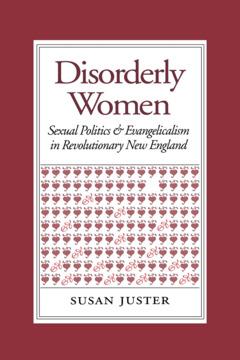
Throughout most of the eighteenth century and particularly during the religious revivals of the Great Awakening, evangelical women in colonial New England participated vigorously in major church decisions, from electing pastors to disciplining backsliding members. After the Revolutionary War, however, women were excluded from political life, not only in their churches but in the new republic as well. Reconstructing the history of this change, Susan Juster shows how a common view of masculinity and femininity shaped both radical religion and revolutionary politics in America.
Juster compares contemporary accounts of Baptist women and men who voice their conversion experiences, theological opinions, and proccupation with personal conflicts and pastoral controversies. At times, the ardent revivalist message of spiritual individualism appeared to sanction sexual anarchy. According to one contemporary, revival attempted "to make all things common, wives as well as goods." The place of women at the center of evangelical life in the mid-eighteenth century, Juster finds, reflected the extent to which evangelical religion itself was perceived as "feminine"—emotional, sensional, and ultimately marginal.
In the 1760s, the Baptist order began to refashion its mission, and what had once been a community of saints—often indifferent to conventional moral or legal constraints—was transformed into a society of churchgoers with a concern for legitimacy. As the church was reconceptualized as a "household" ruled by "father" figures, "feminine" qualities came to define the very essence of sin. Juster observes that an image of benevolent patriarchy threatened by the specter of female power was a central motif of the wider political culture during the age of democratic revolutions.
Before Memmo my notes were scattered across PDFs. Now a workspace pulls everything into one place — I see exactly what's still left to study.
Memmo's summaries are gold before exams. I don't have to re-read 800 pages two weeks before — just the important parts.
The AI chat has saved me the night before an exam more than once. I just keep asking until I get it — no waiting on a study group to reply.
The quizzes hit exactly what I need to know. Memmo tracks what I get stuck on — so I only practice what's worth it.
Flashcards with spaced repetition are magic. Memmo knows when I'm about to forget something and brings it back.
The AI podcasts are my favorite. I listen on my way to school and get a recap without sitting at a computer.

Handbok i kvalitativa metoder
281 kr

Hållbar utveckling: en introduktion för ingenjörer och andra problemlösare
334 kr

Brymans Samhällsvetenskapliga metoder
390 kr

Projektledning
491 kr

Den orättvisa hälsan: om socioekonomiska skillnader i hälsa och livslängd
326 kr

Vetenskapsteori för nybörjare
196 kr

Organizational Leadership
429 kr

På väg mot läraryrket
172 kr

Det sociala livet i skolan: Socialpsykologiska perspektiv
253 kr

Betygsättningens didaktik
151 kr

Personality
402 kr

Studying Leadership
404 kr

Managing Innovation
477 kr

Introduktion till samhällsvetenskaplig metod
347 kr

The Psychology of Sex and Gender
698 kr

Evidens och kunskap för socialt arbete
207 kr

Introduction to Leadership
605 kr