
Before Memmo my notes were scattered across PDFs. Now a workspace pulls everything into one place — I see exactly what's still left to study.
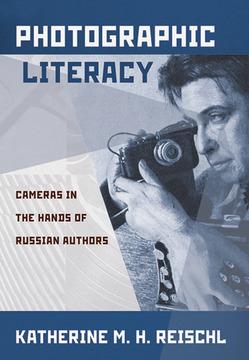
Photography, introduced to Russia in 1839, was nothing short of a sensation. Its rapid proliferation challenged the other arts, including painting and literature, as well as the very integrity of the self. If Leo Tolstoy and Fyodor Dostoevsky greeted the camera with skepticism in the nineteenth century, numerous twentieth-century authors welcomed it with a warm embrace. As Katherine M. H. Reischl shows in Photographic Literacy, authors as varied as Leonid Andreev, Ilya Ehrenburg, and Alexander Solzhenitsyn picked up the camera and reshaped not only their writing practices but also the sphere of literacy itself.
For these authors, a single photograph or a photograph as illustration is never an endpoint; their authorial practices continually transform and animate the frozen moment. But just as authors used images to shape the reception of their work and selves, Russian photographers—including Sergei Prokudin-Gorsky and Alexander Rodchenko—used text to shape the reception of their visual work. From the diary to print, the literary word imbues that photographic moment with a personal life story, and frames and reframes it in the writing of history. In this primer on photographic literacy, Reischl argues for the central place that photography has played in the formation of the Russian literary imagination over the course of roughly seventy years. From image to text and back again, she traces the visual consciousness of modern Russian literature as captured through the lens of the Russian author-photographer.
Before Memmo my notes were scattered across PDFs. Now a workspace pulls everything into one place — I see exactly what's still left to study.
Memmo's summaries are gold before exams. I don't have to re-read 800 pages two weeks before — just the important parts.
The AI chat has saved me the night before an exam more than once. I just keep asking until I get it — no waiting on a study group to reply.
The quizzes hit exactly what I need to know. Memmo tracks what I get stuck on — so I only practice what's worth it.
Flashcards with spaced repetition are magic. Memmo knows when I'm about to forget something and brings it back.
The AI podcasts are my favorite. I listen on my way to school and get a recap without sitting at a computer.

Handbok i kvalitativa metoder
281 kr

Hållbar utveckling: en introduktion för ingenjörer och andra problemlösare
334 kr

Brymans Samhällsvetenskapliga metoder
390 kr

Projektledning
491 kr

Den orättvisa hälsan: om socioekonomiska skillnader i hälsa och livslängd
326 kr

Vetenskapsteori för nybörjare
196 kr

Organizational Leadership
429 kr

På väg mot läraryrket
172 kr

Det sociala livet i skolan: Socialpsykologiska perspektiv
253 kr

Betygsättningens didaktik
151 kr

Personality
402 kr

Studying Leadership
404 kr

Managing Innovation
477 kr

Introduktion till samhällsvetenskaplig metod
347 kr

The Psychology of Sex and Gender
698 kr

Evidens och kunskap för socialt arbete
207 kr

Introduction to Leadership
605 kr