
Before Memmo my notes were scattered across PDFs. Now a workspace pulls everything into one place — I see exactly what's still left to study.
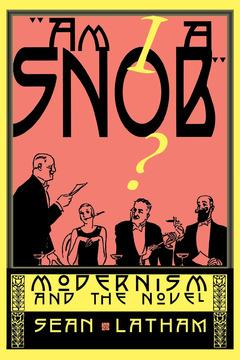
Is there a "great divide" between highbrow and mass cultures? Are modernist novels for, by, and about snobs? What might Lord Peter Wimsey, Mrs. Dalloway, and Stephen Dedalus have to say to one another?
Sean Latham's appealingly written book "Am I a Snob?" traces the evolution of the figure of the snob through the works of William Makepeace Thackeray, Oscar Wilde, Virginia Woolf, James Joyce, and Dorothy Sayers. Each of these writers played a distinctive role in the transformation of the literary snob from a vulgar social climber into a master of taste. In the process, some novelists and their works became emblems of sophistication, treated as if they were somehow apart from or above the fiction of the popular marketplace, while others found a popular audience. Latham argues that both coterie writers like Joyce and popular novelists like Sayers struggled desperately to combat their own pretensions. By portraying snobs in their novels, they attempted to critique and even transform the cultural and economic institutions that they felt isolated them from the broad readership they desired.
Latham regards the snobbery that emerged from and still clings to modernism not as an unfortunate by-product of aesthetic innovation, but as an ongoing problem of cultural production. Drawing on the tools and insights of literary sociology and cultural studies, he traces the nineteenth-century origins of the "snob," then explores the ways in which modernist authors developed their own snobbery as a means of coming to critical consciousness regarding the connections among social, economic, and cultural capital. The result, Latham asserts, is a modernism directly engaged with the cultural marketplace yet deeply conflicted about the terms of its success.
Before Memmo my notes were scattered across PDFs. Now a workspace pulls everything into one place — I see exactly what's still left to study.
Memmo's summaries are gold before exams. I don't have to re-read 800 pages two weeks before — just the important parts.
The AI chat has saved me the night before an exam more than once. I just keep asking until I get it — no waiting on a study group to reply.
The quizzes hit exactly what I need to know. Memmo tracks what I get stuck on — so I only practice what's worth it.
Flashcards with spaced repetition are magic. Memmo knows when I'm about to forget something and brings it back.
The AI podcasts are my favorite. I listen on my way to school and get a recap without sitting at a computer.

Handbok i kvalitativa metoder
281 kr

Hållbar utveckling: en introduktion för ingenjörer och andra problemlösare
334 kr

Brymans Samhällsvetenskapliga metoder
390 kr

Projektledning
491 kr

Den orättvisa hälsan: om socioekonomiska skillnader i hälsa och livslängd
326 kr

Vetenskapsteori för nybörjare
196 kr

Organizational Leadership
429 kr

På väg mot läraryrket
172 kr

Det sociala livet i skolan: Socialpsykologiska perspektiv
253 kr

Betygsättningens didaktik
151 kr

Personality
402 kr

Studying Leadership
404 kr

Managing Innovation
477 kr

Introduktion till samhällsvetenskaplig metod
347 kr

The Psychology of Sex and Gender
698 kr

Evidens och kunskap för socialt arbete
207 kr

Introduction to Leadership
605 kr