
Before Memmo my notes were scattered across PDFs. Now a workspace pulls everything into one place — I see exactly what's still left to study.
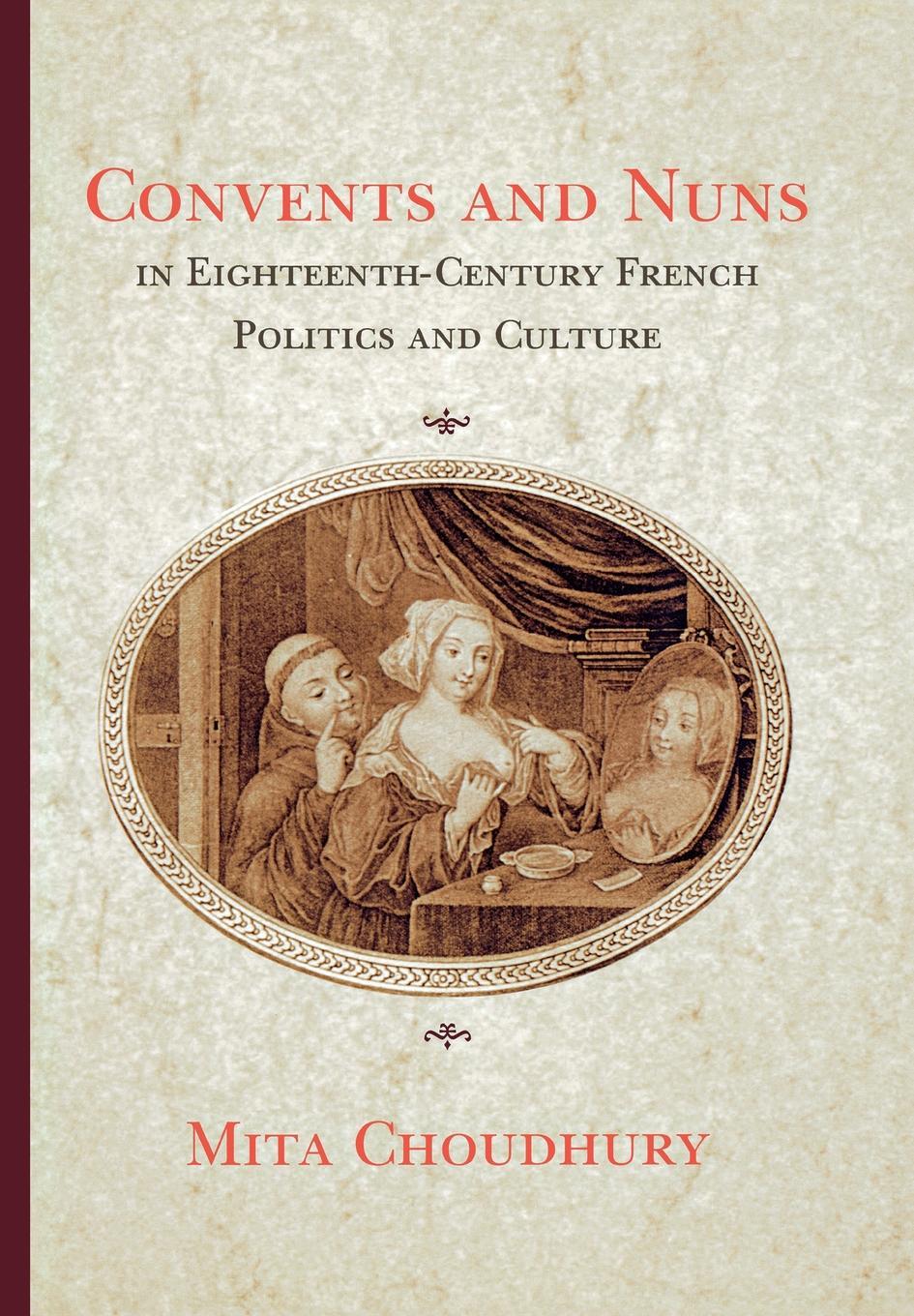
Representations of convents and nuns assumed power and urgency within the volatile political culture of eighteenth-century France. Drawing from a range of literary, cultural, and legal material, Mita Choudhury analyzes how, between 1730 and 1789, lawyers, religious pamphleteers, and men of letters repeatedly asked, "Who should control the female convent and women religious?" These sources chronicled the conflicts between nuns and the male clergy, among nuns themselves, and between nuns and their families, conflicts that were presented to the public in the context of potent issues such as despotism, citizenship, female education, and sexuality.
The cloister operated as a symbol of despotism, the equivalent of the Sultan's seraglio or the King's Bastille. Before 1770, lawyers and magistrates praised nuns as the personification of virtuous Christian women, often victims vulnerable to those who would use them to further their own political ends. After 1770, men of letters evaluated nuns according to more secular norms, and concluded that the convent had no purpose in society, except as a reminder of the problems inherent in the Old Regime.
Choudhury elaborates on how nuns were not always passive entities, mere objects to be shaped by the political needs of others. But because they relied on men in order to make their voices heard, the place of women religious in the public sphere was a complex one based on negotiations between female action and male subjectivity. During the French Revolution, whatever support they had enjoyed was lost as republicans and moderates began to see nuns as potentially disruptive to the social order, family life, and revolutionary values.
Before Memmo my notes were scattered across PDFs. Now a workspace pulls everything into one place — I see exactly what's still left to study.
Memmo's summaries are gold before exams. I don't have to re-read 800 pages two weeks before — just the important parts.
The AI chat has saved me the night before an exam more than once. I just keep asking until I get it — no waiting on a study group to reply.
The quizzes hit exactly what I need to know. Memmo tracks what I get stuck on — so I only practice what's worth it.
Flashcards with spaced repetition are magic. Memmo knows when I'm about to forget something and brings it back.
The AI podcasts are my favorite. I listen on my way to school and get a recap without sitting at a computer.

Handbok i kvalitativa metoder
281 kr

Hållbar utveckling: en introduktion för ingenjörer och andra problemlösare
334 kr

Brymans Samhällsvetenskapliga metoder
390 kr

Projektledning
491 kr

Den orättvisa hälsan: om socioekonomiska skillnader i hälsa och livslängd
326 kr

Vetenskapsteori för nybörjare
196 kr

Organizational Leadership
429 kr

På väg mot läraryrket
172 kr

Det sociala livet i skolan: Socialpsykologiska perspektiv
253 kr

Betygsättningens didaktik
151 kr

Personality
402 kr

Studying Leadership
404 kr

Managing Innovation
477 kr

Introduktion till samhällsvetenskaplig metod
347 kr

The Psychology of Sex and Gender
698 kr

Evidens och kunskap för socialt arbete
207 kr

Introduction to Leadership
605 kr