
Before Memmo my notes were scattered across PDFs. Now a workspace pulls everything into one place — I see exactly what's still left to study.
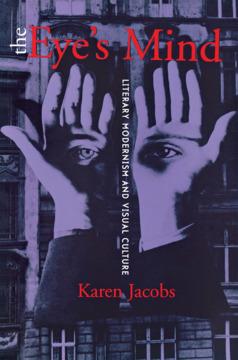
The Eye's Mind significantly alters our understanding of modernist literature by showing how changing visual discourses, techniques, and technologies affected the novels of that period. In readings that bring philosophies of vision into dialogue with photography and film as well as the methods of observation used by the social sciences, Karen Jacobs identifies distinctly modernist kinds of observers and visual relationships.
This important reconception of modernism draws upon American, British, and French literary and extra-literary materials from the period 1900-1955. These texts share a sense of crisis about vision's capacity for violence and its inability to deliver reliable knowledge. Jacobs looks closely at the ways in which historical understandings of race and gender inflected visual relations in the modernist novel. She shows how modernist writers, increasingly aware of the body behind the neutral lens of the observer, used diverse strategies to displace embodiment onto those "others" historically perceived as cultural bodies in order to reimagine for themselves or their characters a "purified" gaze.
The Eye's Mind addresses works by such high modernists as Vladimir Nabokov, Virginia Woolf, and (more distantly) Ralph Ellison and Maurice Blanchot, as well as those by Henry James, Zora Neale Hurston, and Nathanael West which have been tentatively placed in the modernist canon although they forgo the full-blown experimental techniques often seen as synonymous with literary modernism. Jacobs reframes fundamental debates about modernist aesthetic practices by demonstrating how much those practices are indebted to the changing visual cultures of the twentieth century.
Before Memmo my notes were scattered across PDFs. Now a workspace pulls everything into one place — I see exactly what's still left to study.
Memmo's summaries are gold before exams. I don't have to re-read 800 pages two weeks before — just the important parts.
The AI chat has saved me the night before an exam more than once. I just keep asking until I get it — no waiting on a study group to reply.
The quizzes hit exactly what I need to know. Memmo tracks what I get stuck on — so I only practice what's worth it.
Flashcards with spaced repetition are magic. Memmo knows when I'm about to forget something and brings it back.
The AI podcasts are my favorite. I listen on my way to school and get a recap without sitting at a computer.

Handbok i kvalitativa metoder
281 kr

Hållbar utveckling: en introduktion för ingenjörer och andra problemlösare
334 kr

Brymans Samhällsvetenskapliga metoder
390 kr

Projektledning
491 kr

Den orättvisa hälsan: om socioekonomiska skillnader i hälsa och livslängd
326 kr

Vetenskapsteori för nybörjare
196 kr

Organizational Leadership
429 kr

På väg mot läraryrket
172 kr

Det sociala livet i skolan: Socialpsykologiska perspektiv
253 kr

Betygsättningens didaktik
151 kr

Personality
402 kr

Studying Leadership
404 kr

Managing Innovation
477 kr

Introduktion till samhällsvetenskaplig metod
347 kr

The Psychology of Sex and Gender
698 kr

Evidens och kunskap för socialt arbete
207 kr

Introduction to Leadership
605 kr