
Before Memmo my notes were scattered across PDFs. Now a workspace pulls everything into one place — I see exactly what's still left to study.
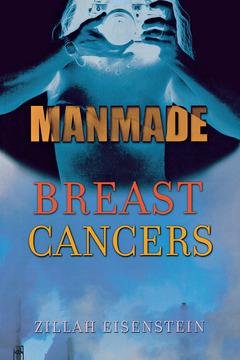
A new understanding of humanity and feminism from the starting point of breast health is the ultimate goal of Zillah Eisenstein's political memoir of her family's experience with breast cancer. The well-known feminist author argues that politics always needs the personal, and that the personal is never enough on its own. Her return to the personal side of the political combines the two for a radicalized way of seeing, viewing, and knowing.
The author strives to bring together a critique of environmental damage and the health of women's bodies, gain perspective on the role race plays as a factor in breast cancers and in political agendas, link prevention and treatment, and connect individual support and political change.
Eisenstein was sixteen when her forty-five-year-old mother successfully battled breast cancer. Her two sisters, Sarah and Giah, were in their twenties when they were diagnosed, but neither of them survived. She received her own diagnosis when she was forty.
Despite her family history, however, Eisenstein rejects the simple argument that genes are simply determining, rather than liable to influence by external factors. She also questions the dominance of the theory that breast cancer is caused by high lifetime exposure to estrogen. Instead, she views breast cancer as an environmental disease, best understood in terms of ecological, racial, economic, and sexual influences on individual women. She uses the term "manmade" to indicate not only industrial carcinogens and other cultural causes, but also the male-dominated and -defined scientific practices of research and treatment.
In response, Manmade Breast Cancers offers a retelling of the meaning of breast cancer and a discussion of universal feminist issues about the body. The author says she writes "to discover a more just globe which will treasure the health of all of our bodies." The emotional depth and intellectual breadth of her argument adds new dimensions to how we understand breast cancer.
Before Memmo my notes were scattered across PDFs. Now a workspace pulls everything into one place — I see exactly what's still left to study.
Memmo's summaries are gold before exams. I don't have to re-read 800 pages two weeks before — just the important parts.
The AI chat has saved me the night before an exam more than once. I just keep asking until I get it — no waiting on a study group to reply.
The quizzes hit exactly what I need to know. Memmo tracks what I get stuck on — so I only practice what's worth it.
Flashcards with spaced repetition are magic. Memmo knows when I'm about to forget something and brings it back.
The AI podcasts are my favorite. I listen on my way to school and get a recap without sitting at a computer.

Handbok i kvalitativa metoder
281 kr

Hållbar utveckling: en introduktion för ingenjörer och andra problemlösare
334 kr

Brymans Samhällsvetenskapliga metoder
390 kr

Projektledning
491 kr

Den orättvisa hälsan: om socioekonomiska skillnader i hälsa och livslängd
326 kr

Vetenskapsteori för nybörjare
196 kr

Organizational Leadership
429 kr

På väg mot läraryrket
172 kr

Det sociala livet i skolan: Socialpsykologiska perspektiv
253 kr

Betygsättningens didaktik
151 kr

Personality
402 kr

Studying Leadership
404 kr

Managing Innovation
477 kr

Introduktion till samhällsvetenskaplig metod
347 kr

The Psychology of Sex and Gender
698 kr

Evidens och kunskap för socialt arbete
207 kr

Introduction to Leadership
605 kr