
Before Memmo my notes were scattered across PDFs. Now a workspace pulls everything into one place — I see exactly what's still left to study.
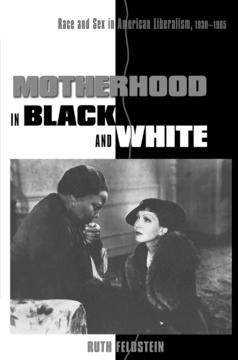
The apron-clad, white, stay-at-home mother. Black bus boycotters in Montgomery, Alabama. Ruth Feldstein explains that these two enduring, yet very different, images of the 1950s did not run parallel merely by ironic coincidence, but were in fact intimately connected. What she calls "gender conservatism" and "racial liberalism" intersected in central, yet overlooked, ways in mid-twentieth-century American liberalism.
Motherhood in Black and White analyzes the widespread assumption within liberalism that social problems—ranging from unemployment to racial prejudice—could be traced to bad mothering. This relationship between liberalism and motherhood took shape in the 1930s, expanded in the 1940s and 1950s, and culminated in the 1960s. Even as civil rights moved into the mainstream of an increasingly visible liberal agenda, images of domineering black "matriarchs" and smothering white "moms" proliferated.
Feldstein draws on a wide array of cultural and political events that demonstrate how and why mother-blaming furthered a progressive anti-racist agenda. From the New Deal into the Great Society, bad mothers, black or white, were seen as undermining American citizenship and as preventing improved race relations, while good mothers, responsible for raising physically and psychologically fit future citizens, were held up as a precondition to a strong democracy.
By showing how ideas about gender roles and race relations intersected in films, welfare policies, and civil rights activism, as well as in the assumptions of classic works of social science, Motherhood in Black and White speaks to questions within women's history, African American history, political history, and cultural history. Ruth Feldstein analyzes representations of black women and white women, as well as the political implications of these representations. She brings together race and gender, culture and policy, vividly illuminating each.
Before Memmo my notes were scattered across PDFs. Now a workspace pulls everything into one place — I see exactly what's still left to study.
Memmo's summaries are gold before exams. I don't have to re-read 800 pages two weeks before — just the important parts.
The AI chat has saved me the night before an exam more than once. I just keep asking until I get it — no waiting on a study group to reply.
The quizzes hit exactly what I need to know. Memmo tracks what I get stuck on — so I only practice what's worth it.
Flashcards with spaced repetition are magic. Memmo knows when I'm about to forget something and brings it back.
The AI podcasts are my favorite. I listen on my way to school and get a recap without sitting at a computer.

Handbok i kvalitativa metoder
281 kr

Hållbar utveckling: en introduktion för ingenjörer och andra problemlösare
334 kr

Brymans Samhällsvetenskapliga metoder
390 kr

Projektledning
491 kr

Den orättvisa hälsan: om socioekonomiska skillnader i hälsa och livslängd
326 kr

Organizational Leadership
429 kr

Vetenskapsteori för nybörjare
196 kr

På väg mot läraryrket
172 kr

Det sociala livet i skolan: Socialpsykologiska perspektiv
253 kr

Betygsättningens didaktik
151 kr

Personality
402 kr

Studying Leadership
404 kr

Managing Innovation
477 kr

Introduktion till samhällsvetenskaplig metod
347 kr

The Psychology of Sex and Gender
698 kr

Evidens och kunskap för socialt arbete
207 kr

Introduction to Leadership
605 kr