
Before Memmo my notes were scattered across PDFs. Now a workspace pulls everything into one place — I see exactly what's still left to study.
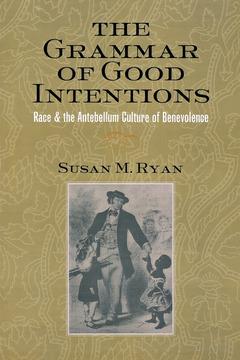
Susan M. Ryan explores antebellum Americans' preoccupation with the language and practice of benevolence. Drawing on a variety of cultural and literary texts, she traces how people working and writing within social reform movements—and their outspoken opponents—helped solidify racial and class ideologies that ultimately marginalized even the most "deserving" poor. "The links between race and the relations of benevolence occasioned much soul-searching among antebellum Americans," Ryan explains. "In a period of heated public debate over issues such as slavery, Indian removal, and non-Protestant immigration, the categories of blackness, Indianness, and a generic 'foreignness' came to signify, for many whites, need itself."
Ryan puts familiar literary works such as Herman Melville's The Confidence-Man, Frederick Douglass's My Bondage and My Freedom, and Harriet Beecher Stowe's Uncle Tom's Cabin back into dialogue with a broad range of print materials: the reports of charity societies, African American and Native American newspapers, juvenile fiction, travel writing, cartoons, sermons, and tract literature. In the process, she dispels the myth that authors usually classified as literary were responding to a simple and unquestioned cult of benevolence. Rather, she contends, they were participating in the complex and often rancorous debates occurring within the broader culture over how good intentions should be expressed and enacted.
Ryan's inquiry into the antebellum culture of benevolence has implications for contemporary U.S. society, resonating especially with recent debates over welfare reform, the politics of compassionate conservatism, and representations of "welfare queens" and violent urban youth. As Ryan writes, "The conversations that this book reconstructs remind us of our ongoing participation in the national ritual of laying claim to good intentions."
Before Memmo my notes were scattered across PDFs. Now a workspace pulls everything into one place — I see exactly what's still left to study.
Memmo's summaries are gold before exams. I don't have to re-read 800 pages two weeks before — just the important parts.
The AI chat has saved me the night before an exam more than once. I just keep asking until I get it — no waiting on a study group to reply.
The quizzes hit exactly what I need to know. Memmo tracks what I get stuck on — so I only practice what's worth it.
Flashcards with spaced repetition are magic. Memmo knows when I'm about to forget something and brings it back.
The AI podcasts are my favorite. I listen on my way to school and get a recap without sitting at a computer.

Handbok i kvalitativa metoder
281 kr

Hållbar utveckling: en introduktion för ingenjörer och andra problemlösare
334 kr

Brymans Samhällsvetenskapliga metoder
390 kr

Projektledning
491 kr

Den orättvisa hälsan: om socioekonomiska skillnader i hälsa och livslängd
326 kr

Organizational Leadership
429 kr

Vetenskapsteori för nybörjare
196 kr

På väg mot läraryrket
172 kr

Det sociala livet i skolan: Socialpsykologiska perspektiv
253 kr

Betygsättningens didaktik
151 kr

Personality
402 kr

Studying Leadership
404 kr

Managing Innovation
477 kr

Introduktion till samhällsvetenskaplig metod
347 kr

The Psychology of Sex and Gender
698 kr

Evidens och kunskap för socialt arbete
207 kr

Introduction to Leadership
605 kr