
Before Memmo my notes were scattered across PDFs. Now a workspace pulls everything into one place — I see exactly what's still left to study.
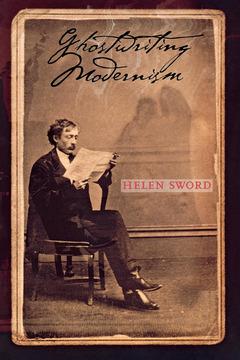
Spiritualism is often dismissed by literary critics and historians as merely a Victorian fad. Helen Sword demonstrates that it continued to flourish well into the twentieth century and seeks to explain why. Literary modernism, she maintains, is replete with ghosts and spirits. In Ghostwriting Modernism she explores spiritualism's striking persistence and what she calls "the vexed relationship between mediumistic discourse and modernist literary aesthetics."
Sword begins with a brief historical review of popular spiritualism's roots in nineteenth-century literary culture. In subsequent chapters, she discusses the forms of mediumship most closely allied with writing, the forms of writing most closely allied with mediumship, and the thematic and aesthetic alliances between popular spiritualism and modernist literature. Finally, she accounts for the recent proliferation of a spiritualist-influenced vocabulary (ghostliness, hauntings, the uncanny) in the works of historians, sociologists, philosophers, and especially literary critics and theorists.
Documenting the hitherto unexplored relationship between spiritualism and modern authors (some credulous, some skeptical), Sword offers compelling readings of works by James Joyce, T. S. Eliot, W. B. Yeats, H.D., James Merrill, Sylvia Plath, and Ted Hughes. Even as modernists mock spiritualism's ludicrous lingo and deride its metaphysical excesses, she finds, they are intrigued and attracted by its ontological shiftiness, its blurring of the traditional divide between high culture and low culture, and its self-serving tendency to favor form over content (medium, so to speak, over message). Like modernism itself, Sword asserts, spiritualism embraces rather than eschews paradox, providing an ideological space where conservative beliefs can coexist with radical, even iconoclastic, thought and action.
Before Memmo my notes were scattered across PDFs. Now a workspace pulls everything into one place — I see exactly what's still left to study.
Memmo's summaries are gold before exams. I don't have to re-read 800 pages two weeks before — just the important parts.
The AI chat has saved me the night before an exam more than once. I just keep asking until I get it — no waiting on a study group to reply.
The quizzes hit exactly what I need to know. Memmo tracks what I get stuck on — so I only practice what's worth it.
Flashcards with spaced repetition are magic. Memmo knows when I'm about to forget something and brings it back.
The AI podcasts are my favorite. I listen on my way to school and get a recap without sitting at a computer.

Handbok i kvalitativa metoder
281 kr

Hållbar utveckling: en introduktion för ingenjörer och andra problemlösare
334 kr

Brymans Samhällsvetenskapliga metoder
390 kr

Projektledning
491 kr

Den orättvisa hälsan: om socioekonomiska skillnader i hälsa och livslängd
326 kr

Organizational Leadership
429 kr

Vetenskapsteori för nybörjare
196 kr

På väg mot läraryrket
172 kr

Det sociala livet i skolan: Socialpsykologiska perspektiv
253 kr

Betygsättningens didaktik
151 kr

Personality
402 kr

Studying Leadership
404 kr

Managing Innovation
477 kr

Introduktion till samhällsvetenskaplig metod
347 kr

The Psychology of Sex and Gender
698 kr

Evidens och kunskap för socialt arbete
207 kr

Introduction to Leadership
605 kr