
Before Memmo my notes were scattered across PDFs. Now a workspace pulls everything into one place — I see exactly what's still left to study.
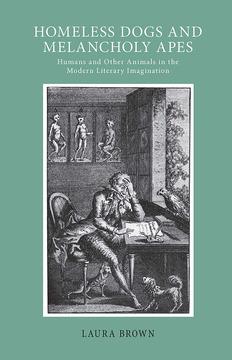
In eighteenth-century England, the encounter between humans and other animals took a singular turn with the discovery of the great apes and the rise of bourgeois pet keeping. These historical changes created a new cultural and intellectual context for the understanding and representation of animal-kind, and the nonhuman animal has thus played a significant role in imaginative literature from that period to the present day. In Homeless Dogs and Melancholy Apes, Laura Brown shows how the literary works of the eighteenth century use animal-kind to bring abstract philosophical, ontological, and metaphysical questions into the realm of everyday experience, affording a uniquely flexible perspective on difference, hierarchy, intimacy, diversity, and transcendence.
Writers of this first age of the rise of the animal in the modern literary imagination used their nonhuman characters—from the lapdogs of Alexander Pope and his contemporaries to the ill-mannered monkey of Frances Burney's Evelina or the ape-like Yahoos of Jonathan Swift—to explore questions of human identity and self-definition, human love and the experience of intimacy, and human diversity and the boundaries of convention. Later literary works continued to use imaginary animals to question human conventions of form and thought. Brown pursues this engagement with animal-kind into the nineteenth century—through works by Mary Shelley, Charles Dickens, and Elizabeth Barrett Browning—and into the twentieth, with a concluding account of Paul Auster's dog-novel, Timbuktu. Auster's work suggests that—today as in the eighteenth century—imagining other animals opens up a potential for dissonance that creates distinctive opportunities for human creativity.
Before Memmo my notes were scattered across PDFs. Now a workspace pulls everything into one place — I see exactly what's still left to study.
Memmo's summaries are gold before exams. I don't have to re-read 800 pages two weeks before — just the important parts.
The AI chat has saved me the night before an exam more than once. I just keep asking until I get it — no waiting on a study group to reply.
The quizzes hit exactly what I need to know. Memmo tracks what I get stuck on — so I only practice what's worth it.
Flashcards with spaced repetition are magic. Memmo knows when I'm about to forget something and brings it back.
The AI podcasts are my favorite. I listen on my way to school and get a recap without sitting at a computer.

Handbok i kvalitativa metoder
281 kr

Hållbar utveckling: en introduktion för ingenjörer och andra problemlösare
334 kr

Brymans Samhällsvetenskapliga metoder
390 kr

Projektledning
491 kr

Den orättvisa hälsan: om socioekonomiska skillnader i hälsa och livslängd
326 kr

Organizational Leadership
429 kr

Vetenskapsteori för nybörjare
196 kr

På väg mot läraryrket
172 kr

Det sociala livet i skolan: Socialpsykologiska perspektiv
253 kr

Betygsättningens didaktik
151 kr

Personality
402 kr

Studying Leadership
404 kr

Managing Innovation
477 kr

Introduktion till samhällsvetenskaplig metod
347 kr

The Psychology of Sex and Gender
698 kr

Evidens och kunskap för socialt arbete
207 kr

Introduction to Leadership
605 kr