
Before Memmo my notes were scattered across PDFs. Now a workspace pulls everything into one place — I see exactly what's still left to study.
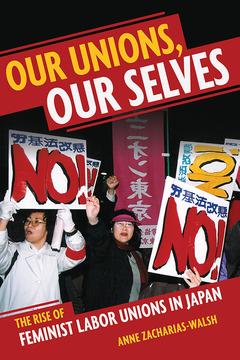
In Our Unions, Our Selves, Anne Zacharias-Walsh provides an in-depth look at the rise of women-only unions in Japan, an organizational analysis of the challenges these new unions face in practice, and a firsthand account of the ambitious, occasionally contentious, and ultimately successful international solidarity project that helped to spark a new feminist labor movement.
In the early 1990s, as part of a larger wave of union reform efforts in Japan, women began creating their own women-only labor unions to confront long-standing gender inequality in the workplace and in traditional enterprise unions. These new unions soon discovered that the demand for individual assistance and help at the bargaining table dramatically exceeded the rate at which the unions could recruit and train members to meet that demand. Within just a few years, women-only unions were proving to be both the most effective option women had for addressing problems on the job and in serious danger of dying out because of their inability to grow their organizational capacity.
Zacharias-Walsh met up with Japanese women's unions at a critical moment in their struggle to survive. Recognizing the benefits of a cross-national dialogue, they teamed up to host a multiyear international exchange project that brought together U.S. and Japanese activists and scholars to investigate the links between organizational structure and the day-to-day problems nontraditional unions face, and to develop Japan-specific participatory labor education as a way to organize and empower new generations of members. They also gained valuable insights into the fine art of building and maintaining the kinds of collaborative, cross border relationships that are essential to today's social justice movements, from global efforts to save the environment to the Fight for $15 and Black Lives Matter.
Before Memmo my notes were scattered across PDFs. Now a workspace pulls everything into one place — I see exactly what's still left to study.
Memmo's summaries are gold before exams. I don't have to re-read 800 pages two weeks before — just the important parts.
The AI chat has saved me the night before an exam more than once. I just keep asking until I get it — no waiting on a study group to reply.
The quizzes hit exactly what I need to know. Memmo tracks what I get stuck on — so I only practice what's worth it.
Flashcards with spaced repetition are magic. Memmo knows when I'm about to forget something and brings it back.
The AI podcasts are my favorite. I listen on my way to school and get a recap without sitting at a computer.

Handbok i kvalitativa metoder
281 kr

Hållbar utveckling: en introduktion för ingenjörer och andra problemlösare
334 kr

Brymans Samhällsvetenskapliga metoder
390 kr

Projektledning
491 kr

Den orättvisa hälsan: om socioekonomiska skillnader i hälsa och livslängd
326 kr

Organizational Leadership
429 kr

Vetenskapsteori för nybörjare
196 kr

På väg mot läraryrket
172 kr

Det sociala livet i skolan: Socialpsykologiska perspektiv
253 kr

Betygsättningens didaktik
151 kr

Personality
402 kr

Studying Leadership
404 kr

Managing Innovation
477 kr

Introduktion till samhällsvetenskaplig metod
347 kr

The Psychology of Sex and Gender
698 kr

Evidens och kunskap för socialt arbete
207 kr

Introduction to Leadership
605 kr