
Before Memmo my notes were scattered across PDFs. Now a workspace pulls everything into one place — I see exactly what's still left to study.
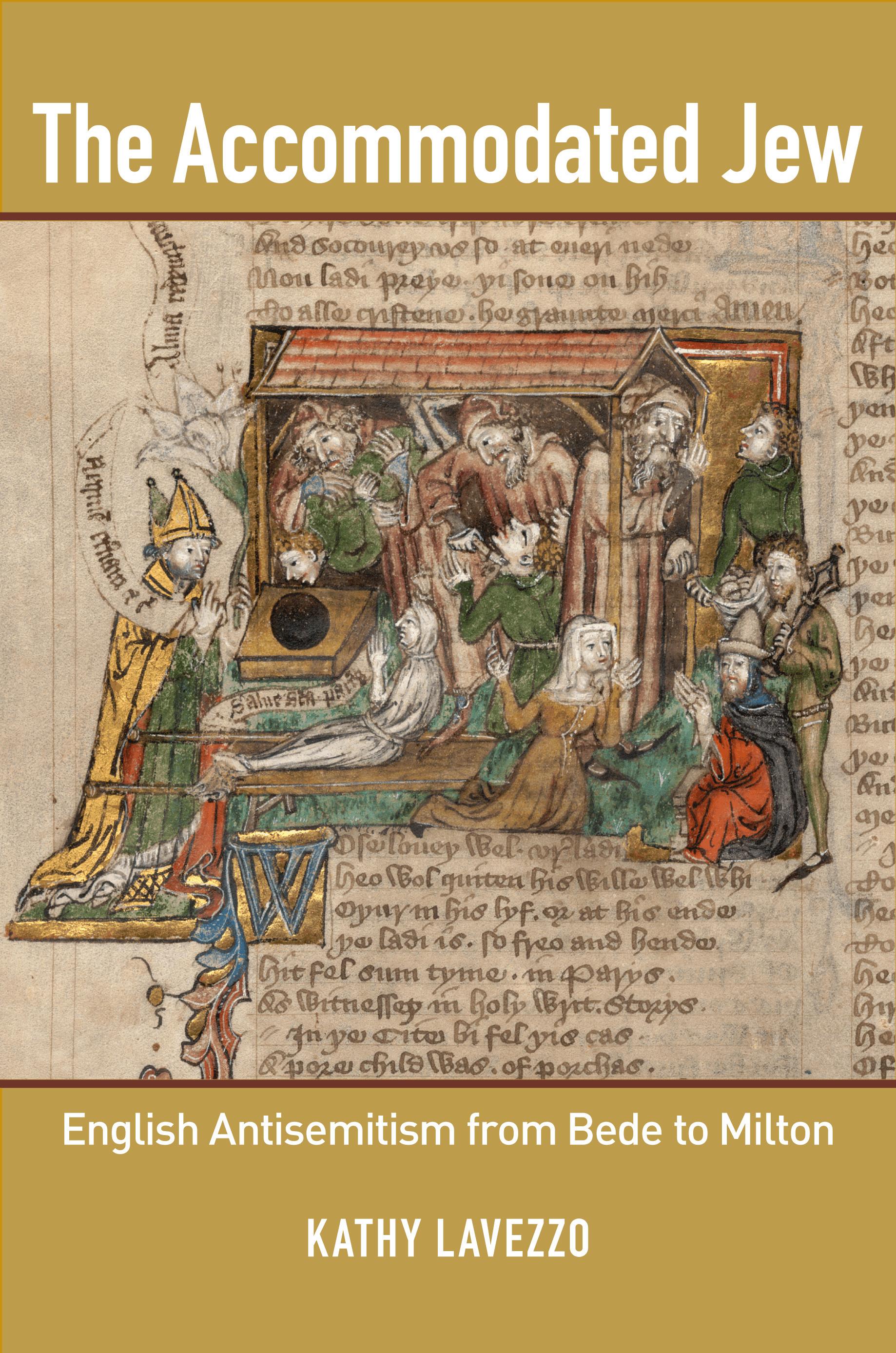
England during the Middle Ages was at the forefront of European antisemitism. It was in medieval Norwich that the notorious "blood libel" was first introduced when a resident accused the city's Jewish leaders of abducting and ritually murdering a local boy. England also enforced legislation demanding that Jews wear a badge of infamy, and in 1290, it became the first European nation to expel forcibly all of its Jewish residents. In The Accommodated Jew, Kathy Lavezzo rethinks the complex and contradictory relation between England's rejection of "the Jew" and the centrality of Jews to classic English literature. Drawing on literary, historical, and cartographic texts, she charts an entangled Jewish imaginative presence in English culture.
In a sweeping view that extends from the Anglo-Saxon period to the late seventeenth century, Lavezzo tracks how English writers from Bede to Milton imagine Jews via buildings—tombs, latrines and especially houses—that support fantasies of exile. Epitomizing this trope is the blood libel and its implication that Jews cannot be accommodated in England because of the anti-Christian violence they allegedly perform in their homes. In the Croxton Play of the Sacrament, Marlowe's The Jew of Malta and Shakespeare's The Merchant of Venice, the Jewish house not only serves as a lethal trap but also as the site of an emerging bourgeoisie incompatible with Christian pieties. Lavezzo reveals the central place of "the Jew" in the slow process by which a Christian "nation of shopkeepers" negotiated their relationship to the urban capitalist sensibility they came to embrace and embody. In the book's epilogue, she advances her inquiry into Victorian England and the relationship between Charles Dickens (whose Fagin is the second most infamous Jew in English literature after Shylock) and the Jewish couple that purchased his London home, Tavistock House, showing how far relations between gentiles and Jews in England had (and had not) evolved.
Before Memmo my notes were scattered across PDFs. Now a workspace pulls everything into one place — I see exactly what's still left to study.
Memmo's summaries are gold before exams. I don't have to re-read 800 pages two weeks before — just the important parts.
The AI chat has saved me the night before an exam more than once. I just keep asking until I get it — no waiting on a study group to reply.
The quizzes hit exactly what I need to know. Memmo tracks what I get stuck on — so I only practice what's worth it.
Flashcards with spaced repetition are magic. Memmo knows when I'm about to forget something and brings it back.
The AI podcasts are my favorite. I listen on my way to school and get a recap without sitting at a computer.

Handbok i kvalitativa metoder
281 kr

Hållbar utveckling: en introduktion för ingenjörer och andra problemlösare
334 kr

Brymans Samhällsvetenskapliga metoder
390 kr

Projektledning
491 kr

Den orättvisa hälsan: om socioekonomiska skillnader i hälsa och livslängd
326 kr

Vetenskapsteori för nybörjare
196 kr

Organizational Leadership
429 kr

På väg mot läraryrket
172 kr

Det sociala livet i skolan: Socialpsykologiska perspektiv
253 kr

Betygsättningens didaktik
151 kr

Personality
402 kr

Studying Leadership
404 kr

Managing Innovation
477 kr

Introduktion till samhällsvetenskaplig metod
347 kr

The Psychology of Sex and Gender
698 kr

Evidens och kunskap för socialt arbete
207 kr

Introduction to Leadership
605 kr