
Before Memmo my notes were scattered across PDFs. Now a workspace pulls everything into one place — I see exactly what's still left to study.
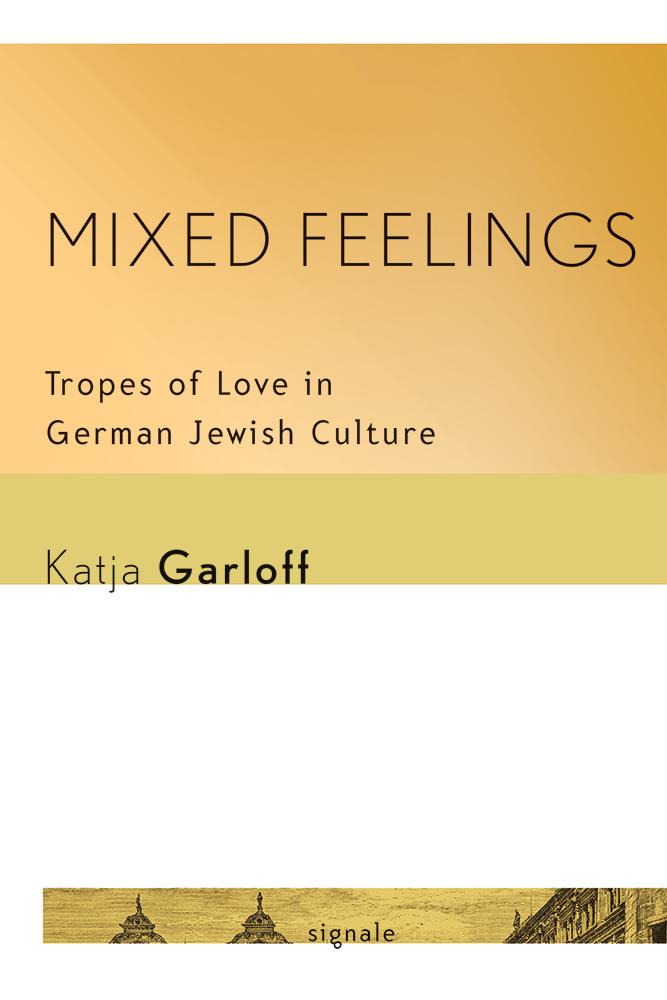
Since the late eighteenth century, writers and thinkers have used the idea of love—often unrequited or impossible love—to comment on the changing cultural, social, and political position of Jews in the German-speaking countries. In Mixed Feelings, Katja Garloff asks what it means for literature (and philosophy) to use love between individuals as a metaphor for group relations. This question is of renewed interest today, when theorists of multiculturalism turn toward love in their search for new models of particularity and universality.
Mixed Feelings is structured around two transformative moments in German Jewish culture and history that produced particularly rich clusters of interfaith love stories. Around 1800, literature promoted the rise of the Romantic love ideal and the shift from prearranged to love-based marriages. In the German-speaking countries, this change in the theory and practice of love coincided with the beginnings of Jewish emancipation, and both its supporters and opponents linked their arguments to tropes of love. Garloff explores the generative powers of such tropes in Moses Mendelssohn, G. E. Lessing, Friedrich Schlegel, Dorothea Veit, and Achim von Arnim.
Around 1900, the rise of racial antisemitism had called into question the promises of emancipation and led to a crisis of German Jewish identity. At the same time, Jewish- Christian intermarriage prompted public debates that were tied up with racial discourses and concerns about procreation, heredity, and the mutability and immutability of the Jewish body. Garloff shows how modern German Jewish writers such as Arthur Schnitzler, Else Lasker-Schüler, and Franz Rosenzweig wrest the idea of love away from biologist thought and reinstate it as a model of sociopolitical relations. She concludes by tracing the relevance of this model in post-Holocaust works by Gershom Scholem, Hannah Arendt, and Barbara Honigmann.
Before Memmo my notes were scattered across PDFs. Now a workspace pulls everything into one place — I see exactly what's still left to study.
Memmo's summaries are gold before exams. I don't have to re-read 800 pages two weeks before — just the important parts.
The AI chat has saved me the night before an exam more than once. I just keep asking until I get it — no waiting on a study group to reply.
The quizzes hit exactly what I need to know. Memmo tracks what I get stuck on — so I only practice what's worth it.
Flashcards with spaced repetition are magic. Memmo knows when I'm about to forget something and brings it back.
The AI podcasts are my favorite. I listen on my way to school and get a recap without sitting at a computer.

Handbok i kvalitativa metoder
281 kr

Hållbar utveckling: en introduktion för ingenjörer och andra problemlösare
334 kr

Brymans Samhällsvetenskapliga metoder
390 kr

Projektledning
491 kr

Den orättvisa hälsan: om socioekonomiska skillnader i hälsa och livslängd
326 kr

Vetenskapsteori för nybörjare
196 kr

Organizational Leadership
429 kr

På väg mot läraryrket
172 kr

Det sociala livet i skolan: Socialpsykologiska perspektiv
253 kr

Betygsättningens didaktik
151 kr

Personality
402 kr

Studying Leadership
404 kr

Managing Innovation
477 kr

Introduktion till samhällsvetenskaplig metod
347 kr

The Psychology of Sex and Gender
698 kr

Evidens och kunskap för socialt arbete
207 kr

Introduction to Leadership
605 kr