
Before Memmo my notes were scattered across PDFs. Now a workspace pulls everything into one place — I see exactly what's still left to study.
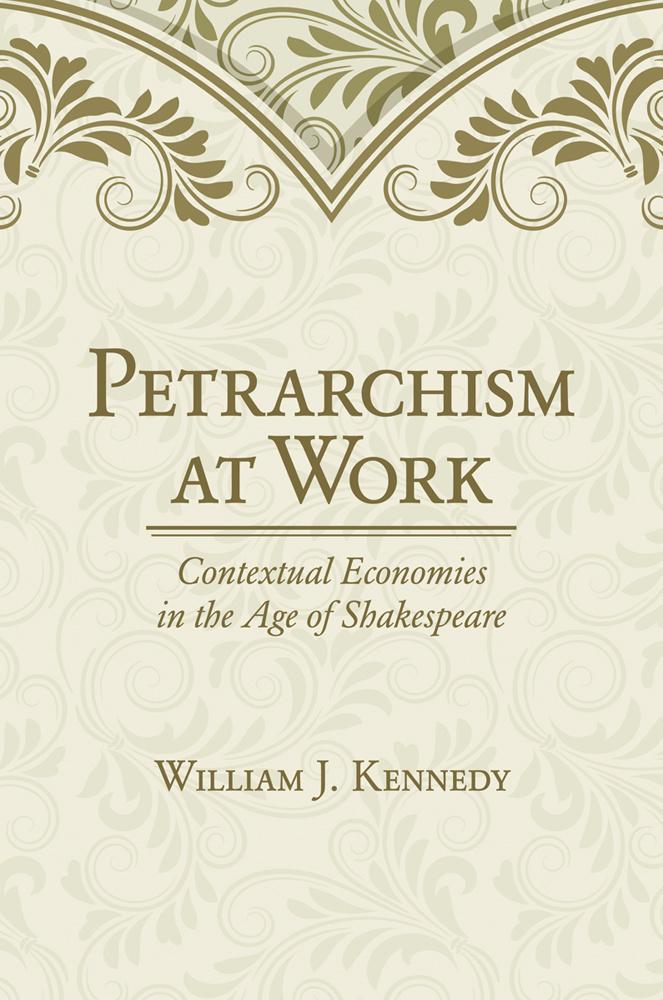
The Italian scholar and poet Francesco Petrarch (1304–1374) is best remembered today for vibrant and impassioned love poetry that helped to establish Italian as a literary language. Petrarch inspired later Renaissance writers, who produced an extraordinary body of work regarded today as perhaps the high-water mark of poetic productivity in the European West. These "Petrarchan" poets were self-consciously aware of themselves as poets—as craftsmen, revisers, and professionals. As William J. Kennedy shows in Petrarchism at Work, this commitment to professionalism and the mastery of poetic craft is essential to understanding Petrarch's legacy.
Petrarchism at Work contributes to recent scholarship that explores relationships between poetics and economic history in early-modern European literature. Kennedy traces the development of a Renaissance aesthetics from one based upon Platonic intuition and visionary furor to one grounded in Aristotelian craftsmanship and technique. Their polarities harbor economic consequences, the first privileging the poet's divinely endowed talent, rewarded by the autocratic largess of patrons, the other emphasizing the poet's acquired skill and hard work. Petrarch was the first to exploit the tensions between these polarities, followed by his poetic successors. These include Gaspara Stampa in the emergent salon society of Venice, Michelangelo Buonarroti in the "gift" economy of Medici Florence and papal Rome, Pierre de Ronsard and the poets of his Pléiade brigade in the fluctuant Valois court, and William Shakespeare and his contemporaries in the commercial world of Elizabethan and early Stuart London. As Kennedy shows, the poetic practices of revision and redaction by Petrarch and his successors exemplify the transition from a premodern economy of patronage to an early modern economy dominated by unstable market forces.
Before Memmo my notes were scattered across PDFs. Now a workspace pulls everything into one place — I see exactly what's still left to study.
Memmo's summaries are gold before exams. I don't have to re-read 800 pages two weeks before — just the important parts.
The AI chat has saved me the night before an exam more than once. I just keep asking until I get it — no waiting on a study group to reply.
The quizzes hit exactly what I need to know. Memmo tracks what I get stuck on — so I only practice what's worth it.
Flashcards with spaced repetition are magic. Memmo knows when I'm about to forget something and brings it back.
The AI podcasts are my favorite. I listen on my way to school and get a recap without sitting at a computer.

Handbok i kvalitativa metoder
281 kr

Hållbar utveckling: en introduktion för ingenjörer och andra problemlösare
334 kr

Brymans Samhällsvetenskapliga metoder
390 kr

Projektledning
491 kr

Den orättvisa hälsan: om socioekonomiska skillnader i hälsa och livslängd
326 kr

Organizational Leadership
429 kr

Vetenskapsteori för nybörjare
196 kr

På väg mot läraryrket
172 kr

Det sociala livet i skolan: Socialpsykologiska perspektiv
253 kr

Betygsättningens didaktik
151 kr

Personality
402 kr

Studying Leadership
404 kr

Managing Innovation
477 kr

Introduktion till samhällsvetenskaplig metod
347 kr

The Psychology of Sex and Gender
698 kr

Evidens och kunskap för socialt arbete
207 kr

Introduction to Leadership
605 kr