
Before Memmo my notes were scattered across PDFs. Now a workspace pulls everything into one place — I see exactly what's still left to study.
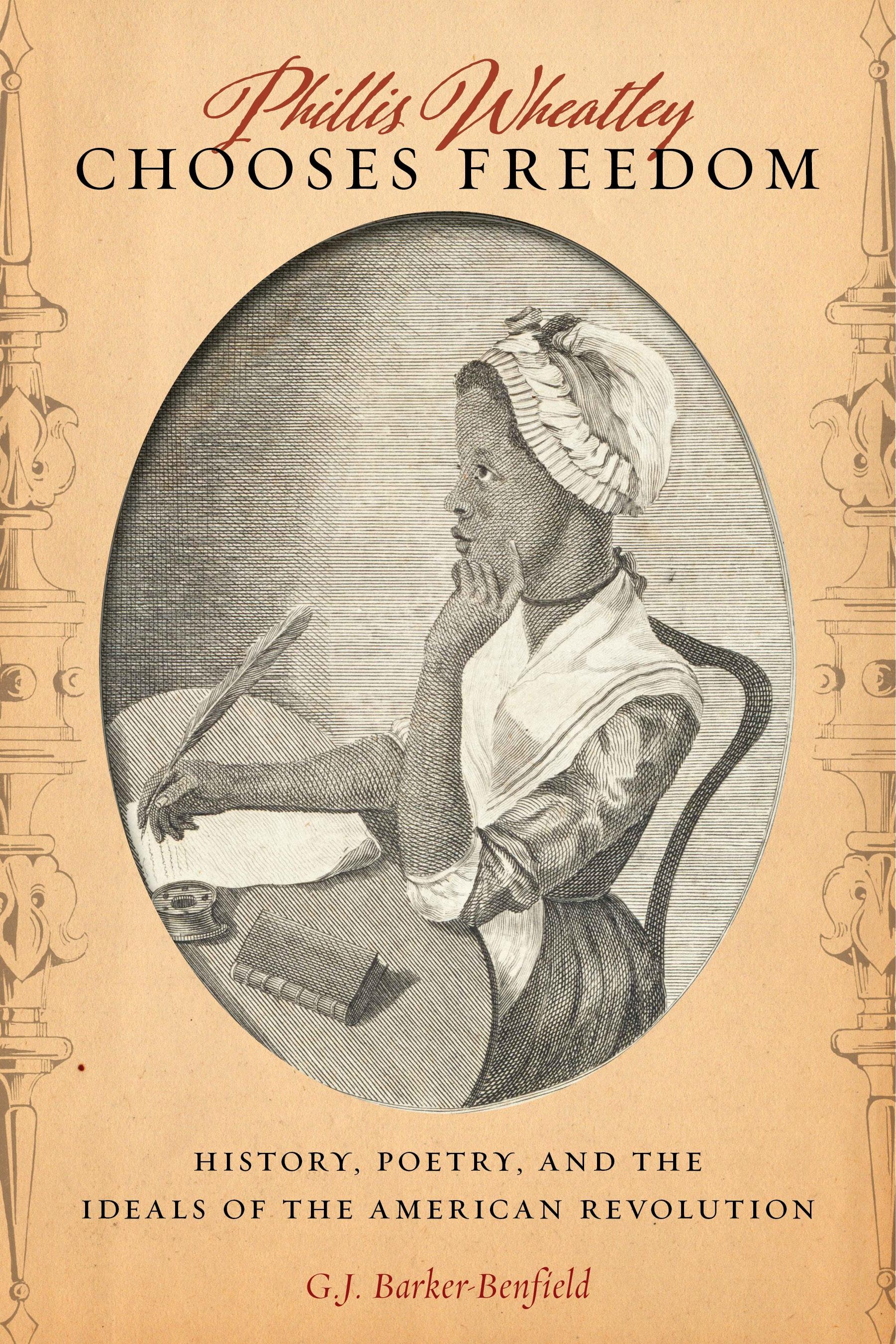
The dramatic story of Phillis Wheatley, a free, black poet who resisted the pressures of arranged marriage, truly embodying the ideals of the American Revolution
There is an uncomfortable paradox at the heart of the American Revolution: many of the men leading the war for independence were slave owners, contradicting the ideal of freedom that they claimed to represent. Meanwhile, abolitionist sentiments of the time contained contradictions as well. Abolitionists encouraged freed Christianized slaves to return to Africa. In this way, they hoped to send more missionaries to Africa in order to Christianize the continent and, at the same time, to send free blacks away from America.
This tension is revealed through the dramatic story of Phillis Wheatley, an African-American poet who refused to marry a man she had never met and return with him to Africa as a missionary. She was enslaved in Africa as a child and transported to Boston, where she was sold to an evangelical family. Agreeing to the proposed marriage – arranged by Congregationalist minister Samuel Hopkins – would have echoed the social mores of the time, particularly those for enslaved black women. However, due to her prodigious talents as a poet, Wheatley won her freedom a year prior to Hopkins’ arrangement, allowing her to take her future into her own hands.
G.J. Barker-Benfield considers Wheatley’s story and Hopkins’s plan in the broader context of the American Revolution. The ideals of the revolution motivated Hopkins and some of his contemporaries to propose freeing African slaves and thus address the “monstrous inconsistency” fundamental to the white slave owners leading the revolution. In so doing, they presented themselves as freedom fighters who resisted the threat of slavery at the hands of British tyranny. Wheatley challenged this inconsistency and, taking the revolutionaries’ rhetoric seriously, called for liberty for all human hearts: women’s and men’s, blacks’ and whites’.
Before Memmo my notes were scattered across PDFs. Now a workspace pulls everything into one place — I see exactly what's still left to study.
Memmo's summaries are gold before exams. I don't have to re-read 800 pages two weeks before — just the important parts.
The AI chat has saved me the night before an exam more than once. I just keep asking until I get it — no waiting on a study group to reply.
The quizzes hit exactly what I need to know. Memmo tracks what I get stuck on — so I only practice what's worth it.
Flashcards with spaced repetition are magic. Memmo knows when I'm about to forget something and brings it back.
The AI podcasts are my favorite. I listen on my way to school and get a recap without sitting at a computer.

Handbok i kvalitativa metoder
281 kr

Hållbar utveckling: en introduktion för ingenjörer och andra problemlösare
334 kr

Brymans Samhällsvetenskapliga metoder
390 kr

Projektledning
491 kr

Den orättvisa hälsan: om socioekonomiska skillnader i hälsa och livslängd
326 kr

Vetenskapsteori för nybörjare
196 kr

Organizational Leadership
429 kr

På väg mot läraryrket
172 kr

Det sociala livet i skolan: Socialpsykologiska perspektiv
253 kr

Betygsättningens didaktik
151 kr

Personality
402 kr

Studying Leadership
404 kr

Managing Innovation
477 kr

Introduktion till samhällsvetenskaplig metod
347 kr

The Psychology of Sex and Gender
698 kr

Evidens och kunskap för socialt arbete
207 kr

Introduction to Leadership
605 kr