
Before Memmo my notes were scattered across PDFs. Now a workspace pulls everything into one place — I see exactly what's still left to study.
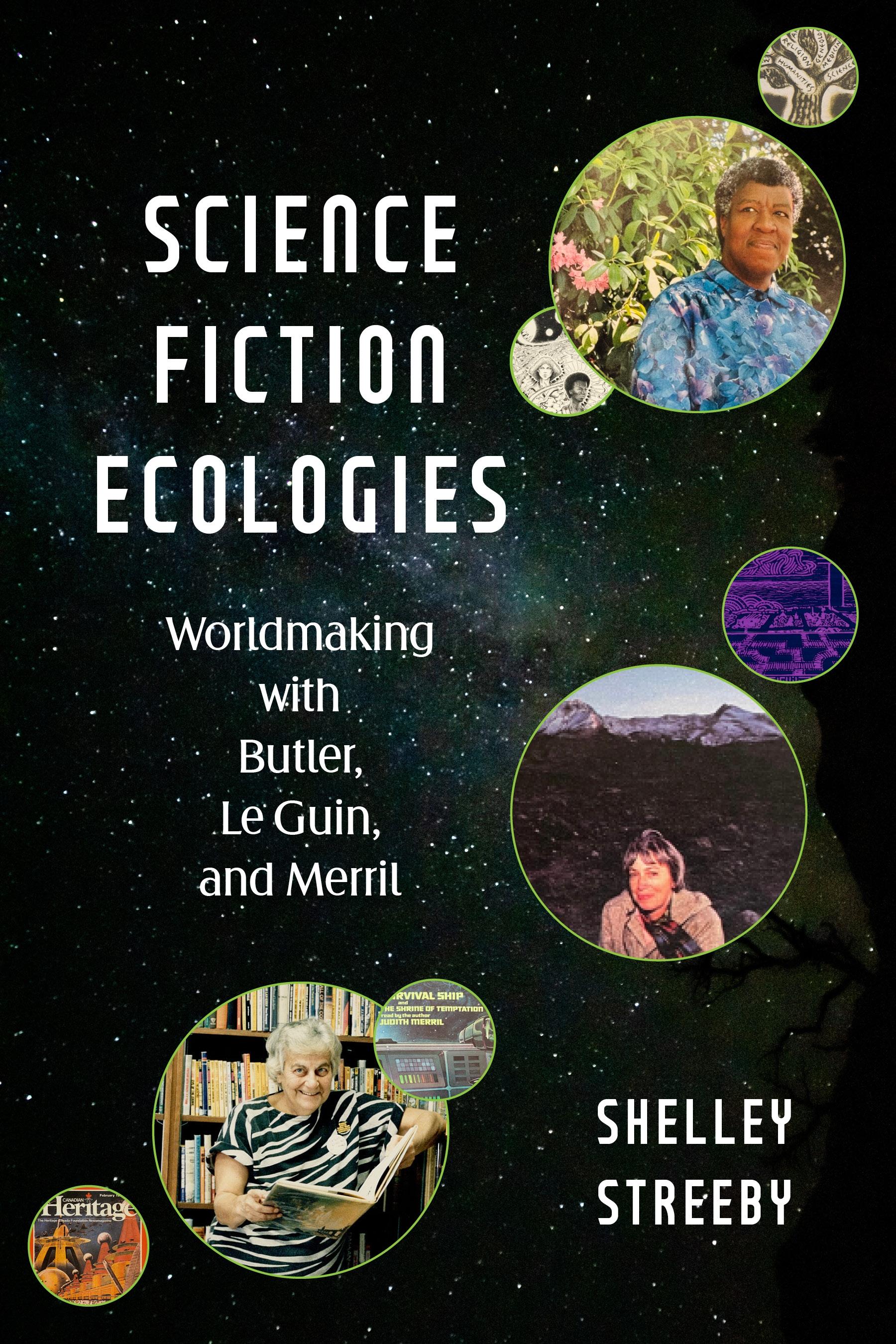
Explores how feminist science-fiction writers engage with ecological and environmental speculation and memory-work.
Science Fiction Ecologies traces how Octavia E. Butler, Ursula K. Le Guin, and Judith Merril—three generations of groundbreaking feminist science fiction writers—used ecological imagination and rigorous memory-work to rethink environments, histories, and possible futures. Shelley Streeby mines their expansive personal archives of letters, journals, notebooks, annotated clippings, and other everyday materials to show how each writer documented environmental news, social movements, colonial and imperial legacies, and the accelerating militarism of the late twentieth century. This archival labor, Streeby argues, was not ancillary but central to their worldmaking: a form of “histofuturist” practice that linked creative speculation to the preservation and reimagining of knowledge.
Against a backdrop of shrinking public library budgets, intensifying weapons development, and the rise of privatization politics, Butler, Le Guin, and Merril fought for the survival of libraries and the democratic circulation of ideas. Their activism, along with their contributions to popular science-fiction culture and their public interventions, reveals how they imagined libraries, archives, and other knowledge spaces as living ecologies shaped by power, identity, and access.
Through speculative documentary methods, Science Fiction Ecologies illuminates the counter-histories embedded in their papers, tracing how their visions challenged ecologies dominated by state power, white Christian nationalism, violent masculinities, and entrenched class and race inequalities. Streeby ultimately shows how these writers’ intertwined lives and works open new ways of thinking about environments, human survival, and the futures we might yet build.
Before Memmo my notes were scattered across PDFs. Now a workspace pulls everything into one place — I see exactly what's still left to study.
Memmo's summaries are gold before exams. I don't have to re-read 800 pages two weeks before — just the important parts.
The AI chat has saved me the night before an exam more than once. I just keep asking until I get it — no waiting on a study group to reply.
The quizzes hit exactly what I need to know. Memmo tracks what I get stuck on — so I only practice what's worth it.
Flashcards with spaced repetition are magic. Memmo knows when I'm about to forget something and brings it back.
The AI podcasts are my favorite. I listen on my way to school and get a recap without sitting at a computer.

Handbok i kvalitativa metoder
281 kr

Hållbar utveckling: en introduktion för ingenjörer och andra problemlösare
334 kr

Brymans Samhällsvetenskapliga metoder
390 kr

Projektledning
491 kr

Den orättvisa hälsan: om socioekonomiska skillnader i hälsa och livslängd
326 kr

Organizational Leadership
429 kr

Vetenskapsteori för nybörjare
196 kr

På väg mot läraryrket
172 kr

Det sociala livet i skolan: Socialpsykologiska perspektiv
253 kr

Betygsättningens didaktik
151 kr

Personality
402 kr

Studying Leadership
404 kr

Managing Innovation
477 kr

Introduktion till samhällsvetenskaplig metod
347 kr

The Psychology of Sex and Gender
698 kr

Evidens och kunskap för socialt arbete
207 kr

Introduction to Leadership
605 kr