
Before Memmo my notes were scattered across PDFs. Now a workspace pulls everything into one place — I see exactly what's still left to study.
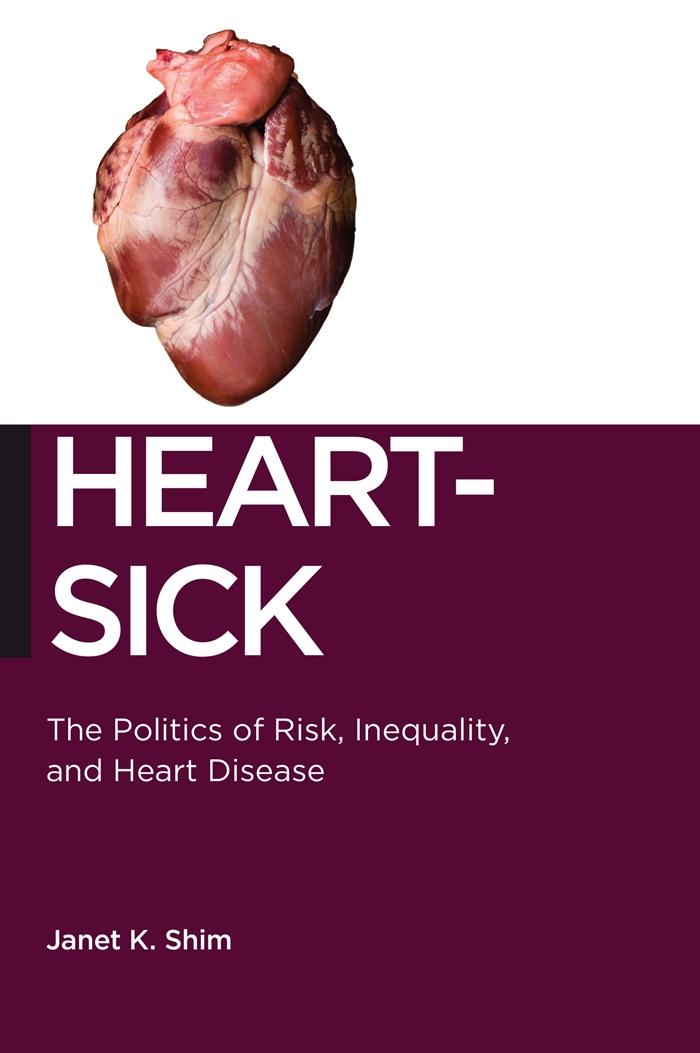
Heart disease, the leading cause of death in the United States, affects people from all walks of life, yet who lives and who dies from heart disease still depends on race, class, and gender. While scientists and clinicians understand and treat heart disease more effectively than ever before, and industrialized countries have made substantial investments in research and treatment over the past six decades, patterns of inequality persist. In Heart-Sick, Janet K. Shim argues that official accounts of cardiovascular health inequalities are unconvincing and inadequate, and that clinical and public health interventions grounded in these accounts ignore many critical causes of those inequalities.
Examining the routine activities of epidemiology—grant applications, data collection, representations of research findings, and post-publication discussions of the interpretations and implications of study results—Shim shows how social differences of race, social class, and gender are upheld by the scientific community. She argues that such sites of expert knowledge routinely, yet often invisibly, make claims about how biological and cultural differences matter—claims that differ substantially from the lived experiences of individuals who themselves suffer from health problems. Based on firsthand research at epidemiologic conferences, conversations with epidemiologists, and in-depth interviews with people of color who live with heart disease, Shim explores how both scientists and lay people define “difference” and its consequences for health. Ultimately, Heart-Sick explores the deep rifts regarding the meanings and consequences of social difference for heart disease, and the changes that would be required to generate more convincing accounts of the significance of inequality for health and well-being.
Before Memmo my notes were scattered across PDFs. Now a workspace pulls everything into one place — I see exactly what's still left to study.
Memmo's summaries are gold before exams. I don't have to re-read 800 pages two weeks before — just the important parts.
The AI chat has saved me the night before an exam more than once. I just keep asking until I get it — no waiting on a study group to reply.
The quizzes hit exactly what I need to know. Memmo tracks what I get stuck on — so I only practice what's worth it.
Flashcards with spaced repetition are magic. Memmo knows when I'm about to forget something and brings it back.
The AI podcasts are my favorite. I listen on my way to school and get a recap without sitting at a computer.

Handbok i kvalitativa metoder
281 kr

Hållbar utveckling: en introduktion för ingenjörer och andra problemlösare
334 kr

Brymans Samhällsvetenskapliga metoder
390 kr

Projektledning
491 kr

Den orättvisa hälsan: om socioekonomiska skillnader i hälsa och livslängd
326 kr

Organizational Leadership
429 kr

Vetenskapsteori för nybörjare
196 kr

På väg mot läraryrket
172 kr

Det sociala livet i skolan: Socialpsykologiska perspektiv
253 kr

Betygsättningens didaktik
151 kr

Personality
402 kr

Studying Leadership
404 kr

Managing Innovation
477 kr

Introduktion till samhällsvetenskaplig metod
347 kr

The Psychology of Sex and Gender
698 kr

Evidens och kunskap för socialt arbete
207 kr

Introduction to Leadership
605 kr