
Before Memmo my notes were scattered across PDFs. Now a workspace pulls everything into one place — I see exactly what's still left to study.
Honorable Mention, 2026 Harry Shaw and Katrina Hazzard-Donald Award for Outstanding Work in African-American Popular Culture Studies, given by the Popular Culture Association
Finalist, 2026 PROSE Award in Media and Cultural Studies, given by the Association of American Publishers
The convergence of the politics of representation and Black fan cultures
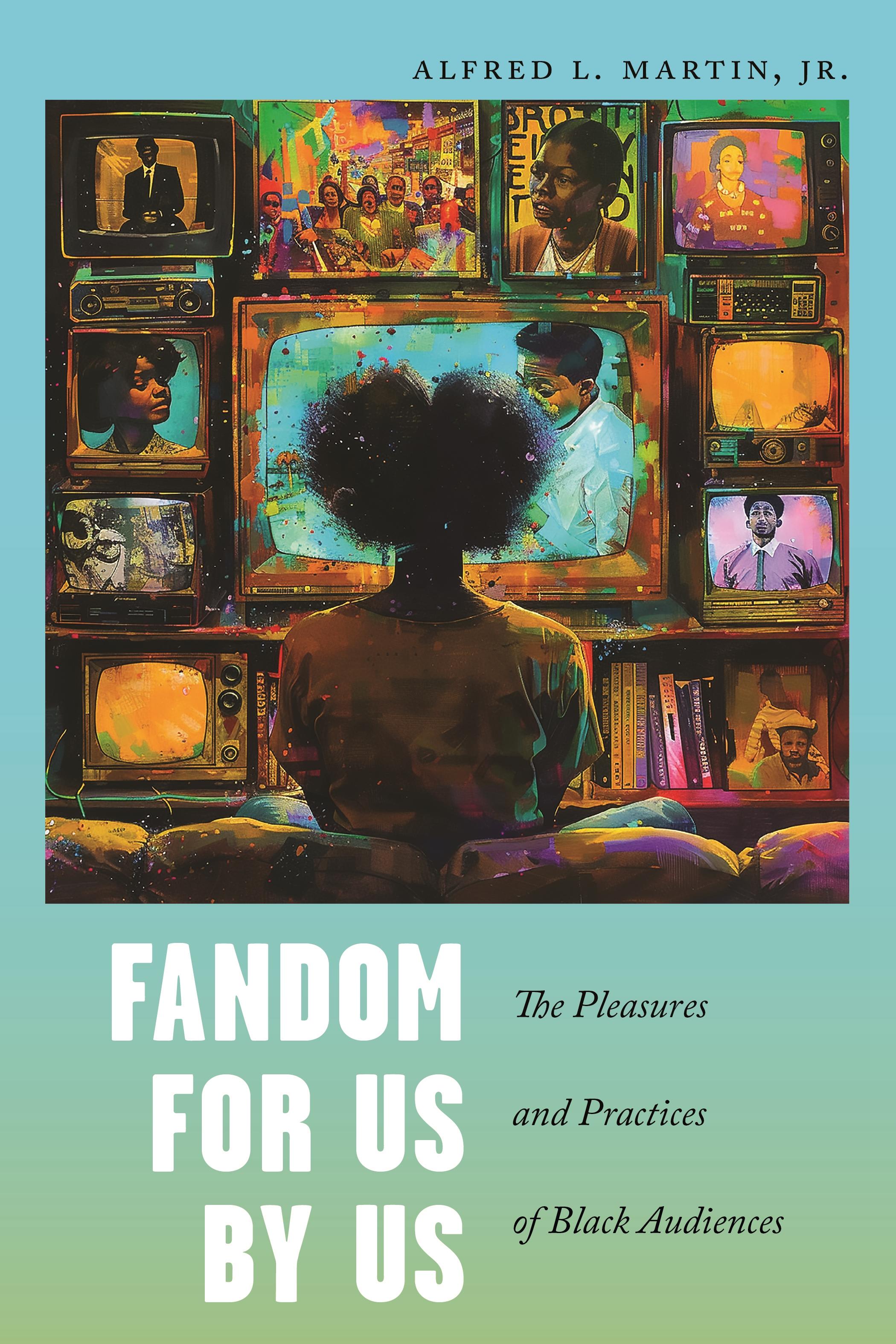
Boldly going where few fandom scholars have gone before, Fandom for Us, by Us breaks from our focus on white fandom to center Black fandoms. Alfred L. Martin, Jr., engages these fandoms through what he calls the “four C’s”: class, clout, canon, and comfort.
Class is a key component of how Black fandom is contingent on distinctions between white, nationally recognized cultural productions and multicultural and/or regional cultural productions, as demonstrated by Misty Copeland’s ascension in American Ballet Theatre. Clout refers to Black fans’ realization of their own consumer spending power as an agent for industrial change, reducing the precarity of Blackness within historically white cultural apparatuses and facilitating the production of Black blockbusters like 2018’s Black Panther. Canon entails a communal fannish practice of sharing media objects, like the 1978 film The Wiz, which lead them to take on meanings outside of their original context. Comfort describes the nostalgic and sentimental affects associated with beloved fan objects such as the television show, Golden Girls, connected to notions of Black joy and signaling moments wherein Black people can just be themselves.
Through 75 in-depth interviews with Black fans, Fandom for Us, by Us argues not only for the importance of studying Black fandoms, but also demonstrates their complexities by both coupling and decoupling Black reception practices from the politics of representation. Martin highlights the nuanced ways Black fans interact with media representations, suggesting class, clout, canon, and comfort are universal to the study of all fandoms. Yet, for all the ways these fandoms are similar and reciprocal, Black fandoms are also their own set of practices, demanding their own study.
Before Memmo my notes were scattered across PDFs. Now a workspace pulls everything into one place — I see exactly what's still left to study.
Memmo's summaries are gold before exams. I don't have to re-read 800 pages two weeks before — just the important parts.
The AI chat has saved me the night before an exam more than once. I just keep asking until I get it — no waiting on a study group to reply.
The quizzes hit exactly what I need to know. Memmo tracks what I get stuck on — so I only practice what's worth it.
Flashcards with spaced repetition are magic. Memmo knows when I'm about to forget something and brings it back.
The AI podcasts are my favorite. I listen on my way to school and get a recap without sitting at a computer.

Handbok i kvalitativa metoder
281 kr

Hållbar utveckling: en introduktion för ingenjörer och andra problemlösare
334 kr

Brymans Samhällsvetenskapliga metoder
390 kr

Projektledning
491 kr

Den orättvisa hälsan: om socioekonomiska skillnader i hälsa och livslängd
326 kr

Vetenskapsteori för nybörjare
196 kr

Organizational Leadership
429 kr

På väg mot läraryrket
172 kr

Det sociala livet i skolan: Socialpsykologiska perspektiv
253 kr

Betygsättningens didaktik
151 kr

Personality
402 kr

Studying Leadership
404 kr

Managing Innovation
477 kr

Introduktion till samhällsvetenskaplig metod
347 kr

The Psychology of Sex and Gender
698 kr

Evidens och kunskap för socialt arbete
207 kr

Introduction to Leadership
605 kr