
Before Memmo my notes were scattered across PDFs. Now a workspace pulls everything into one place — I see exactly what's still left to study.
Winner, 2021 Katherine Singer Kovács Book Award, given by the Society for Cinema and Media Studies
Winner, 2021 Will Eisner Comic Industry Awards for Best Academic/Scholarly Work
Honorable Mention, 2021 Harry Shaw and Katrina Hazzard-Donald Award for Outstanding Work in African-American Popular Culture Studies, given by the Popular Culture Association
Winner, 2020 Charles Hatfield Book Prize, given by the Comic Studies Society
Traces the history of racial caricature and the ways that Black cartoonists have turned this visual grammar on its head
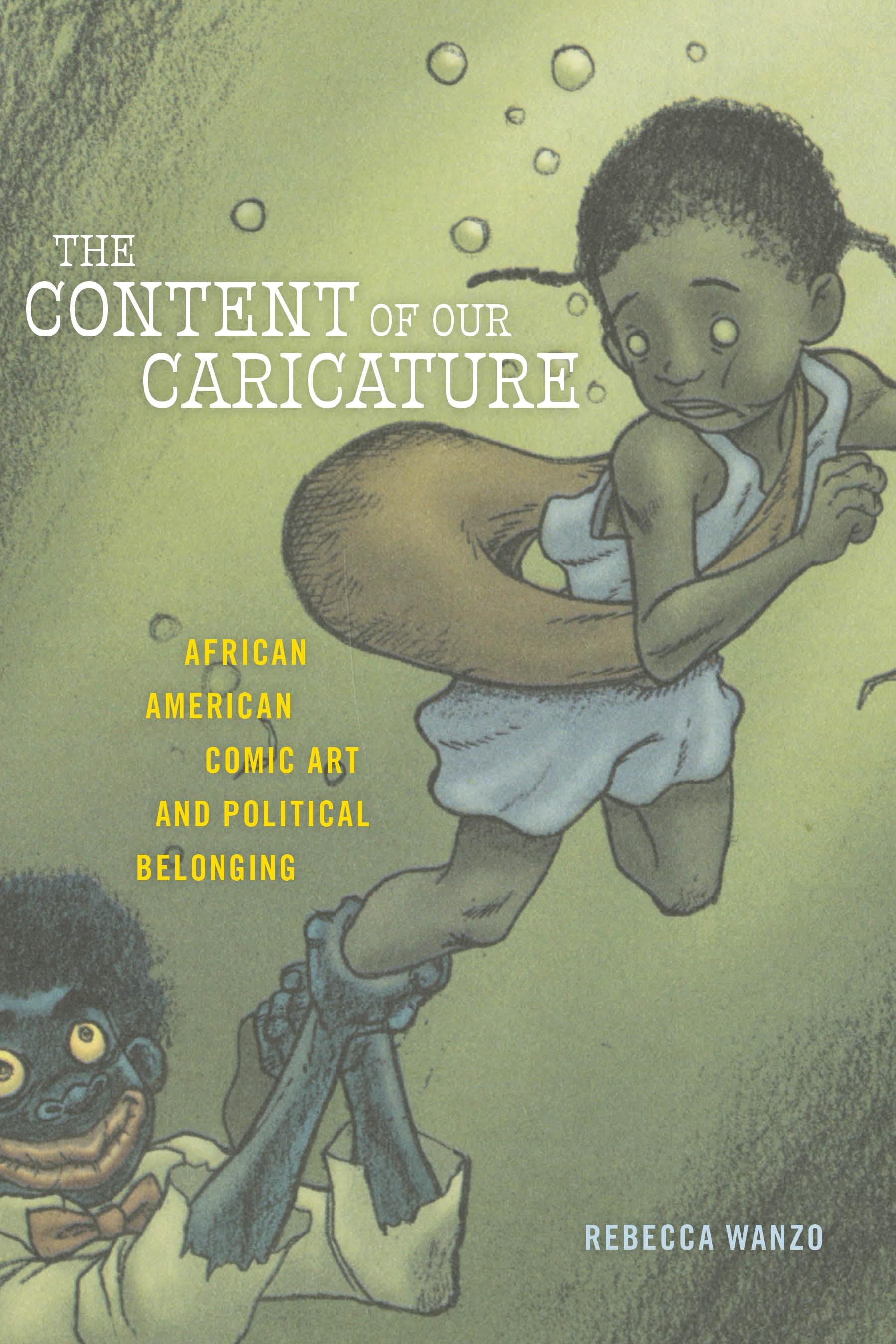
Revealing the long aesthetic tradition of African American cartoonists who have made use of racist caricature as a black diasporic art practice, Rebecca Wanzo demonstrates how these artists have resisted histories of visual imperialism and their legacies. Moving beyond binaries of positive and negative representation, many black cartoonists have used caricatures to criticize constructions of ideal citizenship in the United States, as well as the alienation of African Americans from such imaginaries. The Content of Our Caricature urges readers to recognize how the wide circulation of comic and cartoon art contributes to a common language of both national belonging and exclusion in the United States.
Historically, white artists have rendered white caricatures as virtuous representations of American identity, while their caricatures of African Americans are excluded from these kinds of idealized discourses. Employing a rich illustration program of color and black-and-white reproductions, Wanzo explores the works of artists such as Sam Milai, Larry Fuller, Richard “Grass” Green, Brumsic Brandon Jr., Jennifer Cruté, Aaron McGruder, Kyle Baker, Ollie Harrington, and George Herriman, all of whom negotiate and navigate this troublesome history of caricature. The Content of Our Caricature arrives at a gateway to understanding how a visual grammar of citizenship, and hence American identity itself, has been constructed.
Before Memmo my notes were scattered across PDFs. Now a workspace pulls everything into one place — I see exactly what's still left to study.
Memmo's summaries are gold before exams. I don't have to re-read 800 pages two weeks before — just the important parts.
The AI chat has saved me the night before an exam more than once. I just keep asking until I get it — no waiting on a study group to reply.
The quizzes hit exactly what I need to know. Memmo tracks what I get stuck on — so I only practice what's worth it.
Flashcards with spaced repetition are magic. Memmo knows when I'm about to forget something and brings it back.
The AI podcasts are my favorite. I listen on my way to school and get a recap without sitting at a computer.

Handbok i kvalitativa metoder
281 kr

Hållbar utveckling: en introduktion för ingenjörer och andra problemlösare
334 kr

Brymans Samhällsvetenskapliga metoder
390 kr

Projektledning
491 kr

Den orättvisa hälsan: om socioekonomiska skillnader i hälsa och livslängd
326 kr

Vetenskapsteori för nybörjare
196 kr

Organizational Leadership
429 kr

På väg mot läraryrket
172 kr

Det sociala livet i skolan: Socialpsykologiska perspektiv
253 kr

Betygsättningens didaktik
151 kr

Personality
402 kr

Studying Leadership
404 kr

Managing Innovation
477 kr

Introduktion till samhällsvetenskaplig metod
347 kr

The Psychology of Sex and Gender
698 kr

Evidens och kunskap för socialt arbete
207 kr

Introduction to Leadership
605 kr