
Before Memmo my notes were scattered across PDFs. Now a workspace pulls everything into one place — I see exactly what's still left to study.
2024 Daniel E. Griffiths Research Award Winner
2024 Outstanding Academic Title, given by Choice Reviews
An expansive volume presenting crip approaches to writing, research, and publishing.
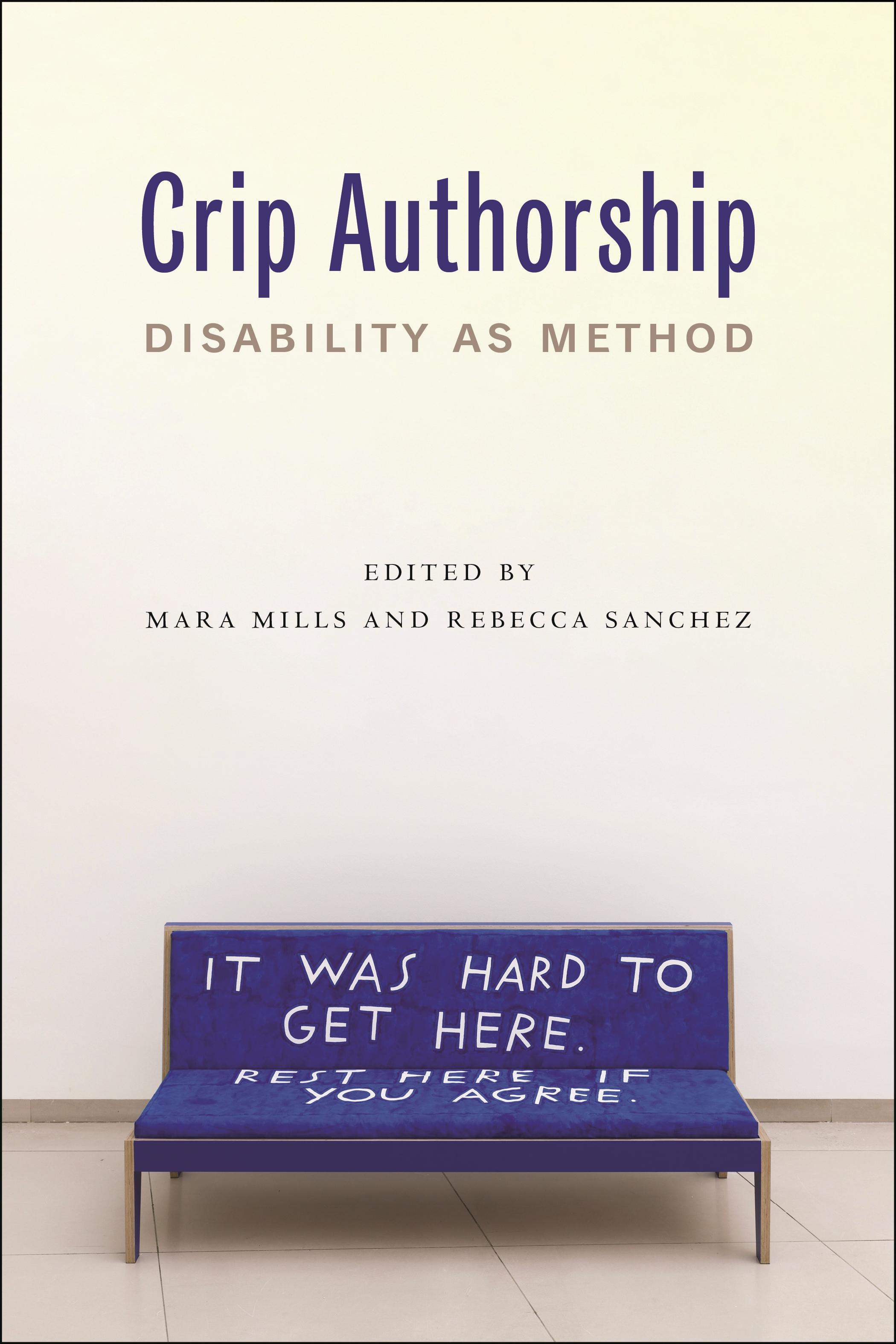
Crip Authorship: Disability as Method is an expansive volume presenting the multidisciplinary methods brought into being by disability studies and activism. Mara Mills and Rebecca Sanchez have convened leading scholars, artists, and activists to explore the ways disability shapes authorship, transforming cultural production, aesthetics, and media.
Starting from the premise that disability is plural and authorship spans composition, affect, and publishing, this collection of thirty-five compact essays asks how knowledge about disability is produced and shared in disability studies. Disability alters, generates, and dismantles method. Crip authorship takes place within and beyond the commodity version of authorship, in books, on social media, and in creative works that will never be published.
The chapters draw on the expertise of international researchers and activists in the humanities, social sciences, education, arts, and design. Across five sections—Writing, Research, Genre/Form, Publishing, Media—contributors consider disability as method for creative work: practices of writing and other forms of composition; research methods and collaboration; crip aesthetics; media formats and hacks; and the capital, access, legal standing, and care networks required to publish. Designed to be accessible and engaging for students, Crip Authorship also provides theoretically sophisticated arguments in a condensed form that will make the text a key resource for disability studies scholars.
Essays include Mel Y Chen on the temporality of writing with chronic illness; Remi Yergeau on perseveration; La Marr Jurelle Bruce on mad Black writing; Alison Kafer on the reliance of the manifesto genre on disability; Jaipreet Virdi on public scholarship for disability justice; Ellen Samuels on the importance of disability and illness to autotheory; Xuan Thuy Nguyen on decolonial research methods for disability studies; Emily Lim Rogers on virtual ethnography; Cameron Awkward-Rich on depression and trans reading methods; Robert McRuer on crip theory in translation; Kelsie Acton on plain language writing; and Georgina Kleege on description as an access and aesthetic technique.
Before Memmo my notes were scattered across PDFs. Now a workspace pulls everything into one place — I see exactly what's still left to study.
Memmo's summaries are gold before exams. I don't have to re-read 800 pages two weeks before — just the important parts.
The AI chat has saved me the night before an exam more than once. I just keep asking until I get it — no waiting on a study group to reply.
The quizzes hit exactly what I need to know. Memmo tracks what I get stuck on — so I only practice what's worth it.
Flashcards with spaced repetition are magic. Memmo knows when I'm about to forget something and brings it back.
The AI podcasts are my favorite. I listen on my way to school and get a recap without sitting at a computer.

Handbok i kvalitativa metoder
281 kr

Hållbar utveckling: en introduktion för ingenjörer och andra problemlösare
334 kr

Brymans Samhällsvetenskapliga metoder
390 kr

Projektledning
491 kr

Den orättvisa hälsan: om socioekonomiska skillnader i hälsa och livslängd
326 kr

Organizational Leadership
429 kr

Vetenskapsteori för nybörjare
196 kr

På väg mot läraryrket
172 kr

Det sociala livet i skolan: Socialpsykologiska perspektiv
253 kr

Betygsättningens didaktik
151 kr

Personality
402 kr

Studying Leadership
404 kr

Managing Innovation
477 kr

Introduktion till samhällsvetenskaplig metod
347 kr

The Psychology of Sex and Gender
698 kr

Evidens och kunskap för socialt arbete
207 kr

Introduction to Leadership
605 kr