
Before Memmo my notes were scattered across PDFs. Now a workspace pulls everything into one place — I see exactly what's still left to study.
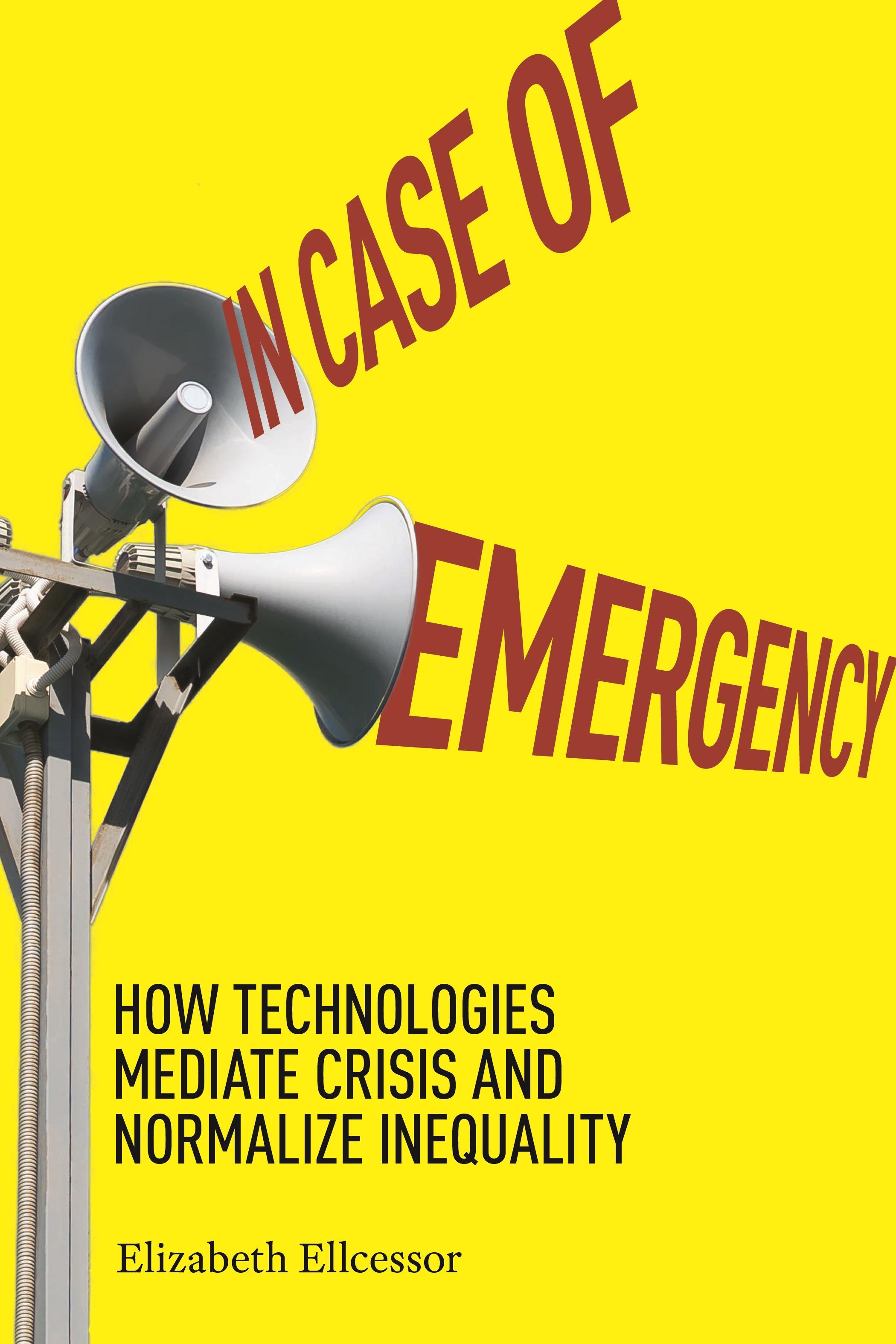
A much-needed look at the growth of emergency media and its impact on our lives
In an emergency, we often look to media: to contact authorities, to get help, to monitor evolving situations, or to reach out to our loved ones. Sometimes we aren’t even aware of an emergency until we are notified by one of the countless alerts, alarms, notifications, sirens, text messages, or phone calls that permeate everyday life. Yet most people have only a partial understanding of how such systems make sense of and act upon an “emergency.” In Case of Emergency argues that emergency media are profoundly cultural artifacts that shape the very definition of “emergency” as an opposite of “normal.” Looking broadly across a range of contemporary emergency-related devices, practices, and services, Elizabeth Ellcessor illuminates the cultural and political underpinnings and socially differential effects of emergency media.
By interweaving in-depth interviews with emergency-operation and app-development experts, archival materials, and discursive and technological readings of hardware and infrastructures, Ellcessor demonstrates that emergency media are powerful components of American life that are rarely, if ever, neutral. The normalization of ideologies produced and reinforced by emergency media result in unequal access to emergency services and discriminatory assumptions about who or what is a threat and who deserves care and protection. As emergency media undergo massive growth and transformation in response to digitization and attendant entrepreneurial cultures, Ellcessor asks where access, equity, and accountability fit in all of this. The first book to develop a typology of emergency media, In Case of Emergency opens a much-needed conversation around the larger cultural meanings of “emergency,” and what an ethical and care-based approach to emergency could entail.
Before Memmo my notes were scattered across PDFs. Now a workspace pulls everything into one place — I see exactly what's still left to study.
Memmo's summaries are gold before exams. I don't have to re-read 800 pages two weeks before — just the important parts.
The AI chat has saved me the night before an exam more than once. I just keep asking until I get it — no waiting on a study group to reply.
The quizzes hit exactly what I need to know. Memmo tracks what I get stuck on — so I only practice what's worth it.
Flashcards with spaced repetition are magic. Memmo knows when I'm about to forget something and brings it back.
The AI podcasts are my favorite. I listen on my way to school and get a recap without sitting at a computer.

Handbok i kvalitativa metoder
281 kr

Hållbar utveckling: en introduktion för ingenjörer och andra problemlösare
334 kr

Brymans Samhällsvetenskapliga metoder
390 kr

Projektledning
491 kr

Den orättvisa hälsan: om socioekonomiska skillnader i hälsa och livslängd
326 kr

Organizational Leadership
429 kr

Vetenskapsteori för nybörjare
196 kr

På väg mot läraryrket
172 kr

Det sociala livet i skolan: Socialpsykologiska perspektiv
253 kr

Betygsättningens didaktik
151 kr

Personality
402 kr

Studying Leadership
404 kr

Managing Innovation
477 kr

Introduktion till samhällsvetenskaplig metod
347 kr

The Psychology of Sex and Gender
698 kr

Evidens och kunskap för socialt arbete
207 kr

Introduction to Leadership
605 kr