
Before Memmo my notes were scattered across PDFs. Now a workspace pulls everything into one place — I see exactly what's still left to study.
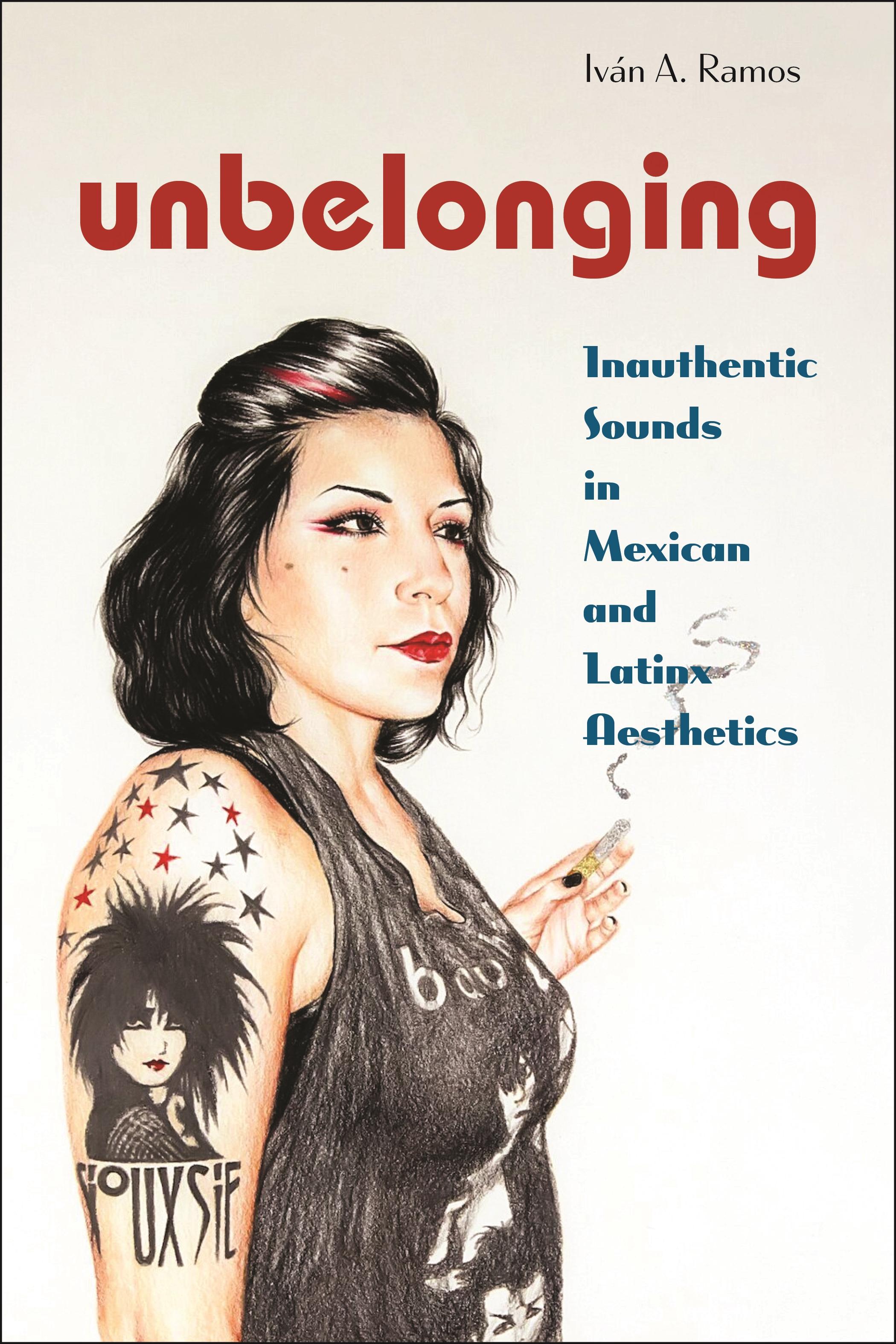
How Latinx artists engage in sonic subcultures to reject neoliberal definitions of belonging
What is the connection between the British rock star Morrissey and the Latinx culture of transnational “unbelonging”? What is the relevance of “dyke chords” in Chicana feminist punk and lesbian dissolution? In what ways can dissonant sounds challenge systems of dominance?
Unbelonging answers these questions and more through an exploration into Mexican and US-based Latinx artists’, writers’, and creators’ use of the discordant sounds of punk, metal, and rock to give voice to the aesthetic of “unbelonging,” a rejection of consumerist and nationalist mentalities. Iván A. Ramos argues that racial identity and belonging have historically required legible forms of performance. Sound has been the primary medium that amplifies and is used to assign cultural citizenship and, for Latinx individuals, legibility is essential to music perceived as traditional and authentic to their national origins. In the context of twentieth-century neoliberal policies, which cemented the concept of “citizen” within logics of consumerism and capitalism, Ramos turns to focus on Latinx artists, writers, and audiences, who produce experimental and often “inauthentic” performances and installations in sonic subcultures to reject new definitions of economic citizenship.
Organized around studies of a number of artists, all whom are explored through the methodological frameworks of sound studies, performance studies, and queer theory, Unbelonging unearths how their very different genres of music share a unifying theme of dissonance. With the backdrop of neoliberalism’s attempt to define citizenship in relation to economic and cultural legibility, Unbelonging offers an urgent analysis of how these oft-overlooked queer and feminist performers and fans used sonic illegibility to challenge gender norms, official definitions of citizenship, and narratives of assimilation. Ultimately, these forms of inauthenticity move beyond negation and become ways to imagine alternative realities.
Before Memmo my notes were scattered across PDFs. Now a workspace pulls everything into one place — I see exactly what's still left to study.
Memmo's summaries are gold before exams. I don't have to re-read 800 pages two weeks before — just the important parts.
The AI chat has saved me the night before an exam more than once. I just keep asking until I get it — no waiting on a study group to reply.
The quizzes hit exactly what I need to know. Memmo tracks what I get stuck on — so I only practice what's worth it.
Flashcards with spaced repetition are magic. Memmo knows when I'm about to forget something and brings it back.
The AI podcasts are my favorite. I listen on my way to school and get a recap without sitting at a computer.

Handbok i kvalitativa metoder
281 kr

Hållbar utveckling: en introduktion för ingenjörer och andra problemlösare
334 kr

Brymans Samhällsvetenskapliga metoder
390 kr

Projektledning
491 kr

Den orättvisa hälsan: om socioekonomiska skillnader i hälsa och livslängd
326 kr

Organizational Leadership
429 kr

Vetenskapsteori för nybörjare
196 kr

På väg mot läraryrket
172 kr

Det sociala livet i skolan: Socialpsykologiska perspektiv
253 kr

Betygsättningens didaktik
151 kr

Personality
402 kr

Studying Leadership
404 kr

Managing Innovation
477 kr

Introduktion till samhällsvetenskaplig metod
347 kr

The Psychology of Sex and Gender
698 kr

Evidens och kunskap för socialt arbete
207 kr

Introduction to Leadership
605 kr