
Before Memmo my notes were scattered across PDFs. Now a workspace pulls everything into one place — I see exactly what's still left to study.
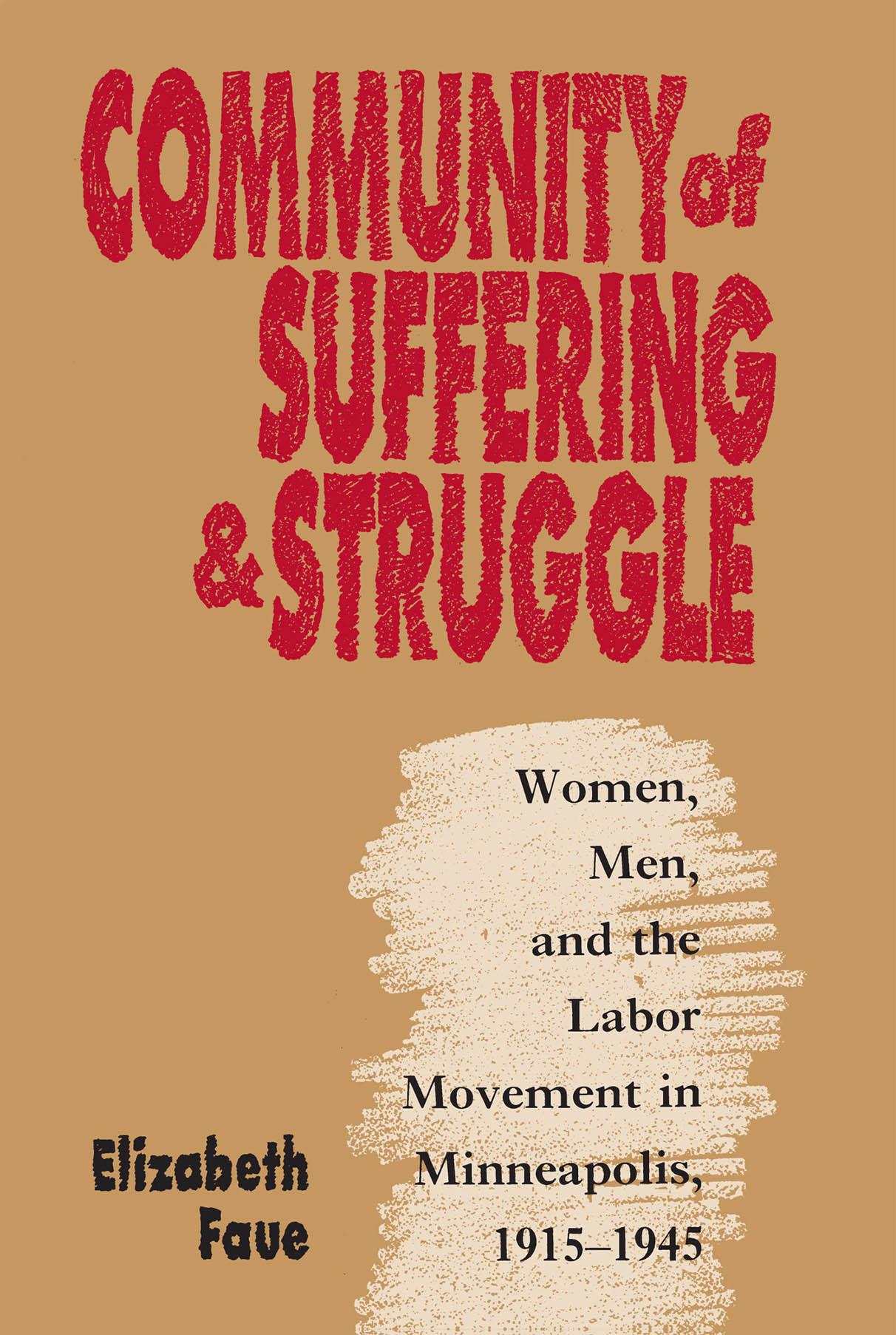
Elizabeth Faue traces the transformation of the American labor movement from community forms of solidarity to bureaucratic unionism. Arguing that gender is central to understanding this shift, Faue explores women’s involvement in labor and political organizations and the role of gender and family ideology in shaping unionism in the twentieth century. Her study of Minneapolis, the site of the important 1934 trucking strike, has broad implications for labor history as a whole.
Initially the labor movement rooted itself in community organizations and networks in which women were active, both as members and as leaders. This community orientation reclaimed family, relief, and education as political ground for a labor movement seeking to re-establish itself after the losses of the 1920s. But as the depression deepened, women — perceived as threats to men seeking work — lost their places in union leadership, in working-class culture, and on labor’s political agenda. When unions exchanged a community orientation for a focus on the workplace and on national politics, they lost the power to recruit and involve women members, even after World War II prompted large numbers of women to enter the work force.
In a pathbreaking analysis, Faue explores how the iconography and language of labor reflected ideas about gender. The depiction of work and the worker as male; the reliance on sport, military, and familial metaphors for solidarity; and the ideas of women’s place — these all reinforced the representation of labor solidarity as masculine during a time of increasing female participation in the labor force. Although the language of labor as male was not new in the depression, the crisis of wage-earning — as a crisis of masculinity — helped to give psychological power to male dominance in the labor culture. By the end of the war, women no longer occupied a central position in organized labor but a peripheral one.
Before Memmo my notes were scattered across PDFs. Now a workspace pulls everything into one place — I see exactly what's still left to study.
Memmo's summaries are gold before exams. I don't have to re-read 800 pages two weeks before — just the important parts.
The AI chat has saved me the night before an exam more than once. I just keep asking until I get it — no waiting on a study group to reply.
The quizzes hit exactly what I need to know. Memmo tracks what I get stuck on — so I only practice what's worth it.
Flashcards with spaced repetition are magic. Memmo knows when I'm about to forget something and brings it back.
The AI podcasts are my favorite. I listen on my way to school and get a recap without sitting at a computer.

Handbok i kvalitativa metoder
281 kr

Hållbar utveckling: en introduktion för ingenjörer och andra problemlösare
334 kr

Brymans Samhällsvetenskapliga metoder
390 kr

Projektledning
491 kr

Den orättvisa hälsan: om socioekonomiska skillnader i hälsa och livslängd
326 kr

Vetenskapsteori för nybörjare
196 kr

Organizational Leadership
429 kr

På väg mot läraryrket
172 kr

Det sociala livet i skolan: Socialpsykologiska perspektiv
253 kr

Betygsättningens didaktik
151 kr

Personality
402 kr

Studying Leadership
404 kr

Managing Innovation
477 kr

Introduktion till samhällsvetenskaplig metod
347 kr

The Psychology of Sex and Gender
698 kr

Evidens och kunskap för socialt arbete
207 kr

Introduction to Leadership
605 kr