
Before Memmo my notes were scattered across PDFs. Now a workspace pulls everything into one place — I see exactly what's still left to study.
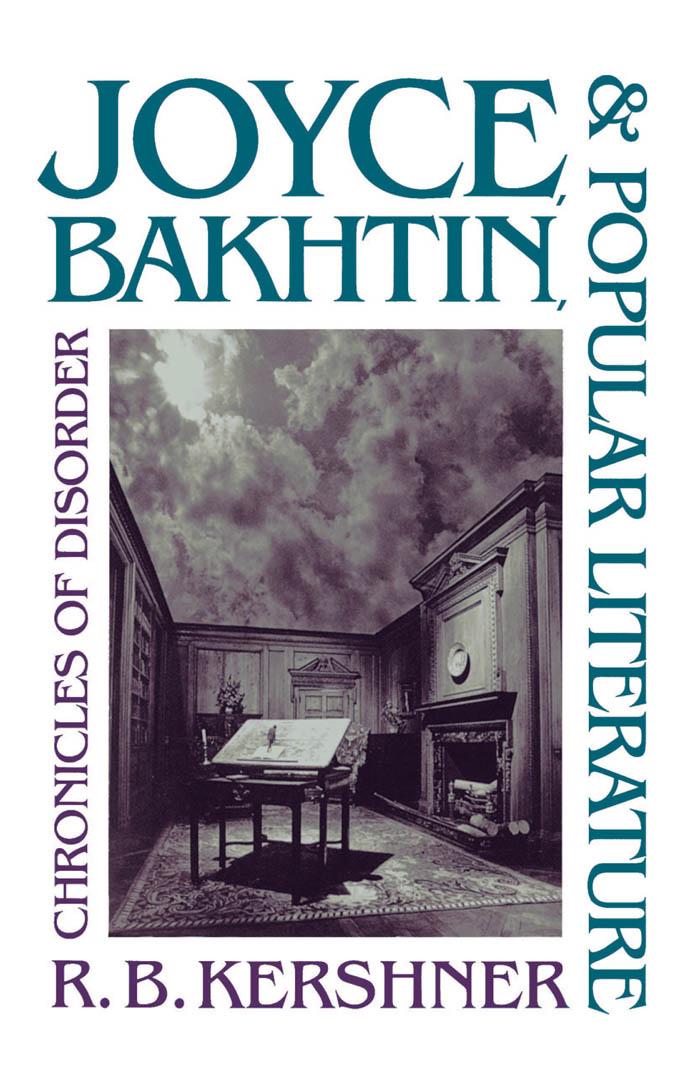
The sheer mass of allusion to popular literature in the writings of James Joyce is daunting. Using theories developed by Russian critic Mikhail Bakhtin, R. B. Kershner analyzes how Joyce made use of popular literature in such early works as Stephen Hero, Dubliners, A Portrait of an Artist as a Young Man, and Exiles. Kershner also examines Joyce’s use of rhetoric, the relationship between narrator and protagonist, and the interplay of voices, whether personal, literary, or subliterary, in Joyce’s writing.
In pointing out the prolific allusions in Joyce to newspapers, children’s books, popular novels, and even pornography, Kershner shows how each of these contributes to the structures of consciousness of Joyce’s various characters, all of whom write and rewrite themselves in terms of the texts they read in their youth. He also investigates the intertextual role of many popular books to which Joyce alludes in his writings and letters, or which he owned — some well known, others now obscure.
Kershner presents Joyce as a writer with a high degrees of social consciousness, whose writings highlight the conflicting ideologies of the Irish bourgeoisie. In exploring the social dimension of Joyce’s writing, he calls upon such important contemporary thinkers as Jameston, Althusser, Barthes, and Lacan in addition to Bakhtin. Joyce’s literary response to his historical situation was not polemical, Kershner argues, but, in Bakhtin’s terms, dialogical: his writings represent an unremitting dialogue with the discordant but powerful voices of his day, many inaudible to us now.
Joyce, Bakhtin, and Popular Literature places Joyce within the social and intellectual context of his time. Through stylistic, social, and ideological analysis, Kersner gives us a fuller grasp of the the complexity of Joyce’s earlier writings.
Before Memmo my notes were scattered across PDFs. Now a workspace pulls everything into one place — I see exactly what's still left to study.
Memmo's summaries are gold before exams. I don't have to re-read 800 pages two weeks before — just the important parts.
The AI chat has saved me the night before an exam more than once. I just keep asking until I get it — no waiting on a study group to reply.
The quizzes hit exactly what I need to know. Memmo tracks what I get stuck on — so I only practice what's worth it.
Flashcards with spaced repetition are magic. Memmo knows when I'm about to forget something and brings it back.
The AI podcasts are my favorite. I listen on my way to school and get a recap without sitting at a computer.

Handbok i kvalitativa metoder
281 kr

Hållbar utveckling: en introduktion för ingenjörer och andra problemlösare
334 kr

Brymans Samhällsvetenskapliga metoder
390 kr

Projektledning
491 kr

Den orättvisa hälsan: om socioekonomiska skillnader i hälsa och livslängd
326 kr

Vetenskapsteori för nybörjare
196 kr

Organizational Leadership
429 kr

På väg mot läraryrket
172 kr

Det sociala livet i skolan: Socialpsykologiska perspektiv
253 kr

Betygsättningens didaktik
151 kr

Personality
402 kr

Studying Leadership
404 kr

Managing Innovation
477 kr

Introduktion till samhällsvetenskaplig metod
347 kr

The Psychology of Sex and Gender
698 kr

Evidens och kunskap för socialt arbete
207 kr

Introduction to Leadership
605 kr