
Before Memmo my notes were scattered across PDFs. Now a workspace pulls everything into one place — I see exactly what's still left to study.
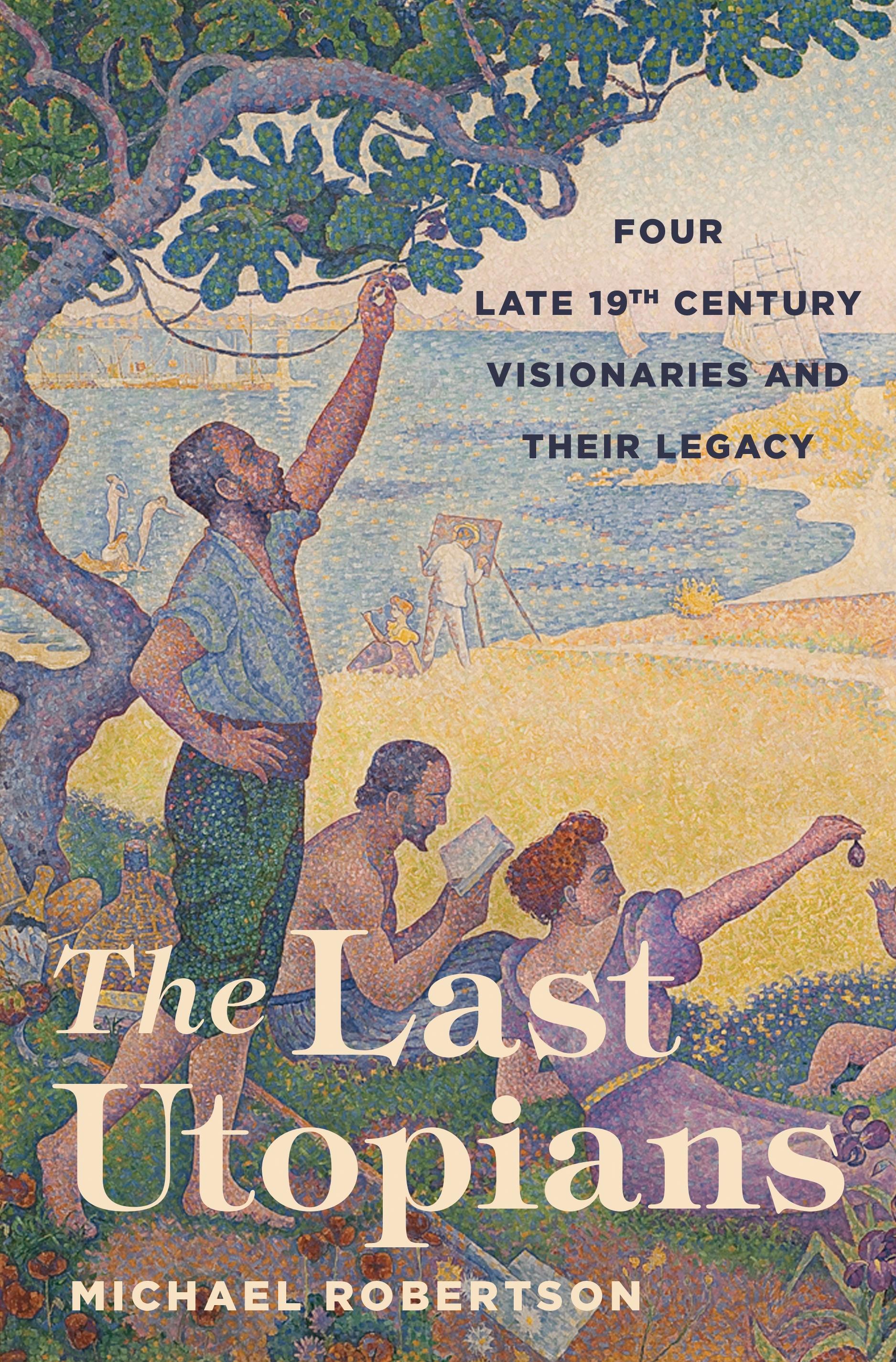
The entertaining story of four utopian writers—Edward Bellamy, William Morris, Edward Carpenter, and Charlotte Perkins Gilman—and their continuing influence today
For readers reared on the dystopian visions of Nineteen Eighty-Four and The Handmaid's Tale, the idea of a perfect society may sound more sinister than enticing. In this lively literary history of a time before "Orwellian" entered the cultural lexicon, Michael Robertson reintroduces us to a vital strain of utopianism that seized the imaginations of late nineteenth-century American and British writers.
The Last Utopians delves into the biographies of four key figures--Edward Bellamy, William Morris, Edward Carpenter, and Charlotte Perkins Gilman—who lived during an extraordinary period of literary and social experimentation. The publication of Bellamy's Looking Backward in 1888 opened the floodgates of an unprecedented wave of utopian writing. Morris, the Arts and Crafts pioneer, was a committed socialist whose News from Nowhere envisions a workers' Arcadia. Carpenter boldly argued that homosexuals constitute a utopian vanguard. Gilman, a women's rights activist and the author of "The Yellow Wallpaper," wrote numerous utopian fictions, including Herland, a visionary tale of an all-female society.
These writers, Robertson shows, shared a belief in radical equality, imagining an end to class and gender hierarchies and envisioning new forms of familial and romantic relationships. They held liberal religious beliefs about a universal spirit uniting humanity. They believed in social transformation through nonviolent means and were committed to living a simple life rooted in a restored natural world. And their legacy remains with us today, as Robertson describes in entertaining firsthand accounts of contemporary utopianism, ranging from Occupy Wall Street to a Radical Faerie retreat.
Before Memmo my notes were scattered across PDFs. Now a workspace pulls everything into one place — I see exactly what's still left to study.
Memmo's summaries are gold before exams. I don't have to re-read 800 pages two weeks before — just the important parts.
The AI chat has saved me the night before an exam more than once. I just keep asking until I get it — no waiting on a study group to reply.
The quizzes hit exactly what I need to know. Memmo tracks what I get stuck on — so I only practice what's worth it.
Flashcards with spaced repetition are magic. Memmo knows when I'm about to forget something and brings it back.
The AI podcasts are my favorite. I listen on my way to school and get a recap without sitting at a computer.

Handbok i kvalitativa metoder
281 kr

Hållbar utveckling: en introduktion för ingenjörer och andra problemlösare
334 kr

Brymans Samhällsvetenskapliga metoder
390 kr

Projektledning
491 kr

Den orättvisa hälsan: om socioekonomiska skillnader i hälsa och livslängd
326 kr

Organizational Leadership
429 kr

Vetenskapsteori för nybörjare
196 kr

På väg mot läraryrket
172 kr

Det sociala livet i skolan: Socialpsykologiska perspektiv
253 kr

Betygsättningens didaktik
151 kr

Personality
402 kr

Studying Leadership
404 kr

Managing Innovation
477 kr

Introduktion till samhällsvetenskaplig metod
347 kr

The Psychology of Sex and Gender
698 kr

Evidens och kunskap för socialt arbete
207 kr

Introduction to Leadership
605 kr