
Before Memmo my notes were scattered across PDFs. Now a workspace pulls everything into one place — I see exactly what's still left to study.
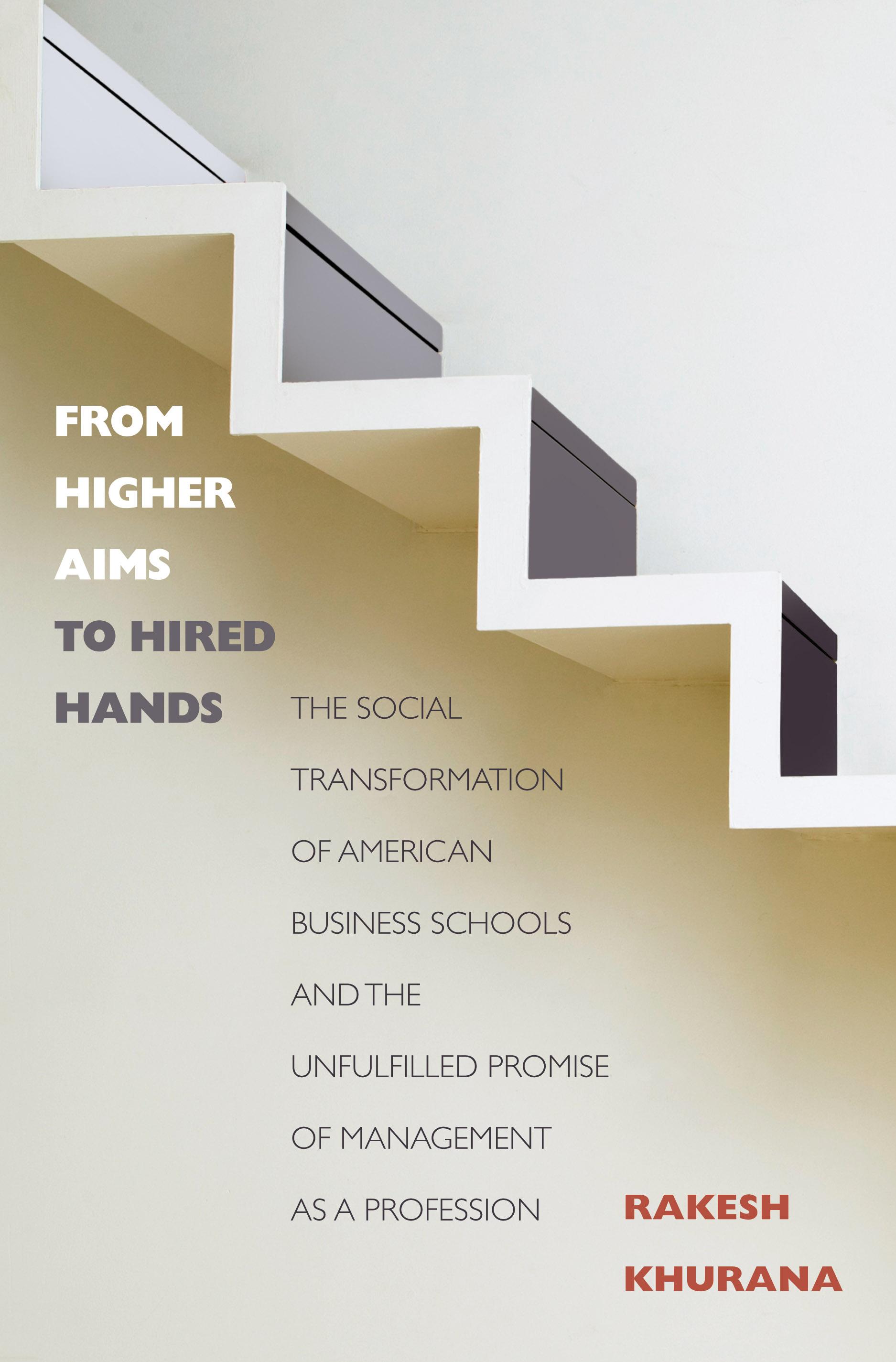
Is management a profession? Should it be? Can it be? This major work of social and intellectual history reveals how such questions have driven business education and shaped American management and society for more than a century. The book is also a call for reform. Rakesh Khurana shows that university-based business schools were founded to train a professional class of managers in the mold of doctors and lawyers but have effectively retreated from that goal, leaving a gaping moral hole at the center of business education and perhaps in management itself.
Khurana begins in the late nineteenth century, when members of an emerging managerial elite, seeking social status to match the wealth and power they had accrued, began working with major universities to establish graduate business education programs paralleling those for medicine and law. Constituting business as a profession, however, required codifying the knowledge relevant for practitioners and developing enforceable standards of conduct. Khurana, drawing on a rich set of archival material from business schools, foundations, and academic associations, traces how business educators confronted these challenges with varying strategies during the Progressive era and the Depression, the postwar boom years, and recent decades of freewheeling capitalism.
Today, Khurana argues, business schools have largely capitulated in the battle for professionalism and have become merely purveyors of a product, the MBA, with students treated as consumers. Professional and moral ideals that once animated and inspired business schools have been conquered by a perspective that managers are merely agents of shareholders, beholden only to the cause of share profits. According to Khurana, we should not thus be surprised at the rise of corporate malfeasance. The time has come, he concludes, to rejuvenate intellectually and morally the training of our future business leaders.
Before Memmo my notes were scattered across PDFs. Now a workspace pulls everything into one place — I see exactly what's still left to study.
Memmo's summaries are gold before exams. I don't have to re-read 800 pages two weeks before — just the important parts.
The AI chat has saved me the night before an exam more than once. I just keep asking until I get it — no waiting on a study group to reply.
The quizzes hit exactly what I need to know. Memmo tracks what I get stuck on — so I only practice what's worth it.
Flashcards with spaced repetition are magic. Memmo knows when I'm about to forget something and brings it back.
The AI podcasts are my favorite. I listen on my way to school and get a recap without sitting at a computer.

Handbok i kvalitativa metoder
281 kr

Hållbar utveckling: en introduktion för ingenjörer och andra problemlösare
334 kr

Brymans Samhällsvetenskapliga metoder
390 kr

Projektledning
491 kr

Den orättvisa hälsan: om socioekonomiska skillnader i hälsa och livslängd
326 kr

Vetenskapsteori för nybörjare
196 kr

Organizational Leadership
429 kr

På väg mot läraryrket
172 kr

Det sociala livet i skolan: Socialpsykologiska perspektiv
253 kr

Betygsättningens didaktik
151 kr

Personality
402 kr

Studying Leadership
404 kr

Managing Innovation
477 kr

Introduktion till samhällsvetenskaplig metod
347 kr

The Psychology of Sex and Gender
698 kr

Evidens och kunskap för socialt arbete
207 kr

Introduction to Leadership
605 kr