
Before Memmo my notes were scattered across PDFs. Now a workspace pulls everything into one place — I see exactly what's still left to study.
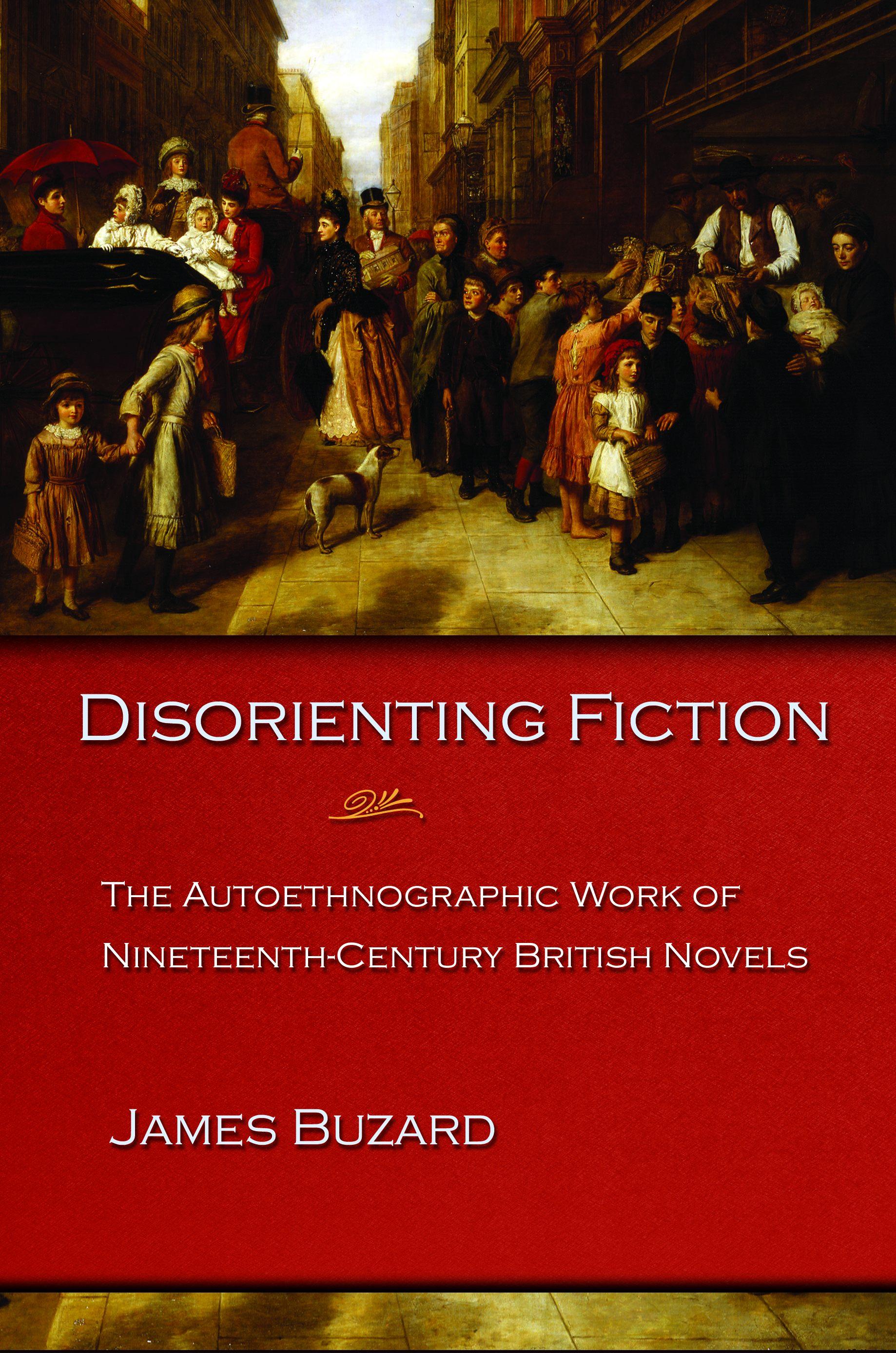
This book gives an ambitious revisionist account of the nineteenth-century British novel and its role in the complex historical process that ultimately gave rise to modern anthropology's concept of culture and its accredited researcher, the Participant Observer. Buzard reads the great nineteenth-century novels of Charles Dickens, Charlotte Brontë, George Eliot, and others as "metropolitan autoethnographies" that began to exercise and test the ethnographic imagination decades in advance of formal modern ethnography--and that did so while focusing on Western European rather than on distant Oriental subjects.
Disorienting Fiction shows how English Victorian novels appropriated and anglicized an autoethnographic mode of fiction developed early in the nineteenth century by the Irish authors of the National Tale and, most influentially, by Walter Scott. Buzard demonstrates that whereas the fiction of these non-English British subjects devoted itself to describing and defending (but also inventing) the cultural autonomy of peripheral regions, the English novels that followed them worked to imagine limited and mappable versions of English or British culture in reaction against the potential evacuation of cultural distinctiveness threatened by Britain's own commercial and imperial expansion. These latter novels attempted to forestall the self-incurred liabilities of a nation whose unprecedented reach and power tempted it to universalize and export its own customs, to treat them as simply equivalent to a globally applicable civilization. For many Victorian novelists, a nation facing the prospect of being able to go and to exercise its influence just about anywhere in the world also faced the danger of turning itself into a cultural nowhere. The complex autoethnographic work of nineteenth-century British novels was thus a labor to disorient or de-globalize British national imaginings, and novelists mobilized and freighted with new significance some basic elements of prose narrative in their efforts to write British culture into being.
Sure to provoke debate, this book offers a commanding reassessment of a major moment in the history of British literature.
Before Memmo my notes were scattered across PDFs. Now a workspace pulls everything into one place — I see exactly what's still left to study.
Memmo's summaries are gold before exams. I don't have to re-read 800 pages two weeks before — just the important parts.
The AI chat has saved me the night before an exam more than once. I just keep asking until I get it — no waiting on a study group to reply.
The quizzes hit exactly what I need to know. Memmo tracks what I get stuck on — so I only practice what's worth it.
Flashcards with spaced repetition are magic. Memmo knows when I'm about to forget something and brings it back.
The AI podcasts are my favorite. I listen on my way to school and get a recap without sitting at a computer.

Handbok i kvalitativa metoder
281 kr

Hållbar utveckling: en introduktion för ingenjörer och andra problemlösare
334 kr

Brymans Samhällsvetenskapliga metoder
390 kr

Projektledning
491 kr

Den orättvisa hälsan: om socioekonomiska skillnader i hälsa och livslängd
326 kr

Organizational Leadership
429 kr

Vetenskapsteori för nybörjare
196 kr

På väg mot läraryrket
172 kr

Det sociala livet i skolan: Socialpsykologiska perspektiv
253 kr

Betygsättningens didaktik
151 kr

Personality
402 kr

Studying Leadership
404 kr

Managing Innovation
477 kr

Introduktion till samhällsvetenskaplig metod
347 kr

The Psychology of Sex and Gender
698 kr

Evidens och kunskap för socialt arbete
207 kr

Introduction to Leadership
605 kr