
Before Memmo my notes were scattered across PDFs. Now a workspace pulls everything into one place — I see exactly what's still left to study.
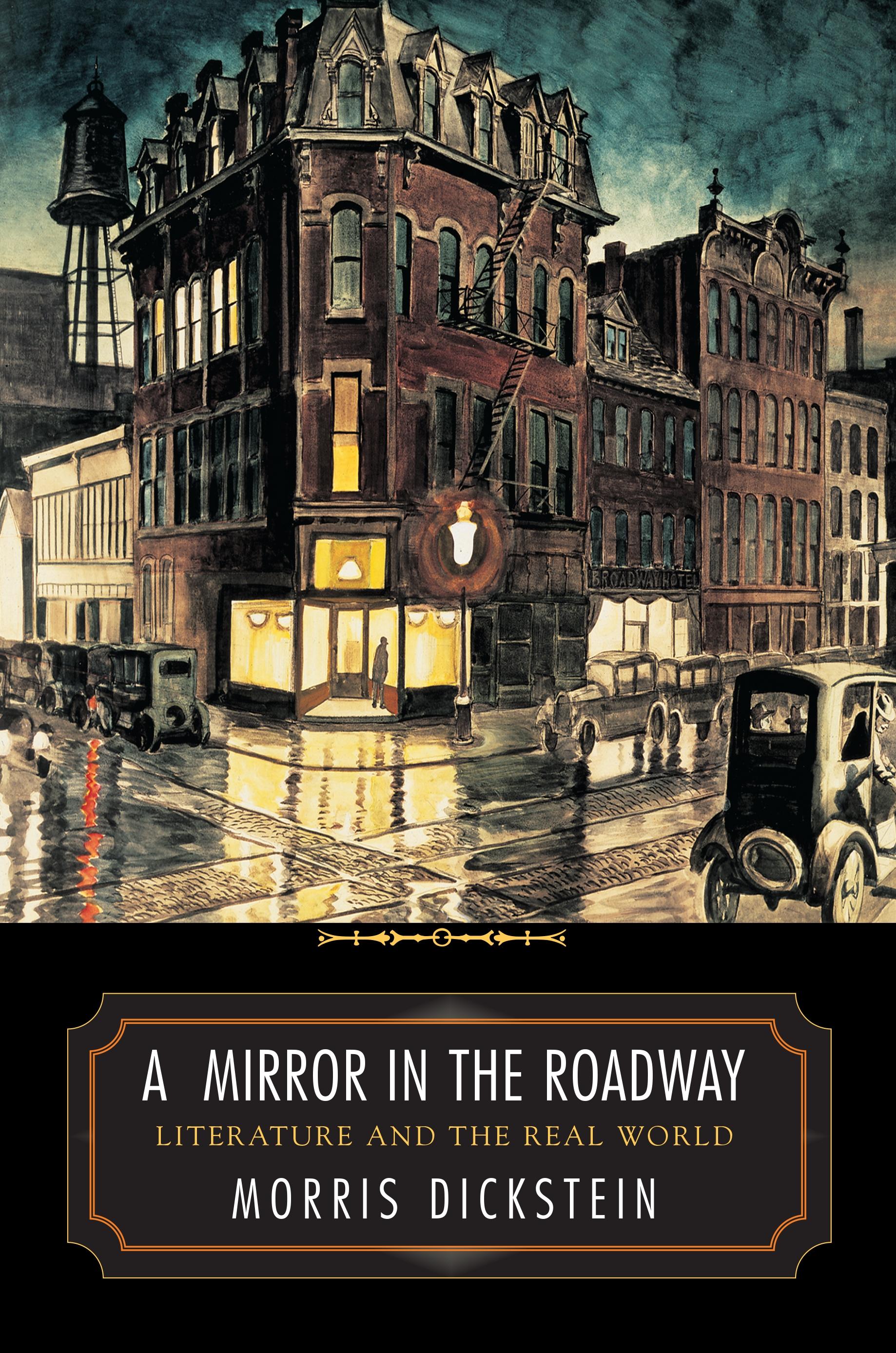
In a famous passage in The Red and the Black, the French writer Stendhal described the novel as a mirror being carried along a roadway. In the twentieth century this was derided as a naïve notion of realism. Instead, modern writers experimented with creative forms of invention and dislocation. Deconstructive theorists went even further, questioning whether literature had any real reference to a world outside its own language, while traditional historians challenged whether novels gave a trustworthy representation of history and society.
In this book, Morris Dickstein reinterprets Stendhal's metaphor and tracks the different worlds of a wide array of twentieth-century writers, from realists like Theodore Dreiser, Sinclair Lewis, Edith Wharton, and Willa Cather, through modernists like Franz Kafka and Samuel Beckett, to wildly inventive postwar writers like Saul Bellow, Günter Grass, Mary McCarthy, George Orwell, Philip Roth, and Gabriel García Márquez. Dickstein argues that fiction will always yield rich insight into its subject, and that literature can also be a form of historical understanding. Writers refract the world through their forms and sensibilities. He shows how the work of these writers recaptures--yet also transforms--the life around them, the world inside them, and the universe of language and feeling they share with their readers.
Through lively and incisive essays directed to general readers as well as students of literature, Dickstein redefines the literary landscape--a landscape in which reading has for decades been devalued by society and distorted by theory. Having begun with a reconsideration of realism, the book concludes with several essays probing the strengths and limitations of a historical approach to literature and criticism.
Before Memmo my notes were scattered across PDFs. Now a workspace pulls everything into one place — I see exactly what's still left to study.
Memmo's summaries are gold before exams. I don't have to re-read 800 pages two weeks before — just the important parts.
The AI chat has saved me the night before an exam more than once. I just keep asking until I get it — no waiting on a study group to reply.
The quizzes hit exactly what I need to know. Memmo tracks what I get stuck on — so I only practice what's worth it.
Flashcards with spaced repetition are magic. Memmo knows when I'm about to forget something and brings it back.
The AI podcasts are my favorite. I listen on my way to school and get a recap without sitting at a computer.

Handbok i kvalitativa metoder
281 kr

Hållbar utveckling: en introduktion för ingenjörer och andra problemlösare
334 kr

Brymans Samhällsvetenskapliga metoder
390 kr

Projektledning
491 kr

Den orättvisa hälsan: om socioekonomiska skillnader i hälsa och livslängd
326 kr

Organizational Leadership
429 kr

Vetenskapsteori för nybörjare
196 kr

På väg mot läraryrket
172 kr

Det sociala livet i skolan: Socialpsykologiska perspektiv
253 kr

Betygsättningens didaktik
151 kr

Personality
402 kr

Studying Leadership
404 kr

Managing Innovation
477 kr

Introduktion till samhällsvetenskaplig metod
347 kr

The Psychology of Sex and Gender
698 kr

Evidens och kunskap för socialt arbete
207 kr

Introduction to Leadership
605 kr