
Before Memmo my notes were scattered across PDFs. Now a workspace pulls everything into one place — I see exactly what's still left to study.
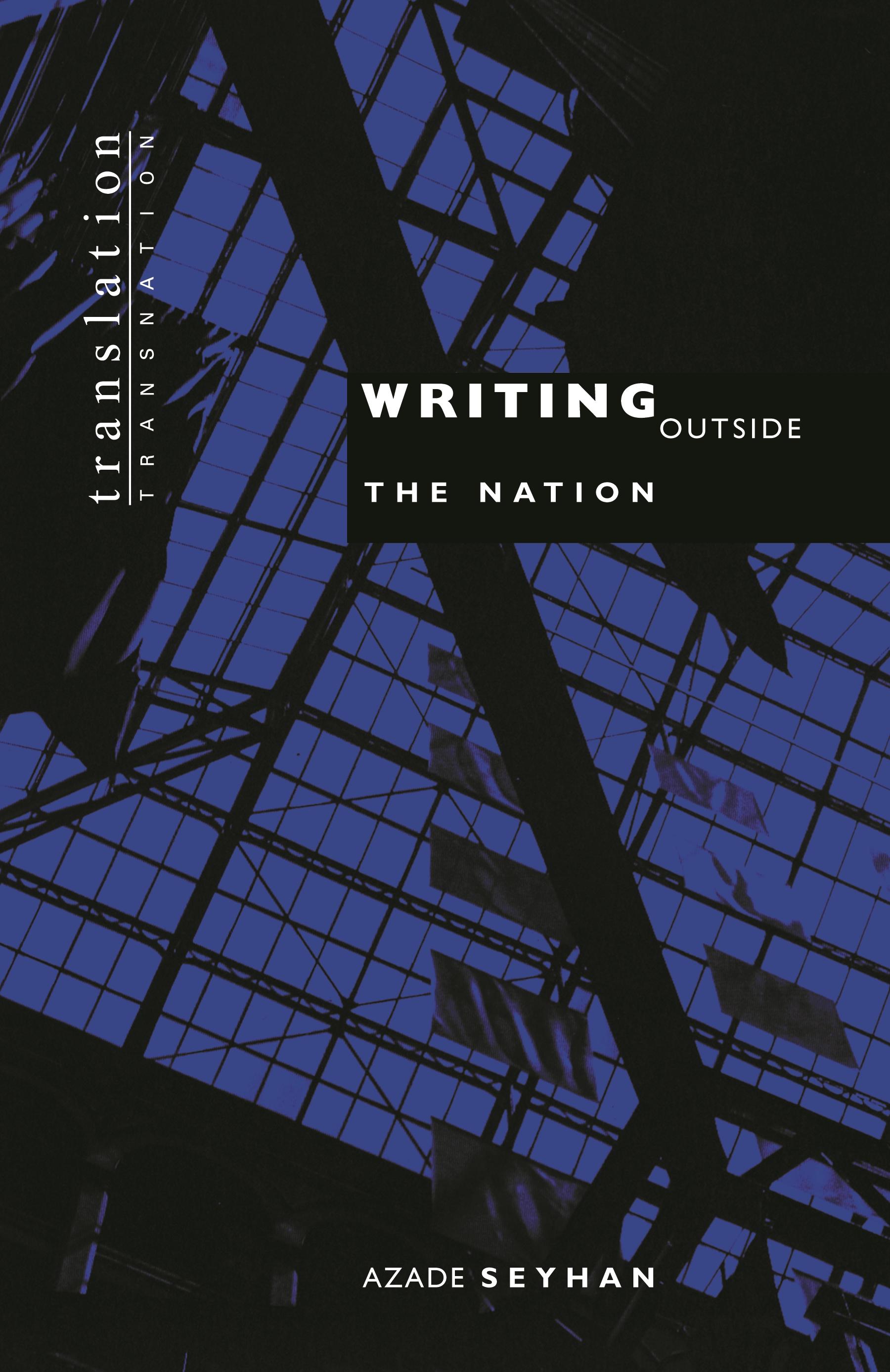
Some of the most innovative writers of contemporary literature are writing in diaspora in their second or third language. Here Azade Seyhan describes the domain of transnational poetics they inhabit. She begins by examining the works of selected bilingual and bicultural writers of the United States (including Oscar Hijuelos, Maxine Hong Kingston, and Eva Hoffman) and Germany (Libuse Moníková, Rafik Schami, and E. S. Özdamar, among others), developing a new framework for understanding the relationship between displacement, memory, and language. Considering themes of loss, witness, translation, identity, and exclusion, Seyhan interprets diasporic literatures as condensed archives of cultural and linguistic memory that give integrity and coherence to pasts ruptured by migration.
The book next compares works by contemporary Chicana and Turkish-German women writers as innovative and sovereign literary voices within the larger national cultures of the United States and Germany. Seyhan identifies in American multiculturalism critical clues for analyzing new cultural formations in Europe and maintains that Germany's cultural transformation suggests new ways of reading the American literary mosaic. Her approach, however, extends well beyond these two literatures. She creates a critical map of a "third geography," where a transnational, multilingual literary movement is gathering momentum.
Writing Outside the Nation both contributes to and departs from postcolonial studies in that it focuses specifically on transnational writers working outside of their "mother tongue" and compares American and German diasporic literatures within a sophisticated conceptual framework. It illustrates how literature's symbolic economy can reclaim lost personal and national histories, as well as connect disparate and distant cultural traditions.
Before Memmo my notes were scattered across PDFs. Now a workspace pulls everything into one place — I see exactly what's still left to study.
Memmo's summaries are gold before exams. I don't have to re-read 800 pages two weeks before — just the important parts.
The AI chat has saved me the night before an exam more than once. I just keep asking until I get it — no waiting on a study group to reply.
The quizzes hit exactly what I need to know. Memmo tracks what I get stuck on — so I only practice what's worth it.
Flashcards with spaced repetition are magic. Memmo knows when I'm about to forget something and brings it back.
The AI podcasts are my favorite. I listen on my way to school and get a recap without sitting at a computer.

Handbok i kvalitativa metoder
281 kr

Hållbar utveckling: en introduktion för ingenjörer och andra problemlösare
334 kr

Brymans Samhällsvetenskapliga metoder
390 kr

Projektledning
491 kr

Den orättvisa hälsan: om socioekonomiska skillnader i hälsa och livslängd
326 kr

Vetenskapsteori för nybörjare
196 kr

Organizational Leadership
429 kr

På väg mot läraryrket
172 kr

Det sociala livet i skolan: Socialpsykologiska perspektiv
253 kr

Betygsättningens didaktik
151 kr

Personality
402 kr

Studying Leadership
404 kr

Managing Innovation
477 kr

Introduktion till samhällsvetenskaplig metod
347 kr

The Psychology of Sex and Gender
698 kr

Evidens och kunskap för socialt arbete
207 kr

Introduction to Leadership
605 kr