
Before Memmo my notes were scattered across PDFs. Now a workspace pulls everything into one place — I see exactly what's still left to study.
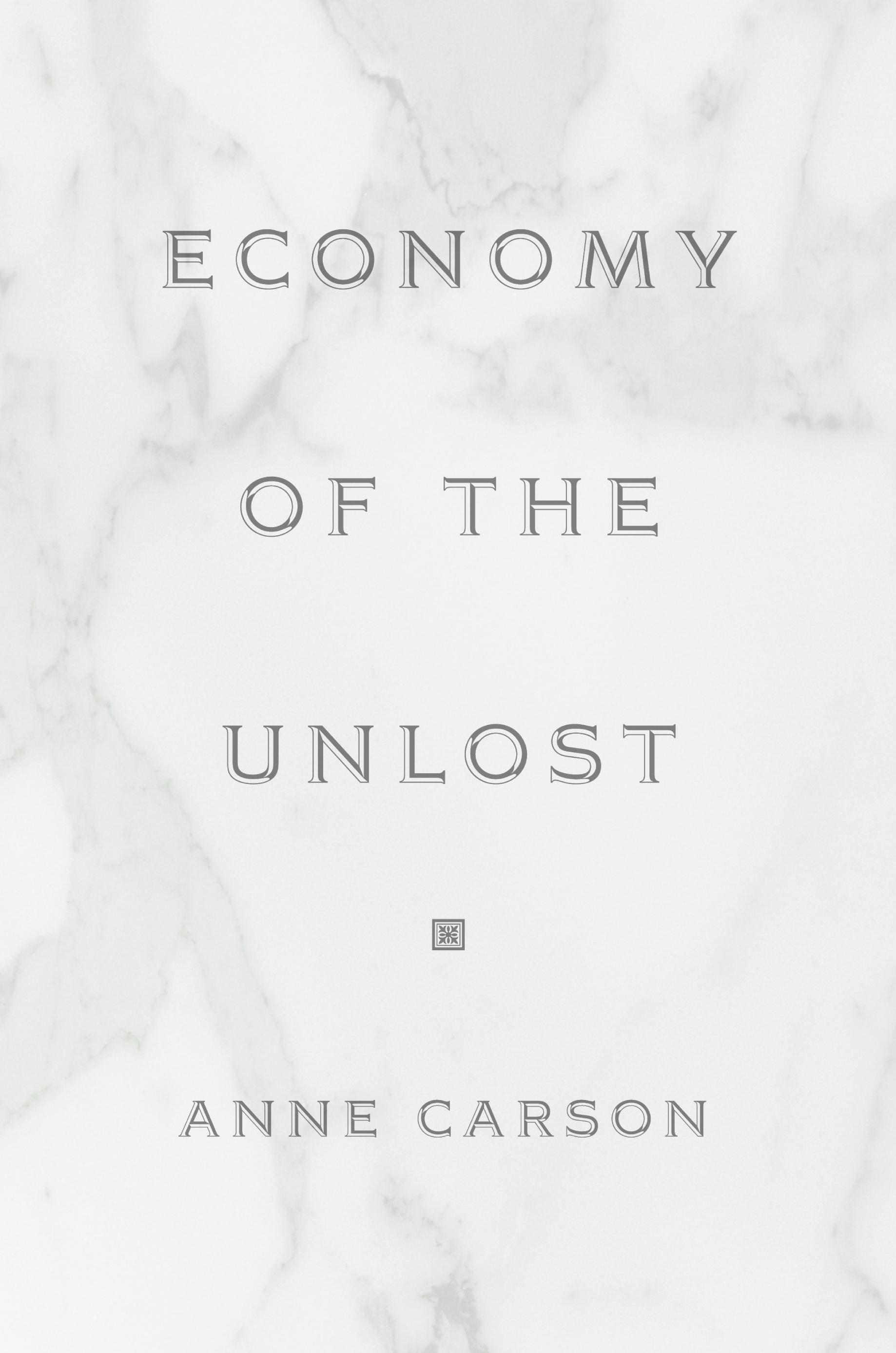
The ancient Greek lyric poet Simonides of Keos was the first poet in the Western tradition to take money for poetic composition. From this starting point, Anne Carson launches an exploration, poetic in its own right, of the idea of poetic economy. She offers a reading of certain of Simonides' texts and aligns these with writings of the modern Romanian poet Paul Celan, a Jew and survivor of the Holocaust, whose "economies" of language are notorious. Asking such questions as, What is lost when words are wasted? and Who profits when words are saved? Carson reveals the two poets' striking commonalities.
In Carson's view Simonides and Celan share a similar mentality or disposition toward the world, language and the work of the poet. Economy of the Unlost begins by showing how each of the two poets stands in a state of alienation between two worlds. In Simonides' case, the gift economy of fifth-century b.c. Greece was giving way to one based on money and commodities, while Celan's life spanned pre- and post-Holocaust worlds, and he himself, writing in German, became estranged from his native language. Carson goes on to consider various aspects of the two poets' techniques for coming to grips with the invisible through the visible world. A focus on the genre of the epitaph grants insights into the kinds of exchange the poets envision between the living and the dead. Assessing the impact on Simonidean composition of the material fact of inscription on stone, Carson suggests that a need for brevity influenced the exactitude and clarity of Simonides' style, and proposes a comparison with Celan's interest in the "negative design" of printmaking: both poets, though in different ways, employ a kind of negative image making, cutting away all that is superfluous. This book's juxtaposition of the two poets illuminates their differences--Simonides' fundamental faith in the power of the word, Celan's ultimate despair--as well as their similarities; it provides fertile ground for the virtuosic interplay of Carson's scholarship and her poetic sensibility.
Before Memmo my notes were scattered across PDFs. Now a workspace pulls everything into one place — I see exactly what's still left to study.
Memmo's summaries are gold before exams. I don't have to re-read 800 pages two weeks before — just the important parts.
The AI chat has saved me the night before an exam more than once. I just keep asking until I get it — no waiting on a study group to reply.
The quizzes hit exactly what I need to know. Memmo tracks what I get stuck on — so I only practice what's worth it.
Flashcards with spaced repetition are magic. Memmo knows when I'm about to forget something and brings it back.
The AI podcasts are my favorite. I listen on my way to school and get a recap without sitting at a computer.

Handbok i kvalitativa metoder
281 kr

Hållbar utveckling: en introduktion för ingenjörer och andra problemlösare
334 kr

Brymans Samhällsvetenskapliga metoder
390 kr

Projektledning
491 kr

Den orättvisa hälsan: om socioekonomiska skillnader i hälsa och livslängd
326 kr

Vetenskapsteori för nybörjare
196 kr

Organizational Leadership
429 kr

På väg mot läraryrket
172 kr

Det sociala livet i skolan: Socialpsykologiska perspektiv
253 kr

Betygsättningens didaktik
151 kr

Personality
402 kr

Studying Leadership
404 kr

Managing Innovation
477 kr

Introduktion till samhällsvetenskaplig metod
347 kr

The Psychology of Sex and Gender
698 kr

Evidens och kunskap för socialt arbete
207 kr

Introduction to Leadership
605 kr