
Before Memmo my notes were scattered across PDFs. Now a workspace pulls everything into one place — I see exactly what's still left to study.
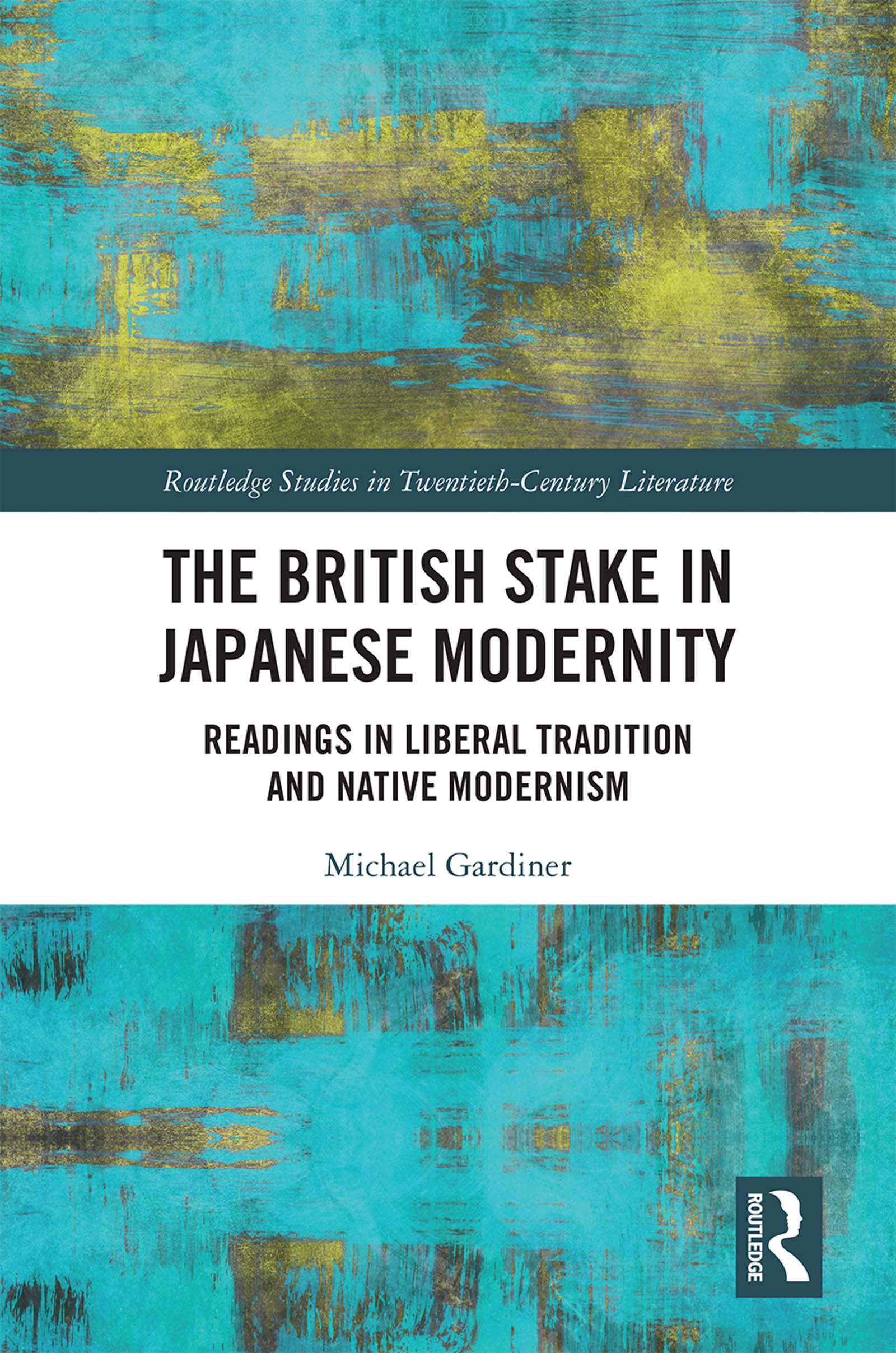
This book describes firstly a Japanese modernity which is readable not only as a modernising, but also as a Britishing, and secondly modernist attempts to overhaul this British universalism in some well-known and some less-known Japanese texts. From the mid-nineteenth century, and particularly as hastened by the spectre of China in the First Opium War, Japan’s modernity was bound up with a convergence with British Newtonian cosmology, something underscored by the British presence in Meiji Japan and the British education of key Meiji state-makers. Moreover the thinking behind Britain’s own unification in the long eighteenth century, particularly the Scottish Enlightenment, is echoed strikingly faithfully in the 1860s-70s work of Fukuzawa Yukichi, Nakamura Masanao, and other writers in the ‘Japanese Enlightenment’. However, from around the end of the Meiji era, we can see a concerted and pointed response to this British universalism, its historiography, its basis in the sovereign individual subject, and its spatial mapping of the world. Elements of this response can be read in texts including Natsume Sōseki’s Kokoro, Watsuji Tetsurō’s Fūdo (Climate and Culture), Tanizaki Jun’ichirō’s In’ei Raisan (In Praise of Shadows), Kawabata Yasunari’s Yukiguni (Snow Country), and various work of the mid-period Kyoto School. Rarely understood in terms of its British specificity, this response should have something to say to modernist studies more generally, since it aimed at a pluralism and de-universalisation that was difficult for mainstream British modernism itself. Indeed the strength of this de-universalisation may be precisely why these ‘native’ Japanese modernist tendencies have not much been accepted as modernism within the Anglophone academy, despite this field’s apparent widening of its ground in the twenty-first century.
Before Memmo my notes were scattered across PDFs. Now a workspace pulls everything into one place — I see exactly what's still left to study.
Memmo's summaries are gold before exams. I don't have to re-read 800 pages two weeks before — just the important parts.
The AI chat has saved me the night before an exam more than once. I just keep asking until I get it — no waiting on a study group to reply.
The quizzes hit exactly what I need to know. Memmo tracks what I get stuck on — so I only practice what's worth it.
Flashcards with spaced repetition are magic. Memmo knows when I'm about to forget something and brings it back.
The AI podcasts are my favorite. I listen on my way to school and get a recap without sitting at a computer.

Handbok i kvalitativa metoder
281 kr

Hållbar utveckling: en introduktion för ingenjörer och andra problemlösare
334 kr

Brymans Samhällsvetenskapliga metoder
390 kr

Projektledning
491 kr

Den orättvisa hälsan: om socioekonomiska skillnader i hälsa och livslängd
326 kr

Vetenskapsteori för nybörjare
196 kr

Organizational Leadership
429 kr

På väg mot läraryrket
172 kr

Det sociala livet i skolan: Socialpsykologiska perspektiv
253 kr

Betygsättningens didaktik
151 kr

Personality
402 kr

Studying Leadership
404 kr

Managing Innovation
477 kr

Introduktion till samhällsvetenskaplig metod
347 kr

The Psychology of Sex and Gender
698 kr

Evidens och kunskap för socialt arbete
207 kr

Introduction to Leadership
605 kr