
Before Memmo my notes were scattered across PDFs. Now a workspace pulls everything into one place — I see exactly what's still left to study.
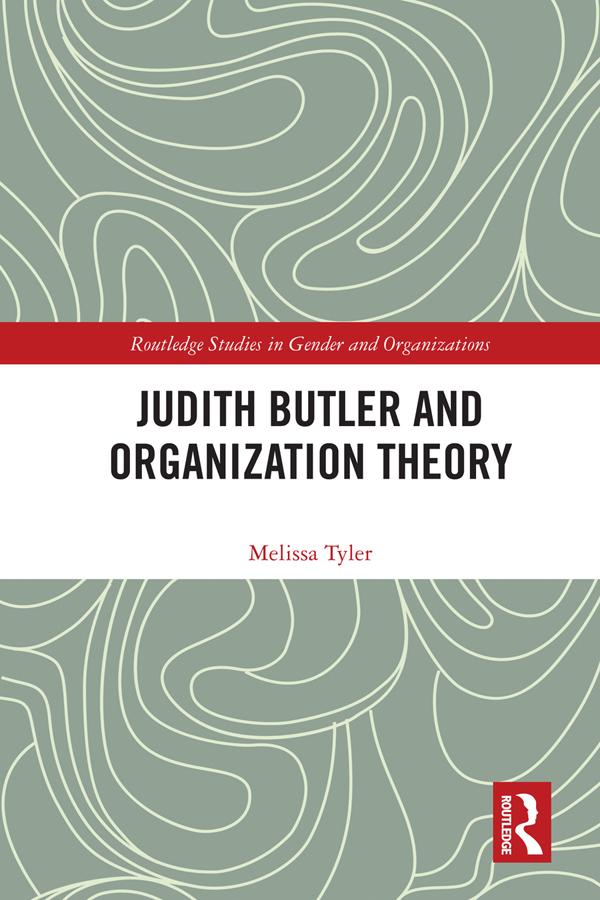
2020 will mark thirty years since the first publication of Judith Butler’s ground-breaking book, Gender Trouble. Here, and in subsequent work, Butler argues that gender and other forms of identity can best be understood as performative acts. These acts are what bring our subjectivities into existence, enabling us to be recognized as viable employable social beings, worthy of rights, responsibilities and respect. The three decades since the publication of Gender Trouble have witnessed Butler become one of the most widely cited and controversial figures in contemporary feminist thinking. While it is only in her most recent work that Butler has engaged directly with themes such as work and organization, her writing has profound implications for thinking, and acting, on the relationship between power, recognition and organization. Whilst her ideas have made important in-roads into work, organization and gender studies that are discussed here, there is considerable scope to explore further avenues that her concepts and theories open up. These inroads and avenues are the focus of this book.
Judith Butler and Organization Theory makes a substantial contribution to the analysis of gender, work and organization. It not only covers central issues in Butler’s work, it also offers a close reading of the complexities and nuances in her thought. It does so by ‘reading’ Butler as a theorist of organization, whose work resonates with scholars, practitioners and activists concerned to understand and engage with organizational life, organization and organizing. Drawing from a range of illustrative examples, the book examines key texts or ‘moments’ in the development of Butler’s writing to date, positing her as a thinker concerned to understand and address the ways in which our most basic desire for recognition comes to be organized within the context of contemporary labour markets and workplaces. It examines insights from Butler’s work, and the philosophical ideas she draws on, considering the impact of these on work, organization and management studies thus far; it also explores some of the many ways in which her thinking might be mobilized in future, considering what scope there is for a non-violent ethics of organization, and for a (re)assembling of the relationship between vulnerability and resistance within and through organizational politics.
Before Memmo my notes were scattered across PDFs. Now a workspace pulls everything into one place — I see exactly what's still left to study.
Memmo's summaries are gold before exams. I don't have to re-read 800 pages two weeks before — just the important parts.
The AI chat has saved me the night before an exam more than once. I just keep asking until I get it — no waiting on a study group to reply.
The quizzes hit exactly what I need to know. Memmo tracks what I get stuck on — so I only practice what's worth it.
Flashcards with spaced repetition are magic. Memmo knows when I'm about to forget something and brings it back.
The AI podcasts are my favorite. I listen on my way to school and get a recap without sitting at a computer.

Handbok i kvalitativa metoder
281 kr

Hållbar utveckling: en introduktion för ingenjörer och andra problemlösare
334 kr

Brymans Samhällsvetenskapliga metoder
390 kr

Projektledning
491 kr

Den orättvisa hälsan: om socioekonomiska skillnader i hälsa och livslängd
326 kr

Organizational Leadership
429 kr

Vetenskapsteori för nybörjare
196 kr

På väg mot läraryrket
172 kr

Det sociala livet i skolan: Socialpsykologiska perspektiv
253 kr

Betygsättningens didaktik
151 kr

Personality
402 kr

Studying Leadership
404 kr

Managing Innovation
477 kr

Introduktion till samhällsvetenskaplig metod
347 kr

The Psychology of Sex and Gender
698 kr

Evidens och kunskap för socialt arbete
207 kr

Introduction to Leadership
605 kr