
Before Memmo my notes were scattered across PDFs. Now a workspace pulls everything into one place — I see exactly what's still left to study.
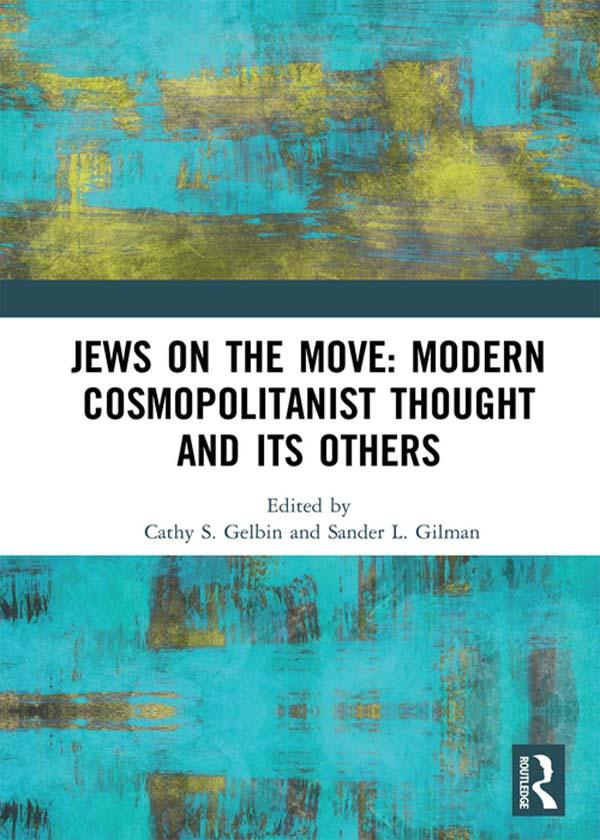
Jewish cosmopolitanism is key to understanding both modern globalization, and the old and new nationalism. Jewish cultures existing in the Western world during the last two centuries have been and continue to be read as hyphenated phenomena within a specific national context, such as German-Jewish or American-Jewish culture. Yet to what extent do such nationalized constructs of Jewish culture and identity still dominate Jewish self-expressions, and the discourses about them, in the rapidly globalizing world of the twenty-first century? In a world in which Diaspora societies have begun to reshape themselves as part of a super- or nonnational identity, what has happened to a cosmopolitan Jewish identity?
In a post-Zionist world, where one of the newest and most substantial Diaspora communities is that of Israelis, in the new globalized culture, is “being Jewish” suddenly something that can reach beyond the older models of Diasporic integration or nationalism? Which new paradigms of Jewish self-location, within the evolving and conflicting global discourses, about the nation, race, Genocides, anti-Semitism, colonialism and postcolonialism, gender and sexual identities does the globalization of Jewish cultures open up? To what extent might transnational notions of Jewishness, such as European-Jewish identity, create new discursive margins and centers? Is there a possibility that a “virtual makom (Jewish space)” might constitute itself? Recent studies on cosmopolitanism cite the Jewish experience as a key to the very notion of the movement of people for good or for ill as well as for the resurgence of modern nationalism. These theories reflect newer models of postcolonialism and transnationalism in regard to global Jewish cultures.
The present volume spans the widest reading of Jewish cosmopolitisms to study “Jews on the move.”
This book was originally published as a special issue of the European Review of History.
Before Memmo my notes were scattered across PDFs. Now a workspace pulls everything into one place — I see exactly what's still left to study.
Memmo's summaries are gold before exams. I don't have to re-read 800 pages two weeks before — just the important parts.
The AI chat has saved me the night before an exam more than once. I just keep asking until I get it — no waiting on a study group to reply.
The quizzes hit exactly what I need to know. Memmo tracks what I get stuck on — so I only practice what's worth it.
Flashcards with spaced repetition are magic. Memmo knows when I'm about to forget something and brings it back.
The AI podcasts are my favorite. I listen on my way to school and get a recap without sitting at a computer.

Handbok i kvalitativa metoder
281 kr

Hållbar utveckling: en introduktion för ingenjörer och andra problemlösare
334 kr

Brymans Samhällsvetenskapliga metoder
390 kr

Projektledning
491 kr

Den orättvisa hälsan: om socioekonomiska skillnader i hälsa och livslängd
326 kr

Vetenskapsteori för nybörjare
196 kr

Organizational Leadership
429 kr

På väg mot läraryrket
172 kr

Det sociala livet i skolan: Socialpsykologiska perspektiv
253 kr

Betygsättningens didaktik
151 kr

Personality
402 kr

Studying Leadership
404 kr

Managing Innovation
477 kr

Introduktion till samhällsvetenskaplig metod
347 kr

The Psychology of Sex and Gender
698 kr

Evidens och kunskap för socialt arbete
207 kr

Introduction to Leadership
605 kr