
Before Memmo my notes were scattered across PDFs. Now a workspace pulls everything into one place — I see exactly what's still left to study.
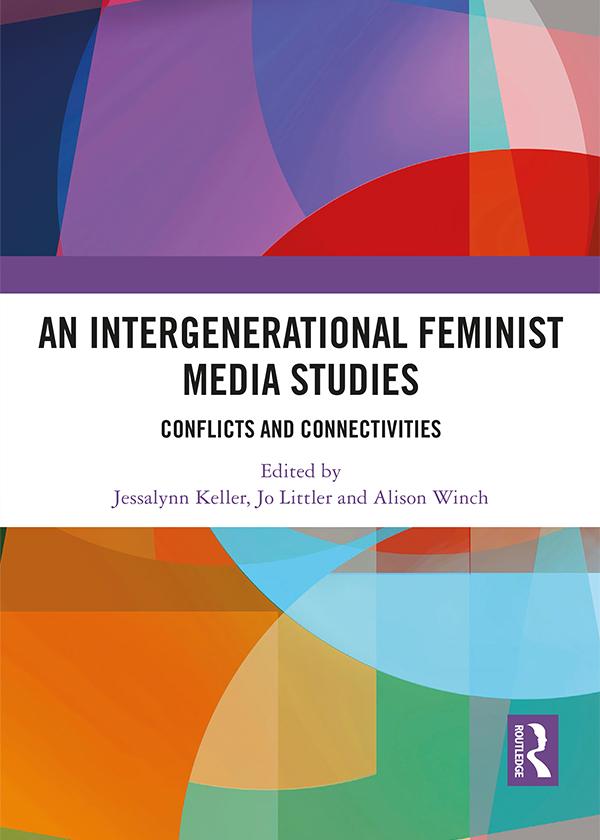
Feminism and generation are live and ideologically freighted issues that are subject to a substantial amount of media engagement. The figure of the millennial and the baby boomer, for example, regularly circulate in mainstream media, often accompanied by hyperbolic and vitriolic discourses and effects of intergenerational feminist conflict. In addition, theories of feminist generation and waves have been, and continue to be, extensively critiqued within feminist theory. Given the compelling criticisms directed at these categories, we ask: why bother examining and foregrounding issues of generation, intergeneration, and transgeneration in feminist media studies? While remaining skeptical of linearity and familial metaphors and of repeating reductive, heteronormative, and racist versions of feminist movements, we believe that the concept of generation does have critical purchase for feminist media scholars. Indeed, precisely because of the problematic ways in which it is used, and its prevalence as a volatile, yet only too palpable, organizing category, generation is in need of continual critical analysis, and is an important tool to be used—with care and nuance—when examining the multiple routes through which power functions in order to marginalize, reward, and oppress.
This book covers a range of media forms: film; games; digital media; television; print media; and practices of media production, intervention, and representation. The contributors explore how figures at particular stages of life—particularly the girl and the aging woman—are constructed relationally and circulate within media, with particular attention to sexuality. The book emphasizes exploring the ways in which the category of generation is mobilized in order to gloss sexism, racism, ageism, class oppression, and the effects of neoliberalism.
The chapters in this book were originally published as a special issue of Feminist Media Studies.
Before Memmo my notes were scattered across PDFs. Now a workspace pulls everything into one place — I see exactly what's still left to study.
Memmo's summaries are gold before exams. I don't have to re-read 800 pages two weeks before — just the important parts.
The AI chat has saved me the night before an exam more than once. I just keep asking until I get it — no waiting on a study group to reply.
The quizzes hit exactly what I need to know. Memmo tracks what I get stuck on — so I only practice what's worth it.
Flashcards with spaced repetition are magic. Memmo knows when I'm about to forget something and brings it back.
The AI podcasts are my favorite. I listen on my way to school and get a recap without sitting at a computer.

Handbok i kvalitativa metoder
281 kr

Hållbar utveckling: en introduktion för ingenjörer och andra problemlösare
334 kr

Brymans Samhällsvetenskapliga metoder
390 kr

Projektledning
491 kr

Den orättvisa hälsan: om socioekonomiska skillnader i hälsa och livslängd
326 kr

Vetenskapsteori för nybörjare
196 kr

Organizational Leadership
429 kr

På väg mot läraryrket
172 kr

Det sociala livet i skolan: Socialpsykologiska perspektiv
253 kr

Betygsättningens didaktik
151 kr

Personality
402 kr

Studying Leadership
404 kr

Managing Innovation
477 kr

Introduktion till samhällsvetenskaplig metod
347 kr

The Psychology of Sex and Gender
698 kr

Evidens och kunskap för socialt arbete
207 kr

Introduction to Leadership
605 kr