
Before Memmo my notes were scattered across PDFs. Now a workspace pulls everything into one place — I see exactly what's still left to study.
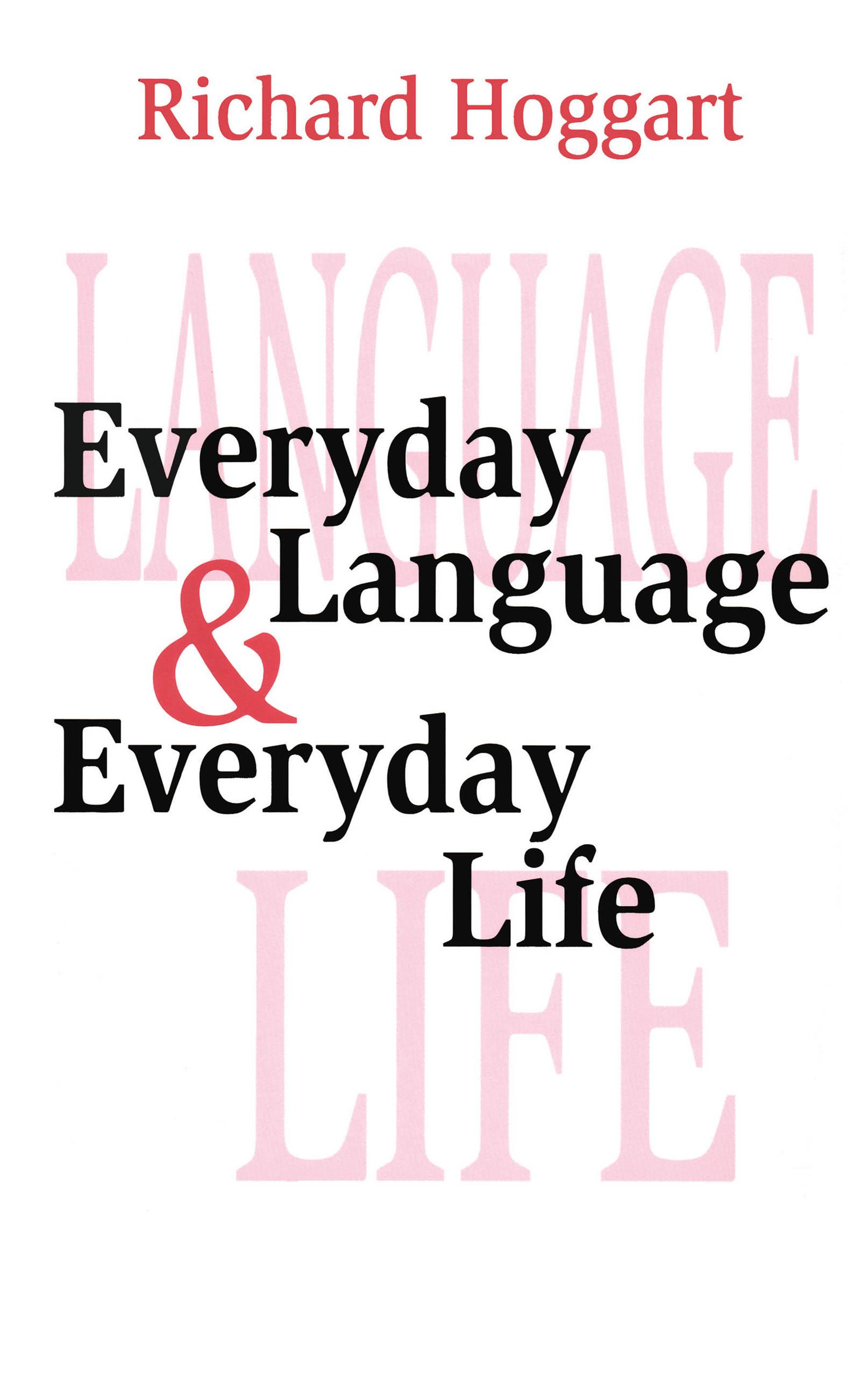
For years Richard Hoggart has observed the oddity of a common speech habit: the fondness for employing ready-made sayings and phrasings whenever we open our mouths, a disinclination to form our own sentences "from scratch," unless that becomes inescapable. But in this book he is interested in more specific questions. How far do the British, and particularly the English, share the same sayings across the social classes? If each group uses some different ones, are those differences determined by location, age, occupation or place in the social scale? Over the years, did such sayings indicate some of the main lines of their culture, its basic conditions, its stresses and strains, its indications of meaning, and significance? These and other concerns animate this fascinating exploration of how the English, and particularly working-class English, use the English language.Hoggart sets the stage by explaining how he has approached his subject matter, his manner of inquiry, and the general characteristics of sayings and speech. Looking back into time, he explores the idioms and epigrams in the poverty setting of the early working-class English. Hoggart examines the very innards of working-class life and the idioms, with the language that arose in relation to home, with its main characters of wives and mothers, husbands and fathers, and children; the wars; marriage; food, drink, health, and weather; neighbors, gossip, quarrels, old age, and death. He discusses related idioms and epigrams and their evolution from prewar to present.Hoggart identifies the sayings and special nuances of the English working-class people that have made them identifiable as such, from the rude and obscene to the intellectual and imaginative. Hoggart also examines the areas of tolerance, local morality, and public morality, elaborating on current usage of words that have evolved from the fourteen through the eighteenth centuries. He touches on religion, superstition, and time, the beliefs that animate language. And finally, he focuses on aphorisms and social change and the emerging idioms of relativism, concluding that many early adages still in use seem to refuse to die.With inimitable verve and humor, Hoggart offers adages, apothegms, epigrams and the like in this colorful examination drawn from the national pool and the common culture. This volume will interest scholars and general readers interested in culture studies, communications, and education.
Before Memmo my notes were scattered across PDFs. Now a workspace pulls everything into one place — I see exactly what's still left to study.
Memmo's summaries are gold before exams. I don't have to re-read 800 pages two weeks before — just the important parts.
The AI chat has saved me the night before an exam more than once. I just keep asking until I get it — no waiting on a study group to reply.
The quizzes hit exactly what I need to know. Memmo tracks what I get stuck on — so I only practice what's worth it.
Flashcards with spaced repetition are magic. Memmo knows when I'm about to forget something and brings it back.
The AI podcasts are my favorite. I listen on my way to school and get a recap without sitting at a computer.

Handbok i kvalitativa metoder
281 kr

Hållbar utveckling: en introduktion för ingenjörer och andra problemlösare
334 kr

Brymans Samhällsvetenskapliga metoder
390 kr

Projektledning
491 kr

Den orättvisa hälsan: om socioekonomiska skillnader i hälsa och livslängd
326 kr

Vetenskapsteori för nybörjare
196 kr

Organizational Leadership
429 kr

På väg mot läraryrket
172 kr

Det sociala livet i skolan: Socialpsykologiska perspektiv
253 kr

Betygsättningens didaktik
151 kr

Personality
402 kr

Studying Leadership
404 kr

Managing Innovation
477 kr

Introduktion till samhällsvetenskaplig metod
347 kr

The Psychology of Sex and Gender
698 kr

Evidens och kunskap för socialt arbete
207 kr

Introduction to Leadership
605 kr