
Before Memmo my notes were scattered across PDFs. Now a workspace pulls everything into one place — I see exactly what's still left to study.
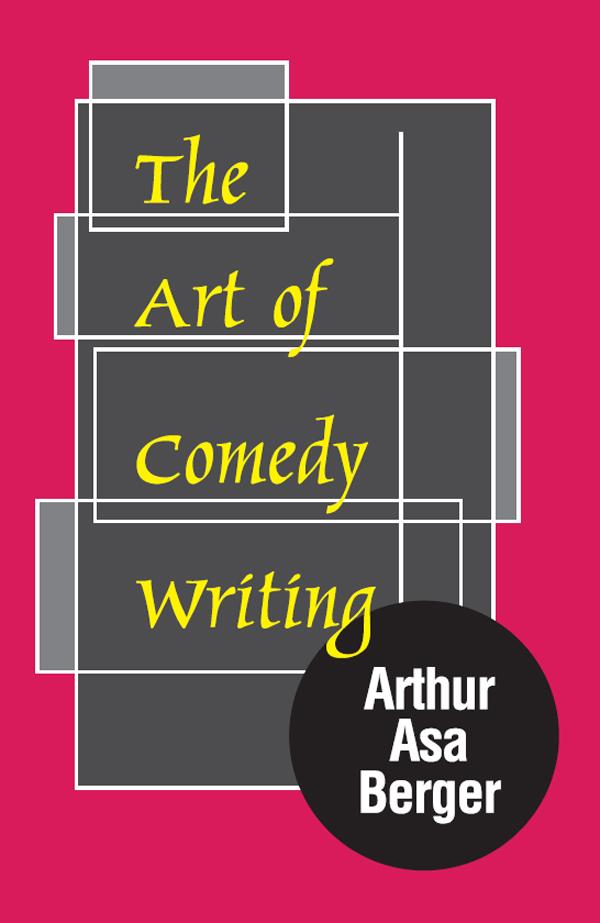
Just as a distinctive literary voice or style is marked by the ease with which it can be parodied, so too can specific aspects of humor be unique. Playwrights, television writers, novelists, cartoonists, and film scriptwriters use many special technical devices to create humor. Just as dramatic writers and novelists use specific devices to craft their work, creators of humorous materials from the ancient Greeks to today's stand-up comics have continued to use certain techniques in order to generate humor.
In The Art of Comedy Writing, Arthur Asa Berger argues that there are a relatively limited number of techniques forty-five in all that humorists employ. Elaborating upon his prior, in-depth study of humor, An Anatomy of Humor, in which Berger provides a content analysis of humor in all forms joke books, plays, comic books, novels, short stories, comic verse, and essaysThe Art of Comedy Writing goes further. Berger groups each technique into four basic categories: humor involving identity such as burlesque, caricature, mimicry, and stereotype; humor involving logic such as analogy, comparison, and reversal; humor involving language such as puns, wordplay, sarcasm, and satire; and finally, chase, slapstick, and speed, or humor involving action.
Berger claims that if you want to know how writers or comedians create humor study and analysis of their humorous works can be immensely insightful. This book is a unique analytical offering for those interested in humor. It provides writers and critics with a sizable repertoire of techniques for use in their own future comic creations. As such, this book will be of interest to people inspired by humor and the creative process professionals in the comedy field and students of creative writing, comedy, literary humor, communications, broadcast/media, and the humanities.
Before Memmo my notes were scattered across PDFs. Now a workspace pulls everything into one place — I see exactly what's still left to study.
Memmo's summaries are gold before exams. I don't have to re-read 800 pages two weeks before — just the important parts.
The AI chat has saved me the night before an exam more than once. I just keep asking until I get it — no waiting on a study group to reply.
The quizzes hit exactly what I need to know. Memmo tracks what I get stuck on — so I only practice what's worth it.
Flashcards with spaced repetition are magic. Memmo knows when I'm about to forget something and brings it back.
The AI podcasts are my favorite. I listen on my way to school and get a recap without sitting at a computer.

Handbok i kvalitativa metoder
281 kr

Hållbar utveckling: en introduktion för ingenjörer och andra problemlösare
334 kr

Brymans Samhällsvetenskapliga metoder
390 kr

Projektledning
491 kr

Den orättvisa hälsan: om socioekonomiska skillnader i hälsa och livslängd
326 kr

Vetenskapsteori för nybörjare
196 kr

Organizational Leadership
429 kr

På väg mot läraryrket
172 kr

Det sociala livet i skolan: Socialpsykologiska perspektiv
253 kr

Betygsättningens didaktik
151 kr

Personality
402 kr

Studying Leadership
404 kr

Managing Innovation
477 kr

Introduktion till samhällsvetenskaplig metod
347 kr

The Psychology of Sex and Gender
698 kr

Evidens och kunskap för socialt arbete
207 kr

Introduction to Leadership
605 kr