
Before Memmo my notes were scattered across PDFs. Now a workspace pulls everything into one place — I see exactly what's still left to study.
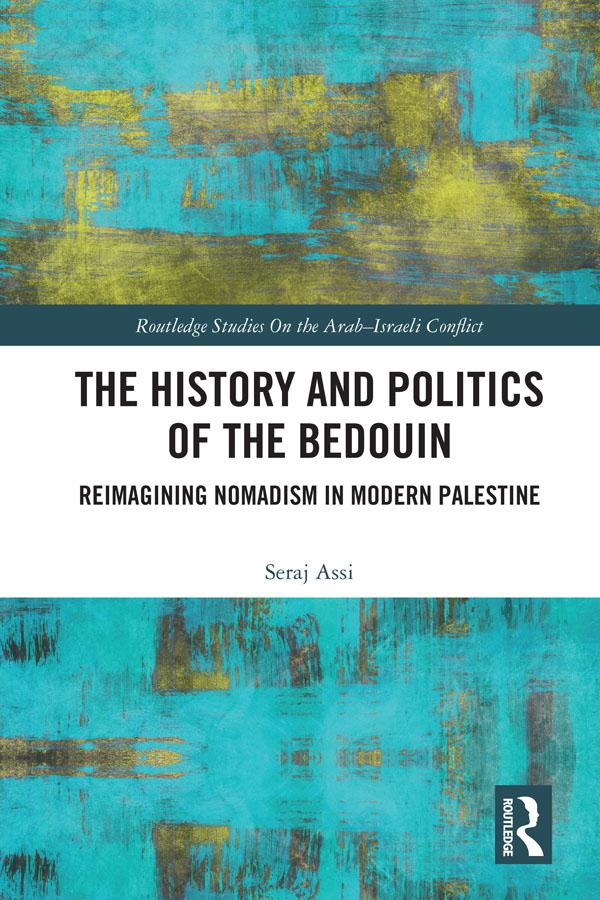
This book examines contending visions on nomadism in modern Palestine, with a special focus on the British Mandate period. Extending from the late Ottoman period to the founding of the State of Israel, it highlights both ruptures and continuities with the Ottoman past and the Israeli present, to prove that nomadism was not invented by the British or the Zionists, but is the shared legacy of Ottoman, British, Zionist, Palestinian, and most recently, Israeli attitudes to the Bedouin of Palestine.
Drawing on primary sources in Arabic and Hebrew, the book shows how native conceptions of nomadism have been reconstructed by colonial and national elites into new legal taxonomies rooted in modern European theories and praxis. By undertaking a comparative approach, it maintains that the introduction of these taxonomies transformed not only native Palestinian perceptions of nomadism, but perceptions that characterized early Zionist literature. The book breaks away from the Arab/Jewish duality by offering a comparative and relational study of the main forces operating under the Mandate: British colonialism, Labor Zionism, and Arab nationalism. Special attention is paid to the British side, which covers the first three chapters. Each chapter represents a formative stage of British colonial enterprise in Palestine, extending from the late Ottoman down to the postwar and the Mandate periods. A major theme is the nexus of race and ethnography reshaping British perceptions of the Bedouin of Palestine before and during the early phases of the Mandate, and the ways these perceptions guided the administrative division of the country along newly demarcated racial boundaries.
Using an interdisciplinary approach that combines new findings in the fields of history, ethnic studies, postcolonial theory, and environmental studies, this book contributes to understandings of the Israel/ Palestine conflict, and current trends of displacement in the Middle East.
Before Memmo my notes were scattered across PDFs. Now a workspace pulls everything into one place — I see exactly what's still left to study.
Memmo's summaries are gold before exams. I don't have to re-read 800 pages two weeks before — just the important parts.
The AI chat has saved me the night before an exam more than once. I just keep asking until I get it — no waiting on a study group to reply.
The quizzes hit exactly what I need to know. Memmo tracks what I get stuck on — so I only practice what's worth it.
Flashcards with spaced repetition are magic. Memmo knows when I'm about to forget something and brings it back.
The AI podcasts are my favorite. I listen on my way to school and get a recap without sitting at a computer.

Handbok i kvalitativa metoder
281 kr

Hållbar utveckling: en introduktion för ingenjörer och andra problemlösare
334 kr

Brymans Samhällsvetenskapliga metoder
390 kr

Projektledning
491 kr

Den orättvisa hälsan: om socioekonomiska skillnader i hälsa och livslängd
326 kr

Vetenskapsteori för nybörjare
196 kr

Organizational Leadership
429 kr

På väg mot läraryrket
172 kr

Det sociala livet i skolan: Socialpsykologiska perspektiv
253 kr

Betygsättningens didaktik
151 kr

Personality
402 kr

Studying Leadership
404 kr

Managing Innovation
477 kr

Introduktion till samhällsvetenskaplig metod
347 kr

The Psychology of Sex and Gender
698 kr

Evidens och kunskap för socialt arbete
207 kr

Introduction to Leadership
605 kr