
Before Memmo my notes were scattered across PDFs. Now a workspace pulls everything into one place — I see exactly what's still left to study.
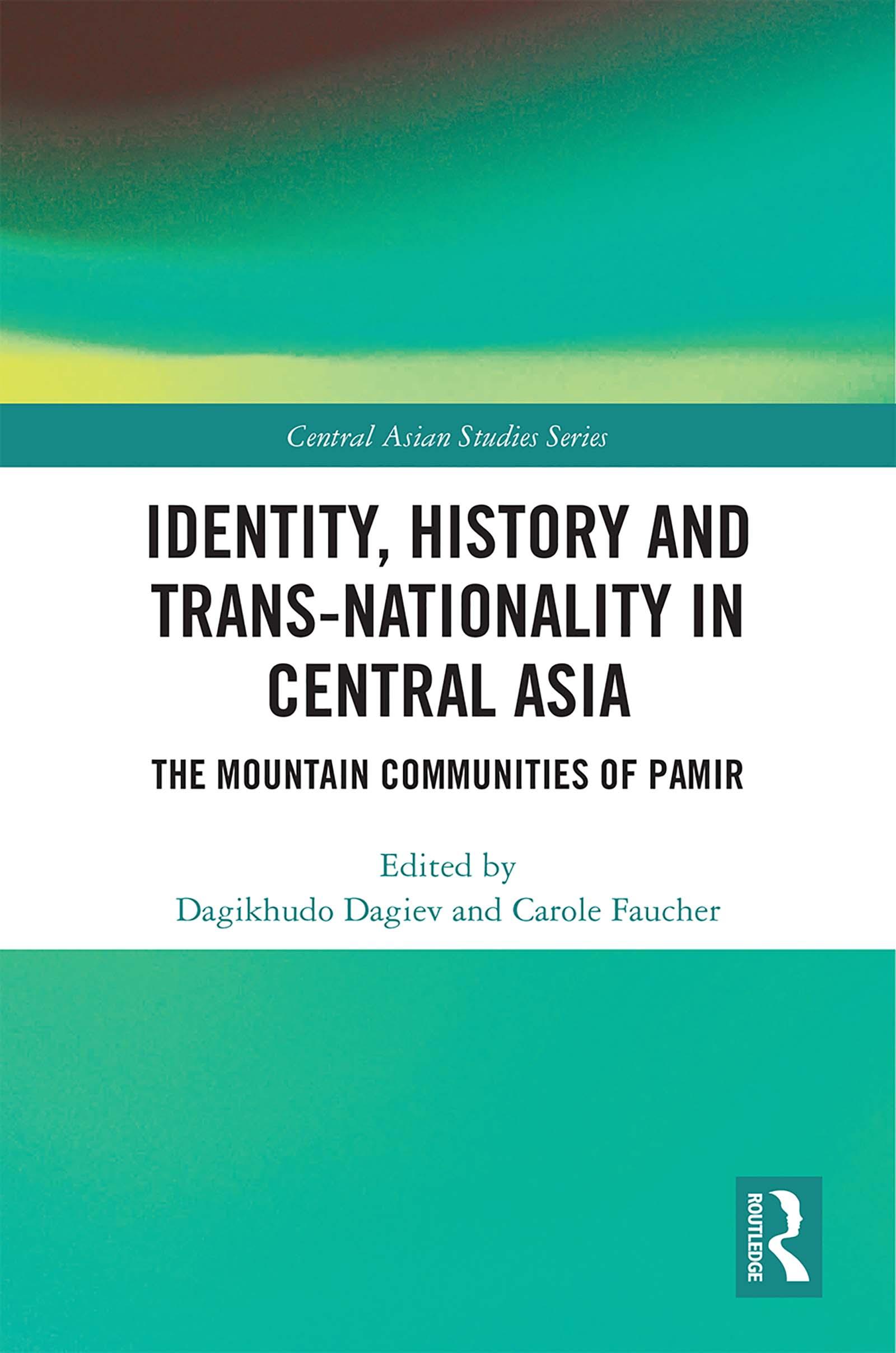
Pamiris, or Badakhshanis in popular discourse, form a small group of Iranic peoples who inhabit the mountainous region of Pamir-Hindu Kush, being the historical region of Badakhshan. Pamiri communities are located in the territories of four current nation-states: Tajikistan, Afghanistan, China and Pakistan.
This book provides insights in the identity process of a group of mountain communities whose vigorous cultures, languages and complex political history have continued to shape a strategic part of the world. Its various chapters capture what being a Pamiri may entail and critically explore the impact of both trans-regionalism and the globalisation processes on activating, engaging and linking the dispersed communities. The book presents a variety of lines of argument pertaining to Pamiri identity and identification processes. Structured in three parts, the book first addresses themes relevant to the region’s geography and the recent history of Pamiri communities. The second section critically explores the rich philosophical, religious and cultural Pamiri heritage through the writings of prominent historical figures. The final section addresses issues pertaining to the contemporary diffusion of traditions, peace-building, interconnectivity and what it means to be a Pamiri for the youth of the region. Contributions by experts in their field offer fresh insights into the Ismaili communities in the region while successfully updating the historical and ethnographic legacy of Soviet times with present-day scholarship.
As the first collection of scholarly contributions in English entirely focusing on the Pamiri people, this book will be of interest to academics in the fields of the history, anthropology, religious studies, sociology, linguistics, education and geography of Central Asia and/or East Asia as well as of Islam, Islamic thought, minority-majority relations, population movements and the processes of defining and affirming identity among minority groups.
Before Memmo my notes were scattered across PDFs. Now a workspace pulls everything into one place — I see exactly what's still left to study.
Memmo's summaries are gold before exams. I don't have to re-read 800 pages two weeks before — just the important parts.
The AI chat has saved me the night before an exam more than once. I just keep asking until I get it — no waiting on a study group to reply.
The quizzes hit exactly what I need to know. Memmo tracks what I get stuck on — so I only practice what's worth it.
Flashcards with spaced repetition are magic. Memmo knows when I'm about to forget something and brings it back.
The AI podcasts are my favorite. I listen on my way to school and get a recap without sitting at a computer.

Handbok i kvalitativa metoder
281 kr

Hållbar utveckling: en introduktion för ingenjörer och andra problemlösare
334 kr

Brymans Samhällsvetenskapliga metoder
390 kr

Projektledning
491 kr

Den orättvisa hälsan: om socioekonomiska skillnader i hälsa och livslängd
326 kr

Vetenskapsteori för nybörjare
196 kr

Organizational Leadership
429 kr

På väg mot läraryrket
172 kr

Det sociala livet i skolan: Socialpsykologiska perspektiv
253 kr

Betygsättningens didaktik
151 kr

Personality
402 kr

Studying Leadership
404 kr

Managing Innovation
477 kr

Introduktion till samhällsvetenskaplig metod
347 kr

The Psychology of Sex and Gender
698 kr

Evidens och kunskap för socialt arbete
207 kr

Introduction to Leadership
605 kr