
Before Memmo my notes were scattered across PDFs. Now a workspace pulls everything into one place — I see exactly what's still left to study.
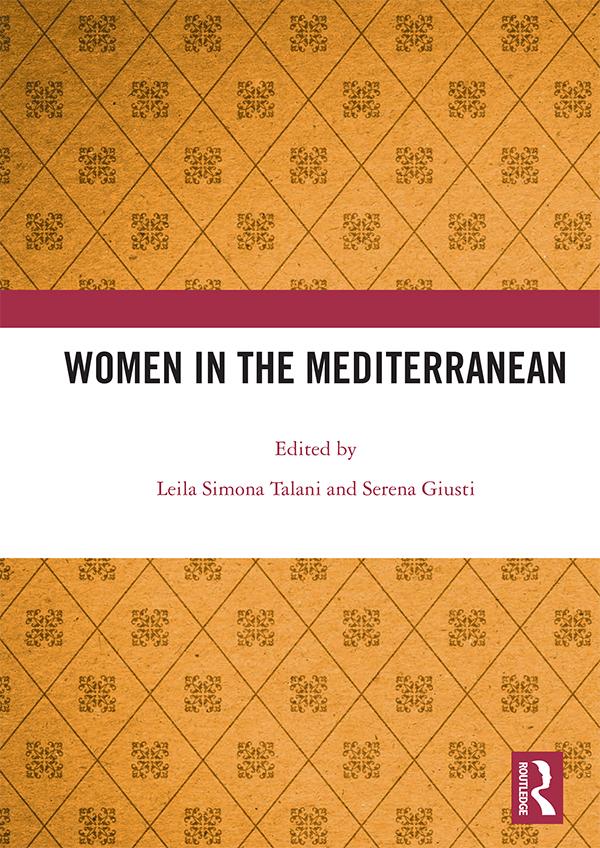
The book addresses the challenges faced by women on the two shores of the Mediterranean from a multidisciplinary and interdisciplinary perspective. While in the European Union’s (EU) Mediterranean countries inequality is mostly linked to the social sphere and, in particular refers to labour market dynamics, in the Middle East and Northern Africa (MENA) area, the situation is more complicated as the social and private spheres are blended and cultural and religious factors have a great impact on women autonomy and opportunities beyond the family perimeter. The different challenges women are facing on the two sides of the Mediterranean have sometimes originated incomprehension and misperceptions. Western-supported policies devoted to fill the gap between men and women in the MENA area have overlooked countries’ peculiarities simply exporting models tailored for EU’s member states. The EU’s attempts to strengthen relations with the Mediterranean countries on a multilevel basis have not rescued women from marginalisation. Nevertheless, during the 2011 awakening, women played an important role in activating civil society. They are still considered as a key part of the fight against terrorism and radicalisation, although in some countries their condition has worsened after secular regimes have been downturned. The number of migrant women has increased and, not differently from men, they are looking for opportunities and better conditions of life while Western media tend to present them in a stereotyped way either as traumatized victim and/or as caring mother. There are other misleading common places, which need to be better conceptualised and understood, such as the alleged incompatibility between Islam and women rights. Unfortunately, women’s rights are still under attack even in European countries where they are considered consolidated.
The chapters in this book were originally published in a special issue of the Journal of the Balkans and Near Eastern Studies.
Before Memmo my notes were scattered across PDFs. Now a workspace pulls everything into one place — I see exactly what's still left to study.
Memmo's summaries are gold before exams. I don't have to re-read 800 pages two weeks before — just the important parts.
The AI chat has saved me the night before an exam more than once. I just keep asking until I get it — no waiting on a study group to reply.
The quizzes hit exactly what I need to know. Memmo tracks what I get stuck on — so I only practice what's worth it.
Flashcards with spaced repetition are magic. Memmo knows when I'm about to forget something and brings it back.
The AI podcasts are my favorite. I listen on my way to school and get a recap without sitting at a computer.

Handbok i kvalitativa metoder
281 kr

Hållbar utveckling: en introduktion för ingenjörer och andra problemlösare
334 kr

Brymans Samhällsvetenskapliga metoder
390 kr

Projektledning
491 kr

Den orättvisa hälsan: om socioekonomiska skillnader i hälsa och livslängd
326 kr

Vetenskapsteori för nybörjare
196 kr

Organizational Leadership
429 kr

På väg mot läraryrket
172 kr

Det sociala livet i skolan: Socialpsykologiska perspektiv
253 kr

Betygsättningens didaktik
151 kr

Personality
402 kr

Studying Leadership
404 kr

Managing Innovation
477 kr

Introduktion till samhällsvetenskaplig metod
347 kr

The Psychology of Sex and Gender
698 kr

Evidens och kunskap för socialt arbete
207 kr

Introduction to Leadership
605 kr