
Before Memmo my notes were scattered across PDFs. Now a workspace pulls everything into one place — I see exactly what's still left to study.
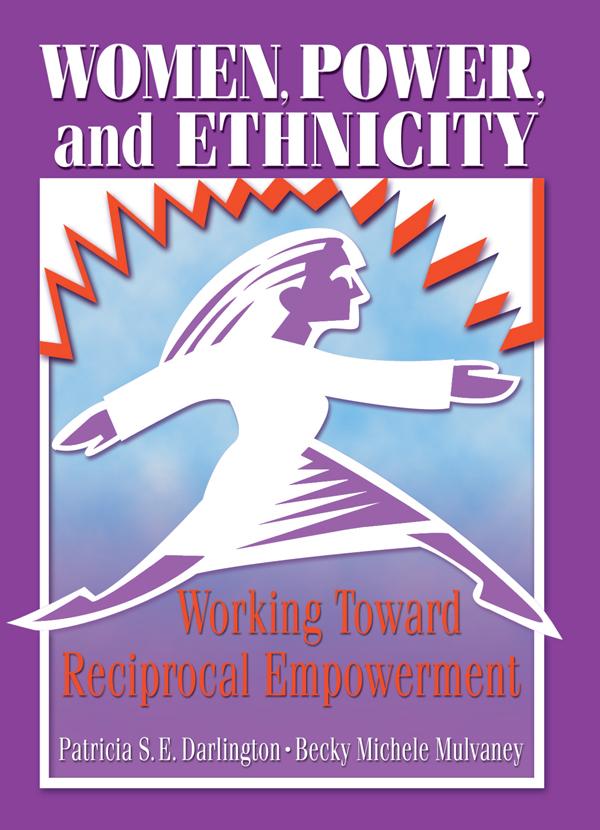
Powerful women aren't just men walking around in dresses!As women continue to assume positions of social leadership in increasing numbers, the dynamics of the social construction of power need to be examined. Have women adopted traditionally male patterns of behavior in an effort to gain and maintain power in business, industry, politics, academics, etc.? And if not, what kind of power are women practicing? The authors of Women, Power, and Ethnicity: Working Toward Reciprocal Empowerment endeavored to find out by conducting a research study on how women from various racial and ethnic backgrounds compare and contrast the attributes associated with existing power paradigms (traditional, empowerment, personal authority) with an alternate model of power--reciprocal empowerment.Reciprocal empowerment is a discursive and behavioral style of interaction grounded in reciprocity initiated by people who feel a sense of personal authority. Reciprocal empowerment enables people with mutual self-interests to rise above obstacles based on social and political structures and to use personal authority to discuss and act on issues openly and honestly in order to effect change. Using a qualitative methodology, Women, Power, and Ethnicity includes the results of surveys and interviews with women from seven different ethnic groups in the United States to determine if the concept or reciprocal empowerment resonates with them. The answer: Yes!Women, Power, and Ethnicity is organized by surveys and interview findings on women from seven cultural groups living in the United States (African, Asian, Caribbean, European, Latin, Middle Eastern, Native American). Each chapter includes:
Women, Power, and Ethnicity examines women's attitudes toward power in several social forums--home, job, religion, politics, and society in general. The book is an essential resource for teachers and students of communication studies, women studies, gender studies, ethnic studies, and social sciences.
Before Memmo my notes were scattered across PDFs. Now a workspace pulls everything into one place — I see exactly what's still left to study.
Memmo's summaries are gold before exams. I don't have to re-read 800 pages two weeks before — just the important parts.
The AI chat has saved me the night before an exam more than once. I just keep asking until I get it — no waiting on a study group to reply.
The quizzes hit exactly what I need to know. Memmo tracks what I get stuck on — so I only practice what's worth it.
Flashcards with spaced repetition are magic. Memmo knows when I'm about to forget something and brings it back.
The AI podcasts are my favorite. I listen on my way to school and get a recap without sitting at a computer.

Handbok i kvalitativa metoder
281 kr

Hållbar utveckling: en introduktion för ingenjörer och andra problemlösare
334 kr

Brymans Samhällsvetenskapliga metoder
390 kr

Projektledning
491 kr

Den orättvisa hälsan: om socioekonomiska skillnader i hälsa och livslängd
326 kr

Vetenskapsteori för nybörjare
196 kr

Organizational Leadership
429 kr

På väg mot läraryrket
172 kr

Det sociala livet i skolan: Socialpsykologiska perspektiv
253 kr

Betygsättningens didaktik
151 kr

Personality
402 kr

Studying Leadership
404 kr

Managing Innovation
477 kr

Introduktion till samhällsvetenskaplig metod
347 kr

The Psychology of Sex and Gender
698 kr

Evidens och kunskap för socialt arbete
207 kr

Introduction to Leadership
605 kr