
Before Memmo my notes were scattered across PDFs. Now a workspace pulls everything into one place — I see exactly what's still left to study.
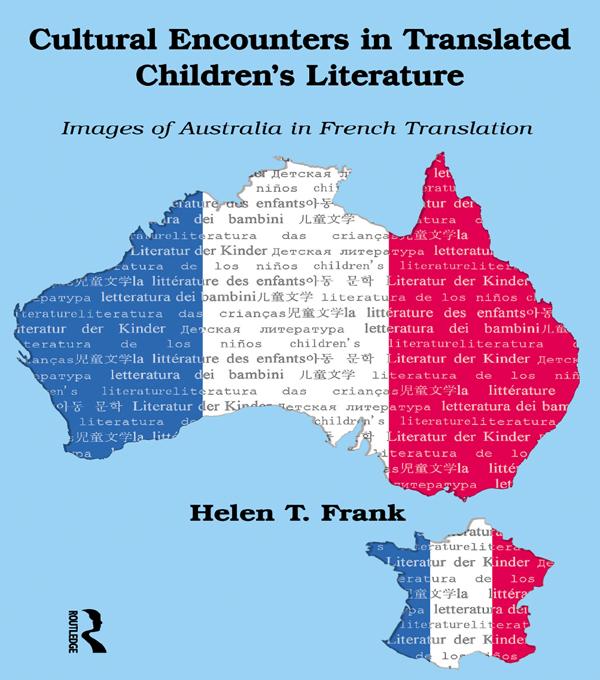
Cultural Encounters in Translated Children's Literature offers a detailed and innovative model of analysis for examining the complexities of translating children's literature and sheds light on the interpretive choices at work in moving texts from one culture to another. The core of the study addresses the issue of how images of a nation, locale or country are constructed in translated children's literature, with the translation of Australian children's fiction into French serving as a case study. Issues examined include the selection of books for translation, the relationship between children's books and the national and international publishing industry, the packaging of translations and the importance of titles, blurbs and covers, the linguistic and stylistic features specific to translating for children, intertextual references, the function of the translation in the target culture, didactic and pedagogical aims, euphemistic language and explicitation, and literariness in translated texts.
The findings of the case study suggest that the most common constructs of Australia in French translations reveal a preponderance of traditional Eurocentric signifiers that identify Australia with the outback, the antipodes, the exotic, the wild, the unknown, the void, the end of the world, the young and innocent nation, and the Far West. Contemporary signifiers that construct Australia as urban, multicultural, Aboriginal, worldly and inharmonious are seriously under-represented. The study also shows that French translations are conventional, conservative and didactic, showing preference for an exotic rather than local specificity, with systematic manipulation of Australian referents betraying a perception of Australia as antipodean rural exoticism.
The significance of the study lies in underscoring the manner in which a given culture is constructed in another cultural milieu, especially through translated children's literature.
Before Memmo my notes were scattered across PDFs. Now a workspace pulls everything into one place — I see exactly what's still left to study.
Memmo's summaries are gold before exams. I don't have to re-read 800 pages two weeks before — just the important parts.
The AI chat has saved me the night before an exam more than once. I just keep asking until I get it — no waiting on a study group to reply.
The quizzes hit exactly what I need to know. Memmo tracks what I get stuck on — so I only practice what's worth it.
Flashcards with spaced repetition are magic. Memmo knows when I'm about to forget something and brings it back.
The AI podcasts are my favorite. I listen on my way to school and get a recap without sitting at a computer.

Handbok i kvalitativa metoder
281 kr

Hållbar utveckling: en introduktion för ingenjörer och andra problemlösare
334 kr

Brymans Samhällsvetenskapliga metoder
390 kr

Projektledning
491 kr

Den orättvisa hälsan: om socioekonomiska skillnader i hälsa och livslängd
326 kr

Vetenskapsteori för nybörjare
196 kr

Organizational Leadership
429 kr

På väg mot läraryrket
172 kr

Det sociala livet i skolan: Socialpsykologiska perspektiv
253 kr

Betygsättningens didaktik
151 kr

Personality
402 kr

Studying Leadership
404 kr

Managing Innovation
477 kr

Introduktion till samhällsvetenskaplig metod
347 kr

The Psychology of Sex and Gender
698 kr

Evidens och kunskap för socialt arbete
207 kr

Introduction to Leadership
605 kr