
Before Memmo my notes were scattered across PDFs. Now a workspace pulls everything into one place — I see exactly what's still left to study.
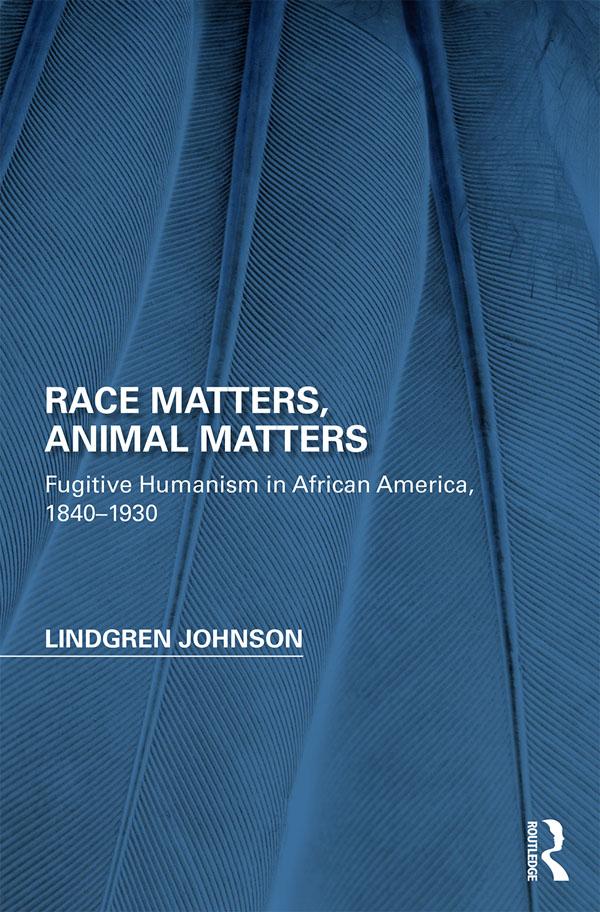
Race Matters, Animal Matters challenges one of the grand narratives of African American studies: that African Americans rejected racist associations of blackness and animality through a disassociation from animality. Analyzing canonical texts written by Frederick Douglass, Charles Chesnutt, Ida B. Wells, and James Weldon Johnson alongside slaughterhouse lithographs, hunting photography, and sheep “husbandry” manuals, Lindgren Johnson argues instead for a critical African American tradition that at pivotal moments reconsiders and recuperates discourses of animality weaponized against both African Americans and animals. Johnson articulates a theory of “fugitive humanism” in which these texts fl ee both white and human exceptionalism, even as they move within and seek out a (revised) humanist space. The focus, for example, is not on how African Americans shake off animal associations in demanding recognition of their humanity, but on how they hold fast to animality and animals in making such a move, revising “the human” itself as they go and undermining the binaries that helped to produce racial and animal injustices.
Fugitive humanism reveals how an interspecies ethics develops in these African American responses to violent dehumanization. Illuminating those moments in which the African American canon exceeds human exceptionalism, Race Matters, Animal Matters ultimately shows how these black engagements with animals and animality are not subsequent to efforts for racial justice — a mere extension of the abolitionist or antilynching movements— but, to the contrary, are integral to those efforts. This black- authored temporality challenges widely accepted humanist approaches to the relationship between racial and animal justice as it anticipates and even critiques the valuable insights that animal studies and posthumanism have to offer in our current moment.
Before Memmo my notes were scattered across PDFs. Now a workspace pulls everything into one place — I see exactly what's still left to study.
Memmo's summaries are gold before exams. I don't have to re-read 800 pages two weeks before — just the important parts.
The AI chat has saved me the night before an exam more than once. I just keep asking until I get it — no waiting on a study group to reply.
The quizzes hit exactly what I need to know. Memmo tracks what I get stuck on — so I only practice what's worth it.
Flashcards with spaced repetition are magic. Memmo knows when I'm about to forget something and brings it back.
The AI podcasts are my favorite. I listen on my way to school and get a recap without sitting at a computer.

Handbok i kvalitativa metoder
281 kr

Hållbar utveckling: en introduktion för ingenjörer och andra problemlösare
334 kr

Brymans Samhällsvetenskapliga metoder
390 kr

Projektledning
491 kr

Den orättvisa hälsan: om socioekonomiska skillnader i hälsa och livslängd
326 kr

Vetenskapsteori för nybörjare
196 kr

Organizational Leadership
429 kr

På väg mot läraryrket
172 kr

Det sociala livet i skolan: Socialpsykologiska perspektiv
253 kr

Betygsättningens didaktik
151 kr

Personality
402 kr

Studying Leadership
404 kr

Managing Innovation
477 kr

Introduktion till samhällsvetenskaplig metod
347 kr

The Psychology of Sex and Gender
698 kr

Evidens och kunskap för socialt arbete
207 kr

Introduction to Leadership
605 kr