
Before Memmo my notes were scattered across PDFs. Now a workspace pulls everything into one place — I see exactly what's still left to study.
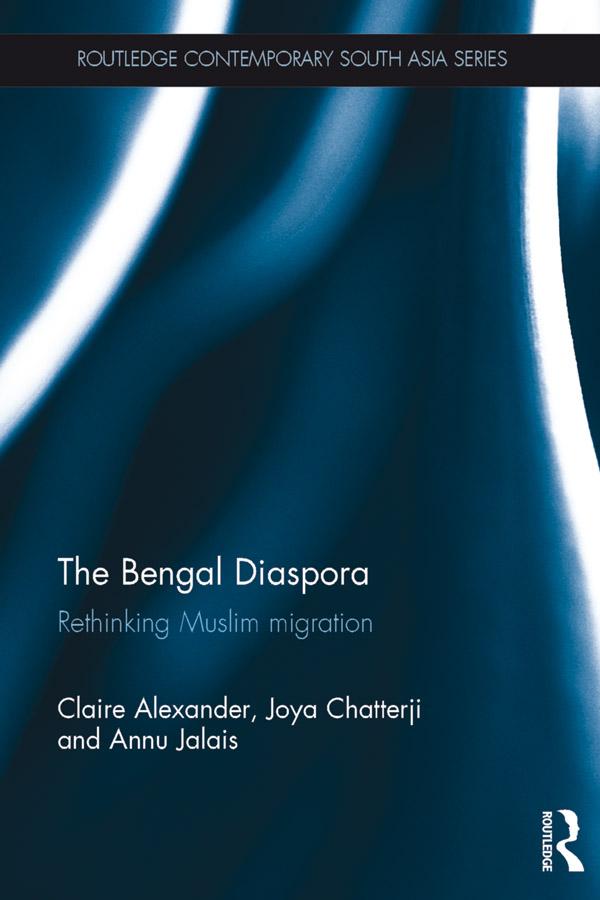
India’s partition in 1947 and the creation of Bangladesh in 1971 saw the displacement and resettling of millions of Muslims and Hindus, resulting in profound transformations across the region. A third of the region’s population sought shelter across new borders, almost all of them resettling in the Bengal delta itself. A similar number were internally displaced, while others moved to the Middle East, North America and Europe.
Using a creative interdisciplinary approach combining historical, sociological and anthropological approaches to migration and diaspora this book explores the experiences of Bengali Muslim migrants through this period of upheaval and transformation. It draws on over 200 interviews conducted in Britain, India, and Bangladesh, tracing migration and settlement within, and from, the Bengal delta region in the period after 1947. Focussing on migration and diaspora ‘from below’, it teases out fascinating ‘hidden’ migrant stories, including those of women, refugees, and displaced people. It reveals surprising similarities, and important differences, in the experience of Muslim migrants in widely different contexts and places, whether in the towns and hamlets of Bengal delta, or in the cities of Britain. Counter-posing accounts of the structures that frame migration with the textures of how migrants shape their own movement, it examines what it means to make new homes in a context of diaspora. The book is also unique in its focus on the experiences of those who stayed behind, and in its analysis of ruptures in the migration process. Importantly, the book seeks to challenge crude attitudes to ‘Muslim’ migrants, which assume their cultural and religious homogeneity, and to humanize contemporary discourses around global migration.
This ground-breaking new research offers an essential contribution to the field of South Asian Studies, Diaspora Studies, and Society and Culture Studies.
Before Memmo my notes were scattered across PDFs. Now a workspace pulls everything into one place — I see exactly what's still left to study.
Memmo's summaries are gold before exams. I don't have to re-read 800 pages two weeks before — just the important parts.
The AI chat has saved me the night before an exam more than once. I just keep asking until I get it — no waiting on a study group to reply.
The quizzes hit exactly what I need to know. Memmo tracks what I get stuck on — so I only practice what's worth it.
Flashcards with spaced repetition are magic. Memmo knows when I'm about to forget something and brings it back.
The AI podcasts are my favorite. I listen on my way to school and get a recap without sitting at a computer.

Handbok i kvalitativa metoder
281 kr

Hållbar utveckling: en introduktion för ingenjörer och andra problemlösare
334 kr

Brymans Samhällsvetenskapliga metoder
390 kr

Projektledning
491 kr

Den orättvisa hälsan: om socioekonomiska skillnader i hälsa och livslängd
326 kr

Vetenskapsteori för nybörjare
196 kr

Organizational Leadership
429 kr

På väg mot läraryrket
172 kr

Det sociala livet i skolan: Socialpsykologiska perspektiv
253 kr

Betygsättningens didaktik
151 kr

Personality
402 kr

Studying Leadership
404 kr

Managing Innovation
477 kr

Introduktion till samhällsvetenskaplig metod
347 kr

The Psychology of Sex and Gender
698 kr

Evidens och kunskap för socialt arbete
207 kr

Introduction to Leadership
605 kr