
Before Memmo my notes were scattered across PDFs. Now a workspace pulls everything into one place — I see exactly what's still left to study.
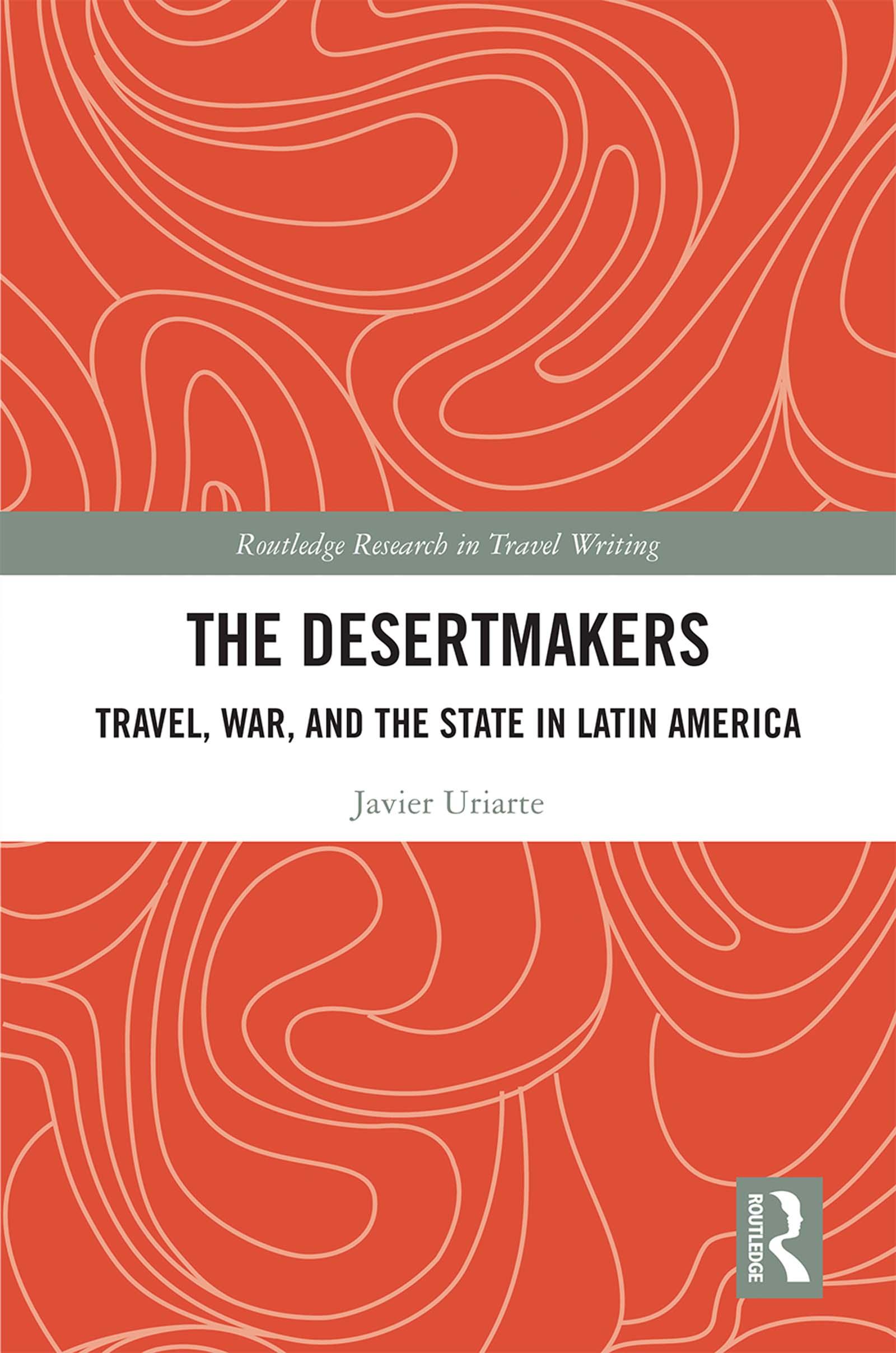
This book studies how the rhetoric of travel introduces different conceptualizations of space and time in scenarios of war during the last decades of the 19th century, in Argentina, Brazil, Paraguay, and Uruguay. By examining accounts of war and travel in the context of the consolidation of state apparatuses in these countries, Uriarte underlines the essential role that war (in connection to empire and capital) has played in the Latin American process of modernization and state formation. In this book, the analysis of British and Latin American travel narratives proves particularly productive in reading the ways in which national spaces are reconfigured, reimagined, and reappropriated by the state apparatus. War turns out to be a central instrument not just for making possible this logic of appropriation, but also for bringing temporal notions such as modernization and progress to spaces that were described — albeit problematically — as being outside of history. The book argues that wars waged against "deserts" (as Patagonia, the sertão, Paraguay, and the Uruguayan countryside were described and imagined) were in fact means of generating empty spaces, real voids that were the condition for new foundations. The study of travel writing is an essential tool for understanding the transformations of space brought by war, and for analyzing in detail the forms and connotations of movement in connection to violence. Uriarte pays particular attention to the effects that witnessing war had on the traveler’s identity and on the relation that is established with the oikos or point of departure of their own voyage. Written at the intersection of literary analysis, critical geography, political science, and history, this book will be of interest to those studying Latin American literature, Travel Writing, and neocolonialism and Empire writing.
Before Memmo my notes were scattered across PDFs. Now a workspace pulls everything into one place — I see exactly what's still left to study.
Memmo's summaries are gold before exams. I don't have to re-read 800 pages two weeks before — just the important parts.
The AI chat has saved me the night before an exam more than once. I just keep asking until I get it — no waiting on a study group to reply.
The quizzes hit exactly what I need to know. Memmo tracks what I get stuck on — so I only practice what's worth it.
Flashcards with spaced repetition are magic. Memmo knows when I'm about to forget something and brings it back.
The AI podcasts are my favorite. I listen on my way to school and get a recap without sitting at a computer.

Handbok i kvalitativa metoder
281 kr

Hållbar utveckling: en introduktion för ingenjörer och andra problemlösare
334 kr

Brymans Samhällsvetenskapliga metoder
390 kr

Projektledning
491 kr

Den orättvisa hälsan: om socioekonomiska skillnader i hälsa och livslängd
326 kr

Organizational Leadership
429 kr

Vetenskapsteori för nybörjare
196 kr

På väg mot läraryrket
172 kr

Det sociala livet i skolan: Socialpsykologiska perspektiv
253 kr

Betygsättningens didaktik
151 kr

Personality
402 kr

Studying Leadership
404 kr

Managing Innovation
477 kr

Introduktion till samhällsvetenskaplig metod
347 kr

The Psychology of Sex and Gender
698 kr

Evidens och kunskap för socialt arbete
207 kr

Introduction to Leadership
605 kr