
Before Memmo my notes were scattered across PDFs. Now a workspace pulls everything into one place — I see exactly what's still left to study.
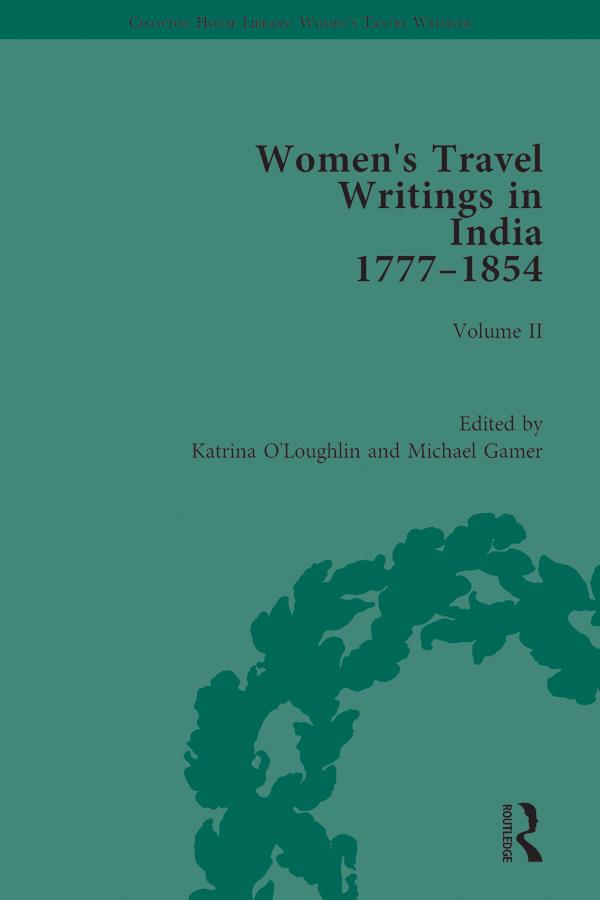
The ‘memsahibs’ of the British Raj in India are well-known figures today, frequently depicted in fiction, TV and film. In recent years, they have also become the focus of extensive scholarship. Less familiar to both academics and the general public, however, are the eighteenth- and early nineteenth-century precursors to the memsahibs of the Victorian and Edwardian era. Yet British women also visited and resided in India in this earlier period, witnessing first-hand the tumultuous, expansionist decades in which the East India Company established British control over the subcontinent. Some of these travellers produced highly regarded accounts of their experiences, thereby inaugurating a rich tradition of women’s travel writing about India. In the process, they not only reported events and developments in the subcontinent, they also contributed to them, helping to shape opinion and policy on issues such as colonial rule, religion, and social reform.
This new set in the Chawton House Library Women’s Travel Writing series assembles seven of these accounts, six by British authors (Jemima Kindersley, Maria Graham, Eliza Fay, Ann Deane, Julia Maitland and Mary Sherwood) and one by an American (Harriet Newell). Their narratives – here reproduced for the first time in reset scholarly editions – were published between 1777 and 1854, and recount journeys undertaken in India, or periods of residence there, between the 1760s and the 1830s. Collectively they showcase the range of women’s interests and activities in India, and also the variety of narrative forms, voices and personae available to them as travel writers. Some stand squarely in the tradition of Enlightenment ethnography; others show the growing influence of Evangelical beliefs. But all disrupt any lingering stereotypes about women’s passivity, reticence and lack of public agency in this period, when colonial women were not yet as sequestered and debarred from cross-cultural contact as they would later be during the Raj. Their narratives are consequently a useful resource to students and researchers across multiple fields and disciplines, including women’s writing, travel writing, colonial and postcolonial studies, the history of women’s educational and missionary work, and Romantic-era and nineteenth-century literature.
This second volume includes two texts, Harriet Newell, Memoirs of Mrs Harriet Newell (1815) and Eliza Fay, Original Letters from India (1817).
Before Memmo my notes were scattered across PDFs. Now a workspace pulls everything into one place — I see exactly what's still left to study.
Memmo's summaries are gold before exams. I don't have to re-read 800 pages two weeks before — just the important parts.
The AI chat has saved me the night before an exam more than once. I just keep asking until I get it — no waiting on a study group to reply.
The quizzes hit exactly what I need to know. Memmo tracks what I get stuck on — so I only practice what's worth it.
Flashcards with spaced repetition are magic. Memmo knows when I'm about to forget something and brings it back.
The AI podcasts are my favorite. I listen on my way to school and get a recap without sitting at a computer.

Handbok i kvalitativa metoder
281 kr

Hållbar utveckling: en introduktion för ingenjörer och andra problemlösare
334 kr

Brymans Samhällsvetenskapliga metoder
390 kr

Projektledning
491 kr

Den orättvisa hälsan: om socioekonomiska skillnader i hälsa och livslängd
326 kr

Vetenskapsteori för nybörjare
196 kr

Organizational Leadership
429 kr

På väg mot läraryrket
172 kr

Det sociala livet i skolan: Socialpsykologiska perspektiv
253 kr

Betygsättningens didaktik
151 kr

Personality
402 kr

Studying Leadership
404 kr

Managing Innovation
477 kr

Introduktion till samhällsvetenskaplig metod
347 kr

The Psychology of Sex and Gender
698 kr

Evidens och kunskap för socialt arbete
207 kr

Introduction to Leadership
605 kr