
Before Memmo my notes were scattered across PDFs. Now a workspace pulls everything into one place — I see exactly what's still left to study.
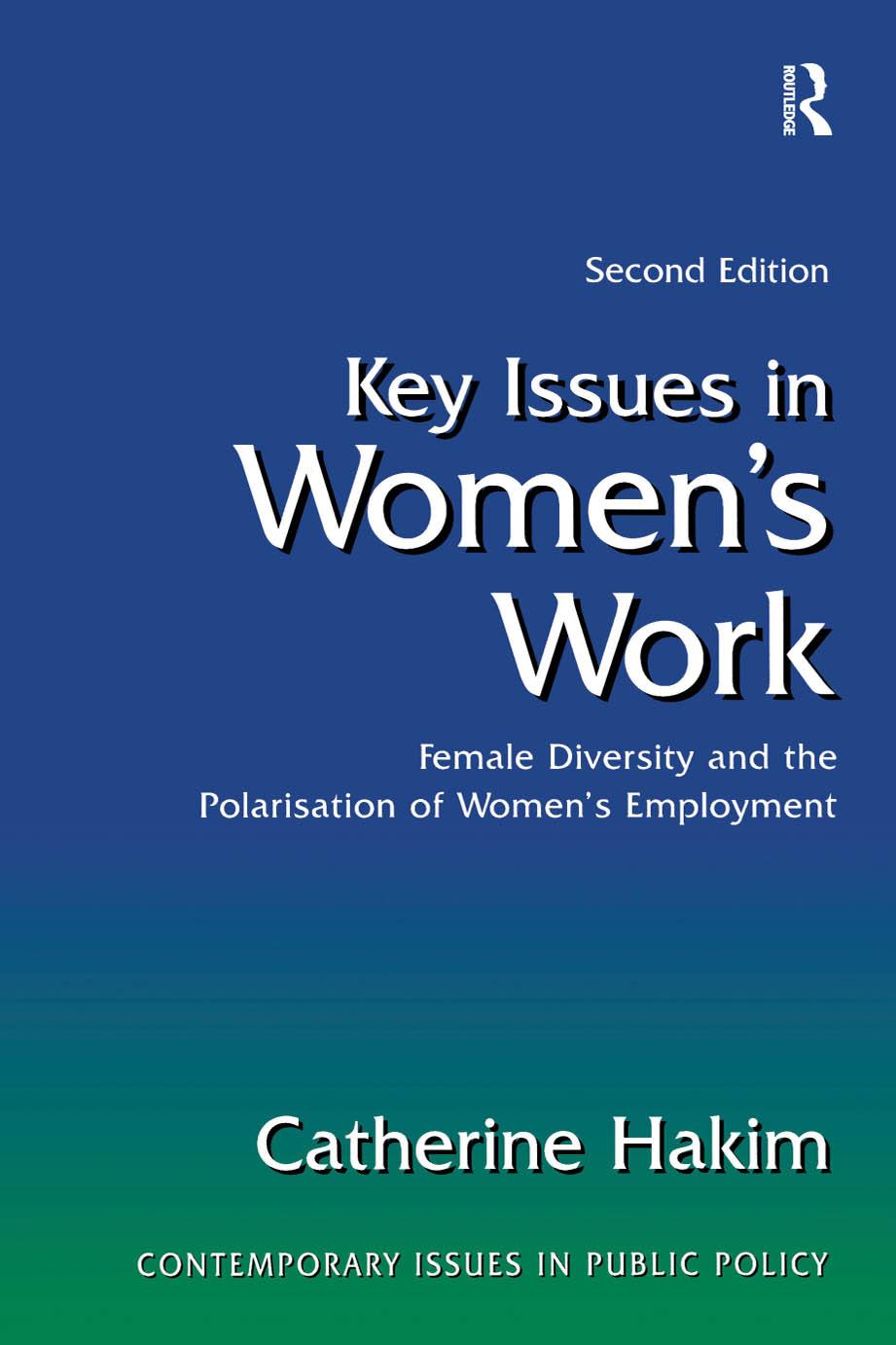
Women's employment is one of the most widely-discussed and often-misunderstood issues of modern society. Are women today oppressed, or do they have the best of both worlds? Do women have to go out to work to gain equality with men, or do they already do more than their share of domestic work, caring work and voluntary work as well as work in the informal economy? Do women seek careers on the same terms as men, or are they content to be dependent wives or secondary earners taking jobs on a short-term basis? How important is job segregation in explaining the 20% pay gap between men and women? Have equal opportunities laws had any real impact? Are women in Europe lagging behind, or are they at the forefront of developments in modern societies? This new updated edition of Catherine Hakim's classic text addresses all the key issues currently debated in relation to women's work - in the domestic sphere, as well as paid employment.
Dr Hakim tests the power of patriarchy theory and preference theory against economic theories. Sex discrimination, work-life balance, part-time work, flexible hours, homeworking, career patterns across the life cycle, labour mobility, labour turnover, the returns to education, occupational segregation, the pay gap, the glass ceiling, and the impact of European Union policies are all considered. Analysis of historical developments over the twentieth century, based on censuses, is complemented by case studies of people working in occupations undergoing dramatic change. Throughout the book, comparisons are drawn between the USA, Britain, other European countries, Canada, Australia, and also China, Japan and other Far Eastern societies.
The analysis draws on sociology, economics, psychology, labour law, history and social anthropology to conclude that the diversity of women's life goals and lifestyle preferences is increasing. This explains the growing polarisation of women's employment and many contradictory recent research results.
Before Memmo my notes were scattered across PDFs. Now a workspace pulls everything into one place — I see exactly what's still left to study.
Memmo's summaries are gold before exams. I don't have to re-read 800 pages two weeks before — just the important parts.
The AI chat has saved me the night before an exam more than once. I just keep asking until I get it — no waiting on a study group to reply.
The quizzes hit exactly what I need to know. Memmo tracks what I get stuck on — so I only practice what's worth it.
Flashcards with spaced repetition are magic. Memmo knows when I'm about to forget something and brings it back.
The AI podcasts are my favorite. I listen on my way to school and get a recap without sitting at a computer.

Handbok i kvalitativa metoder
281 kr

Hållbar utveckling: en introduktion för ingenjörer och andra problemlösare
334 kr

Brymans Samhällsvetenskapliga metoder
390 kr

Projektledning
491 kr

Den orättvisa hälsan: om socioekonomiska skillnader i hälsa och livslängd
326 kr

Vetenskapsteori för nybörjare
196 kr

Organizational Leadership
429 kr

På väg mot läraryrket
172 kr

Det sociala livet i skolan: Socialpsykologiska perspektiv
253 kr

Betygsättningens didaktik
151 kr

Personality
402 kr

Studying Leadership
404 kr

Managing Innovation
477 kr

Introduktion till samhällsvetenskaplig metod
347 kr

The Psychology of Sex and Gender
698 kr

Evidens och kunskap för socialt arbete
207 kr

Introduction to Leadership
605 kr