
Before Memmo my notes were scattered across PDFs. Now a workspace pulls everything into one place — I see exactly what's still left to study.
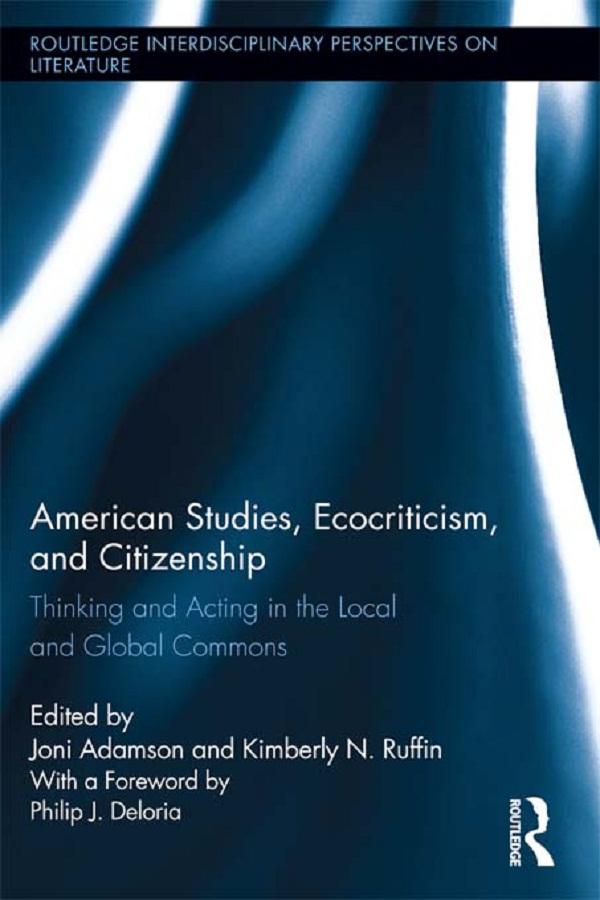
This collection reclaims public intellectuals and scholars important to the foundational work in American Studies that contributed to emerging conceptions of an "ecological citizenship" advocating something other than nationalism or an "exclusionary ethics of place." Co-editors Adamson and Ruffin recover underrecognized field genealogies in American Studies (i.e. the work of early scholars whose scope was transnational and whose activism focused on race, class and gender) and ecocriticism (i.e. the work of movement leaders, activists and scholars concerned with environmental justice whose work predates the 1990s advent of the field). They stress the necessity of a confluence of intellectual traditions, or "interdisciplinarities," in meeting the challenges presented by the "anthropocene," a new era in which human beings have the power to radically endanger the planet or support new approaches to transnational, national and ecological citizenship. Contributors to the collection examine literary, historical, and cultural examples from the 19th century to the 21st. They explore notions of the common—namely, common humanity, common wealth, and common ground—and the relation of these notions to often conflicting definitions of who (or what) can have access to "citizenship" and "rights." The book engages in scholarly ecological analysis via the lens of various human groups—ethnic, racial, gendered, coalitional—that are shaping twenty-first century environmental experience and vision. Read together, the essays included in American Studies, Ecocriticism, and Citizenship create a "methodological commons" where environmental justice case studies and interviews with activists and artists living in places as diverse as the U.S., Canada, Haiti, Puerto Rico, Taiwan and the Navajo Nation, can be considered alongside literary and social science analysis that contributes significantly to current debates catalyzed by nuclear meltdowns, oil spills, hurricanes, and climate change, but also by hopes for a common future that will ensure the rights of all beings--human and nonhuman-- to exist, maintain, and regenerate life cycles and evolutionary processes
Before Memmo my notes were scattered across PDFs. Now a workspace pulls everything into one place — I see exactly what's still left to study.
Memmo's summaries are gold before exams. I don't have to re-read 800 pages two weeks before — just the important parts.
The AI chat has saved me the night before an exam more than once. I just keep asking until I get it — no waiting on a study group to reply.
The quizzes hit exactly what I need to know. Memmo tracks what I get stuck on — so I only practice what's worth it.
Flashcards with spaced repetition are magic. Memmo knows when I'm about to forget something and brings it back.
The AI podcasts are my favorite. I listen on my way to school and get a recap without sitting at a computer.

Handbok i kvalitativa metoder
281 kr

Hållbar utveckling: en introduktion för ingenjörer och andra problemlösare
334 kr

Brymans Samhällsvetenskapliga metoder
390 kr

Projektledning
491 kr

Den orättvisa hälsan: om socioekonomiska skillnader i hälsa och livslängd
326 kr

Vetenskapsteori för nybörjare
196 kr

Organizational Leadership
429 kr

På väg mot läraryrket
172 kr

Det sociala livet i skolan: Socialpsykologiska perspektiv
253 kr

Betygsättningens didaktik
151 kr

Personality
402 kr

Studying Leadership
404 kr

Managing Innovation
477 kr

Introduktion till samhällsvetenskaplig metod
347 kr

The Psychology of Sex and Gender
698 kr

Evidens och kunskap för socialt arbete
207 kr

Introduction to Leadership
605 kr