
Before Memmo my notes were scattered across PDFs. Now a workspace pulls everything into one place — I see exactly what's still left to study.
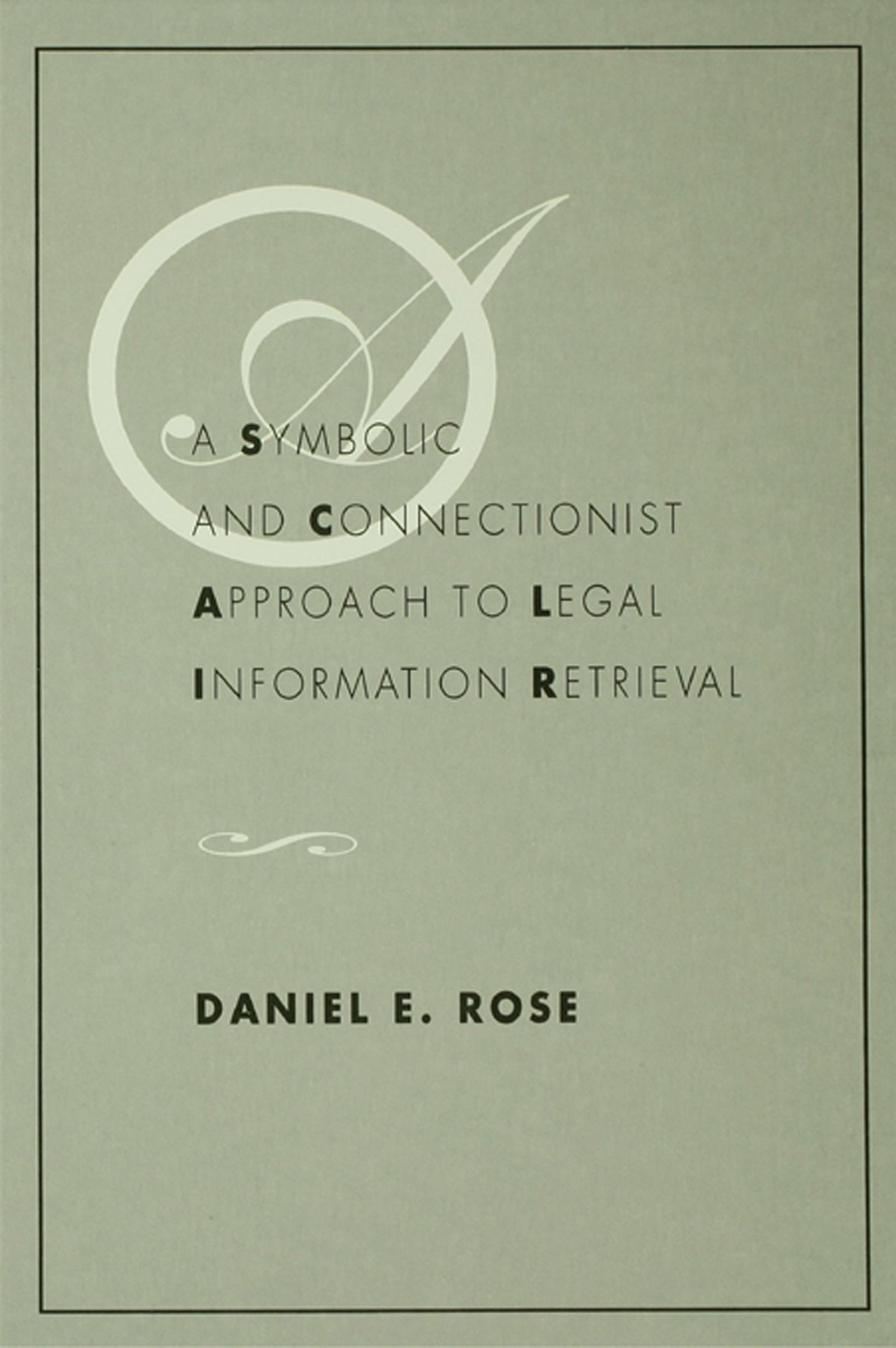
Many existing information retrieval (IR) systems are surprisingly ineffective at finding documents relevant to particular topics. Traditional systems are extremely brittle, failing to retrieve relevant documents unless the user's exact search string is found. They support only the most primitive trial-and-error interaction with their users and are also static. Even systems with so-called "relevance feedback" are incapable of learning from experience with users. SCALIR (a Symbolic and Connectionist Approach to Legal Information Retrieval) -- a system for assisting research on copyright law -- has been designed to address these problems. By using a hybrid of symbolic and connectionist artificial intelligence techniques, SCALIR develops a conceptual representation of document relationships without explicit knowledge engineering. SCALIR's direct manipulation interface encourages users to browse through the space of documents. It then uses these browsing patterns to improve its performance by modifying its representation, resulting in a communal repository of expertise for all of its users.
SCALIR's representational scheme also mirrors the hybrid nature of the Anglo-American legal system. While certain legal concepts are precise and rule-like, others -- which legal scholars call "open-textured" -- are subject to interpretation. The meaning of legal text is established through the parallel and distributed precedence-based judicial appeal system. SCALIR represents documents and terms as nodes in a network, capturing the duality of the legal system by using symbolic (semantic network) and connectionist links. The former correspond to a priori knowledge such as the fact that one case overturned another on appeal. The latter correspond to statistical inferences such as the relevance of a term describing a case. SCALIR's text corpus includes all federal cases on copyright law.
The hybrid representation also suggests a way to resolve the apparent incompatibility between the two prominent paradigms in artificial intelligence, the "classical" symbol-manipulation approach and the neurally-inspired connectionist approach. Part of the book focuses on a characterization of the two paradigms and an investigation of when and how -- as in the legal research domain -- they can be effectively combined.
Before Memmo my notes were scattered across PDFs. Now a workspace pulls everything into one place — I see exactly what's still left to study.
Memmo's summaries are gold before exams. I don't have to re-read 800 pages two weeks before — just the important parts.
The AI chat has saved me the night before an exam more than once. I just keep asking until I get it — no waiting on a study group to reply.
The quizzes hit exactly what I need to know. Memmo tracks what I get stuck on — so I only practice what's worth it.
Flashcards with spaced repetition are magic. Memmo knows when I'm about to forget something and brings it back.
The AI podcasts are my favorite. I listen on my way to school and get a recap without sitting at a computer.

Handbok i kvalitativa metoder
281 kr

Hållbar utveckling: en introduktion för ingenjörer och andra problemlösare
334 kr

Brymans Samhällsvetenskapliga metoder
390 kr

Projektledning
491 kr

Den orättvisa hälsan: om socioekonomiska skillnader i hälsa och livslängd
326 kr

Vetenskapsteori för nybörjare
196 kr

Organizational Leadership
429 kr

På väg mot läraryrket
172 kr

Det sociala livet i skolan: Socialpsykologiska perspektiv
253 kr

Betygsättningens didaktik
151 kr

Personality
402 kr

Studying Leadership
404 kr

Managing Innovation
477 kr

Introduktion till samhällsvetenskaplig metod
347 kr

The Psychology of Sex and Gender
698 kr

Evidens och kunskap för socialt arbete
207 kr

Introduction to Leadership
605 kr